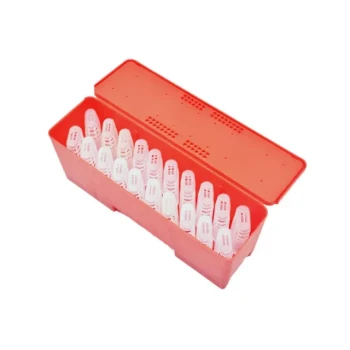
The internal slot structure acts as a precision stabilizer system. By employing stainless steel panels to create rigid physical constraints, the design mechanically locks wooden hive frames into place. This prevents lateral shifting and violent shaking when traversing rough terrain, ensuring the frames do not collide with one another or impact the walls of the container.
Transporting apiary equipment over uneven ground poses a significant risk to fragile comb structures. The core value of the slot structure is that it neutralizes this risk by isolating the frames from vehicle movement, effectively preventing the kinetic energy of transport from damaging your yield.
The Mechanics of Frame Stabilization
To understand how the loading box protects your equipment, you must look at how it manages physical space and movement.
Precise Physical Constraints
The loading box utilizes an internal arrangement of slots formed by stainless steel panels. These panels are not merely dividers; they provide a specific, rigid boundary for each individual wooden frame.
Limiting Lateral Movement
On bumpy terrain, the primary threat to a hive frame is side-to-side motion. The slot structure restricts this lateral movement, ensuring the frames remain fixed in position regardless of how the vehicle sways.
Reducing Excessive Shaking
By holding the frame tight against the stainless steel structure, the box minimizes vibration and "chatter." This prevents the frames from rattling loosely, which can loosen joints or disturb the bees inside.
Preventing Structural Damage
The ultimate goal of the slot design is to preserve the integrity of both the wooden hardware and the biological product.
Avoiding Frame-to-Frame Collisions
Without individual slots, sudden stops or turns would cause frames to slam into one another. The slot structure enforces a safety gap, making violent collisions between frames physically impossible.
Protecting the Box Body
The constraints also prevent heavy frames from impacting the interior walls of the loading box. This preserves the structural integrity of the box itself, extending the lifespan of your transport equipment.
Ensuring Honeycomb Integrity
The most critical function is the protection of the honeycomb. By eliminating violent collisions and excessive shaking, the design ensures the delicate wax structures remain intact and undamaged upon arrival.
Understanding the Trade-offs
While the slot structure offers superior protection, it is important to recognize the inherent limitations of this design.
Dependence on Standard Sizing
The efficacy of the "precise physical constraints" relies on your wooden frames matching the slot dimensions. Frames that are warped or non-standard in size may not fit securely, negating the benefits of the stabilization system.
Rigid Constraints vs. Shock Absorption
The system relies on rigidity rather than suspension. While it prevents collisions, it transfers the vertical motion of the vehicle to the frame; therefore, extremely rough handling can still transmit G-force to the comb, even if the frame doesn't move laterally.
Making the Right Choice for Your Transport
To maximize the utility of a slotted loading box, consider your specific operational needs.
- If your primary focus is transport over rough terrain: Prioritize a box with stainless steel panels that offer the most rigid constraints to counteract the heavy swaying of off-road driving.
- If your primary focus is preserving fragile comb: Ensure your wooden frames are in excellent condition and standard size to take full advantage of the slot's lateral movement prevention.
By relying on a precise internal slot structure, you transform your transport from a chaotic risk into a controlled, secure process.
Summary Table:
| Feature | Mechanism | Benefit to Apiary |
|---|---|---|
| Stainless Steel Panels | Creates rigid physical constraints | Mechanically locks frames in place |
| Lateral Limitation | Restricts side-to-side motion | Prevents frame-to-frame collisions |
| Vibration Reduction | Minimizes frame "chatter" and shaking | Preserves delicate honeycomb & wax structures |
| Standardized Spacing | Enforces a consistent safety gap | Protects both frames and the box interior |
Secure Your Harvest with HONESTBEE Professional Logistics Solutions
Transporting hive frames over rough terrain shouldn't risk your yield. HONESTBEE provides commercial apiaries and distributors with high-durability beekeeping loading boxes and a full spectrum of precision-engineered beekeeping machinery.
Whether you need specialized hardware like hive-making machines and honey-filling lines, or essential consumables and tools, we offer a comprehensive wholesale portfolio designed to enhance your operational efficiency.
Ready to upgrade your apiary infrastructure? Contact our expert team today to learn how our specialized equipment can protect your investment and streamline your honey production.
References
- Pingan Wang, Xiongzhe Han. Dynamics Simulation and Field Test Verification of Multi-Functional Beekeeping Loading Box Based on the Tracked Vehicle. DOI: 10.3390/app12136667
This article is also based on technical information from HonestBee Knowledge Base .
Related Products
- Plastic Transporting Bee Packages and Nuc Boxes for Beekeeping
- 5 Frame Wooden Nuc Box for Beekeeping
- Metal Bee Hive Stand Bee Box Stand for Beekeeping
- Professional 600D Oxford Cloth Beekeeping Tool Bag with 8 Pockets and Elastic Loops
- Australian Langstroth Beehive Boxes for Beekeeping Wholesales
People Also Ask
- What role do bee package boxes play in the commercial transport and expansion of honeybee colonies? - Logistic Essentials
- What are beekeeping boxes called? A Guide to Hive Bodies and Box Types
- How do standardized bee packages serve as a recovery mechanism for commercial beekeeping? Ensure Business Continuity
- What is the commercial value of using standardized bee packages? Drive Scalability in Large-Scale Apiaries
- Why is the timely introduction of high-quality bee packages critical? Save Your Apiary from Asian Hornet Invasions