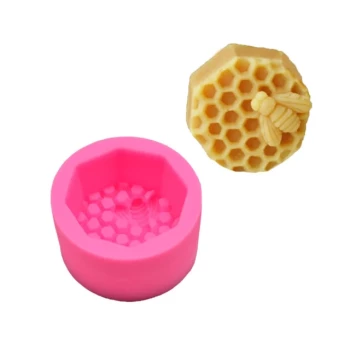
Regularly replacing honeycomb wax foundations acts as a critical reset for colony hygiene and genetic validation. By removing old wax, you directly reduce the accumulation of harmful pathogens and chemical residues, creating a "clean slate" that minimizes environmental interference in your breeding program.
In resistance breeding, environmental noise is the enemy of data accuracy. Clean wax foundations ensure that a colony's observed vigor is a result of its genetic superiority, not merely a reflection of its struggle against a contaminated hive environment.
Reducing Environmental Stressors
To accurately assess a colony, you must first minimize external pressures that are not related to the specific traits you are selecting for.
Eliminating Pathogen Reservoirs
Old honeycomb wax acts as a sponge for biological contaminants. Over time, it accumulates pathogens that increase the risk of secondary diseases.
By replacing these foundations, you physically remove the medium where these pathogens thrive. This lowers the baseline disease load, allowing the colony to focus its energy on growth and defense rather than constantly fighting infection.
Minimizing Chemical Build-up
Wax is lipophilic, meaning it absorbs and holds onto chemicals. This includes residues from agricultural pesticides and previous mite treatments.
Regular replacement prevents these residues from reaching toxic levels. This ensures that the colony's health metrics are not skewed by chemical exposure, which can mimic or mask genetic weaknesses.
Isolating Genetic Traits
The primary goal of resistance breeding is to identify bees that naturally withstand threats like the Varroa mite.
Removing Interference Variables
If a colony fails, you need to know why. In a hive filled with old, contaminated comb, it is difficult to distinguish between a colony with poor genetics and one that is simply overwhelmed by a dirty environment.
Clean foundations eliminate this variable. When the nesting environment is standardized and clean, the cleaning performance and vigor you observe can be directly attributed to the colony's genetic quality.
Validating True Resistance
Resistance breeding relies on identifying specific traits, such as hygienic behavior.
When you reduce environmental stressors through wax replacement, you ensure that the colony's survival is due to its active defense mechanisms (like Varroa resistance). This allows breeders to efficiently identify and "lock in" superior genetic resources.
The Role of Standardization
While replacement ensures hygiene, the use of standardized frames ensures measurement accuracy.
Creating a Uniform Metric
Standardized honeycomb frames provide a consistent unit of measure. They allow you to quantitatively evaluate colony strength by measuring the number of frames covered by bees and the total area of sealed brood.
Consistent Comparison
Using uniform equipment allows for direct comparison across multiple colony samples. You can accurately track development rates, wax-building capacity, and propolis collection levels because every colony is operating under identical physical conditions.
Understanding the Trade-offs
While beneficial, aggressive replacement strategies require careful management to balance health benefits against resource costs.
Energy Expenditure
Drawing out new wax foundations requires significant energy and resources from the bees. A colony forced to rebuild too much comb at once may see a temporary dip in honey production or brood rearing as resources are diverted to construction.
Disruption of the Nest
Replacing frames changes the physical structure of the nest. If done during critical brood-rearing periods without care, it can temporarily disrupt the colony’s internal organization and thermal regulation.
Optimizing Your Breeding Program
To effectively utilize wax replacement in your resistance breeding strategy, consider your primary objectives.
- If your primary focus is Genetic Accuracy: Prioritize replacement to eliminate environmental variables, ensuring that performance data strictly reflects genetic traits.
- If your primary focus is Colony Vigor: Use replacement to lower the pathogen load, giving colonies the best physical chance to display their natural strength.
By maintaining a clean and standardized wax environment, you transform your apiary from a simple production unit into a precision laboratory for genetic selection.
Summary Table:
| Factor | Impact of Old Wax | Benefit of Regular Replacement |
|---|---|---|
| Pathogen Load | Accumulates bacteria and viruses | Physically removes disease reservoirs |
| Chemical Residue | Absorbs pesticides and mite treatments | Provides a clean, toxin-free environment |
| Genetic Accuracy | Environmental "noise" masks true traits | Validates performance is due to genetics |
| Standardization | Variable cell sizes and conditions | Enables uniform metrics across colonies |
| Colony Vigor | Energy spent on immune defense | Energy redirected to growth and production |
Elevate Your Breeding Precision with HONESTBEE
At HONESTBEE, we understand that high-quality resistance breeding requires professional-grade equipment and standardization. We specialize in supporting commercial apiaries and distributors with a comprehensive wholesale portfolio designed for excellence.
From standardized honeycomb frames and wax foundation machinery to advanced honey-filling equipment and hive-making tools, we provide the full spectrum of hardware and industry consumables needed to transform your apiary into a precision laboratory.
Ready to scale your operation with superior tools? Contact HONESTBEE today to explore our wholesale solutions
References
- Melissa A. Y. Oddie, Bjørn Dahle. Insights from Norway: Using Natural Adaptation to Breed <i>Varroa</i>-Resistant Honey Bees. DOI: 10.1080/0005772x.2021.1882783
This article is also based on technical information from HonestBee Knowledge Base .
Related Products
- Colorful Silicone Beeswax Foundation Mold Mould for Beekeeping
- Assembled Wooden Bee Frames with Beeswax Foundation Ready to Use by HONESTBEE
- Notebook Style Beeswax Foundation Mould Wax Foundation Mold
- Beeswax Foundation Sheets Beehive Foundation for Wholesale
- Manual Beeswax Comb Foundation Machine Wax Foundation Mill Embossing Machine
People Also Ask
- How do beeswax foundation molds facilitate the construction of standardized honeycombs? Optimize Your Apiary Efficiency
- How do you use the Foundation Mold to create beeswax foundation? Master DIY Beekeeping with Precision
- How can beeswax value-addition processes be utilized to increase beekeeping revenue? Boost Your Apiary Profitability
- What is the first tip for pouring beeswax into a silicone mold? Ensure a Perfect Release
- Why are specific wax foundation molds used to downsize brood cells? Master Mechanical Pest Inhibition