Appropriate beekeeping equipment improves crop pollination by keeping colonies healthy, manageable, and operationally available during short flowering windows. In intensive farming, the right hives, inspection tools, protective equipment, and colony-management systems help beekeepers monitor bee health, reduce handling stress, regulate colony strength, and relocate colonies efficiently. The result is more consistent bee activity across fields, improving cross-pollination, seed setting, fruit quality, and yield potential.
Pollination efficiency depends not only on the number of hives deployed, but on whether those colonies remain strong, healthy, correctly distributed, and active when crops are flowering. Professional equipment turns these requirements into repeatable management processes.
Why Equipment Selection Matters in Intensive Farming
Pollination demand is concentrated in short windows
Many commercial crops require effective pollination during a limited flowering period. Fruit trees, rapeseed, cucurbits, pulses, spices, and other crops may need strong pollinator activity precisely when flowers are receptive.
Appropriate equipment allows beekeepers to prepare colonies in advance, inspect them efficiently, and place or relocate them at the correct time. This helps ensure that pollination capacity is available when the crop needs it most.
Intensive production increases management complexity
Large-scale farms often involve many fields, high crop density, frequent chemical applications, and demanding logistics. Managing colonies under these conditions requires more than basic hives; it requires standardized tools and systems that support consistent decisions across numerous colonies.
Without suitable equipment, inspections become slower, colony conditions are harder to compare, and problems such as weak populations or disease may be discovered too late to protect pollination performance.
How the Right Tools Improve Colony Performance
Hive systems provide a stable operating environment
Structured hives give honeybee colonies the space and organization needed for survival, breeding, brood development, and population growth. They also help protect colonies from adverse weather and make routine management more systematic.
A suitable hive system supports the development of strong colonies before deployment and makes it easier to maintain them throughout intensive pollination cycles.
Inspection tools reveal problems before they affect crops
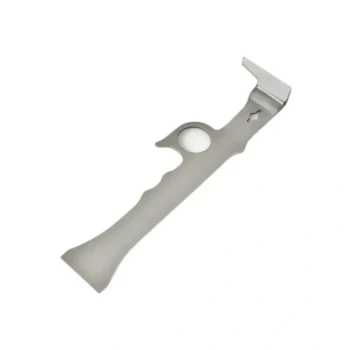
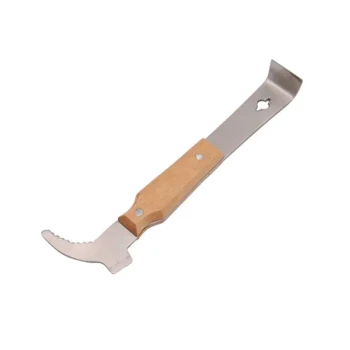
Hive management tools enable technicians to inspect frames, brood, food stores, queen condition, and signs of disease or parasites. Early detection is essential because a declining colony may still appear present in the field while delivering substantially less pollination activity.
Regular, well-managed inspections help beekeepers correct weaknesses before peak flowering. They also create a more reliable basis for deciding which colonies are suitable for commercial pollination contracts.
Protective equipment reduces handling risk and stress
Protective clothing and appropriate handling tools allow personnel to work safely and calmly around colonies. Safer operations make frequent inspections more practical and reduce the likelihood of rushed or disruptive hive manipulation.
Lower handling stress supports more stable colony management. It also protects the workforce, which is particularly important when teams must service large numbers of hives across multiple locations.
Standardized tools improve operational consistency
Uniform equipment converts complex beekeeping activities into repeatable workflows. When teams use consistent tools and procedures, they can compare colony conditions more accurately and respond more quickly to variations in queen quality, brood development, or food availability.
For distributors, wholesalers, and commercial operators, standardization also simplifies training, spare-parts planning, purchasing, and field support.
How Equipment Supports Pollination Logistics
Healthy colonies can be deployed more reliably
Pollination efficiency starts with having enough active colonies at the crop site. Equipment that supports colony development, disease control, and routine maintenance helps preserve the strength and availability of those colonies.
This is especially valuable when pollination contracts require a defined number of colonies to be delivered and maintained during a narrow flowering period.
Relocation becomes safer and more efficient
Managed pollination often requires colonies to be moved between apiaries and agricultural sites. Suitable hive equipment and transport-support tools help personnel relocate colonies with less disruption.
Efficient relocation allows beekeepers to match colony placement with crop schedules, field conditions, and flowering intensity. It also reduces the operational delays that can leave parts of a crop under-pollinated.
Colony density can be actively managed
Specialized equipment supports colony division, frame inspection, and other interventions used to regulate colony strength and availability. These activities help maintain an appropriate number of active colonies for the crop and the scale of the farming operation.
The objective is not simply to maximize hive numbers. It is to establish sufficient, healthy, and well-distributed pollination capacity during the period when flowers require it.
How Equipment Helps Manage Environmental Pressure
Hive management can reduce exposure risks
Intensive agriculture may involve pesticide use, changing weather, and other environmental pressures. Appropriate hive systems and management practices can help shelter colonies from adverse conditions and support more controlled placement and maintenance.
However, equipment does not eliminate pesticide risk. Effective pollination programs also require coordination with growers on application timing, product selection, field access, and measures that reduce harmful exposure.
Micro-environment control supports colony stability
Professional hive systems and inspection tools allow beekeepers to monitor and regulate conditions inside the colony. Maintaining a suitable internal environment supports brood development and overall colony vitality.
Stable colonies are more likely to remain active and productive throughout demanding pollination cycles, rather than weakening under repeated environmental or operational stress.
Disease and parasite control protect service continuity
Professional-grade tools make it easier to identify signs of disease, parasites, poor nutrition, and other causes of colony decline. Timely intervention reduces the risk that weak colonies will fail during the flowering period.
This protects not only individual colonies but also the continuity of contracted pollination services across an entire farm or production region.
Measuring the Business Value of Better Equipment
More efficient inspections increase capacity
Standardized, durable equipment improves the output-to-time ratio of beekeeping operations. Teams can inspect more colonies, identify problems faster, and spend less time improvising solutions in the field.
For commercial beekeepers and service providers, this can improve the number of colonies managed per technician while supporting more consistent service quality.
Reliable pollination supports crop quality
Effective bee activity improves the likelihood of successful cross-pollination. Depending on the crop, this can influence seed setting, fruit formation, fruit uniformity, and overall marketable yield.
Equipment contributes indirectly but decisively by keeping colonies sufficiently strong and active to perform this biological function at scale.
A complete equipment portfolio reduces operational gaps
Pollination programs depend on interconnected products rather than a single tool. Hive systems, frames, inspection equipment, protective gear, transport accessories, and maintenance supplies must work together.
A one-stop sourcing model can reduce procurement complexity, improve compatibility, and help operators obtain replacements quickly when equipment is damaged or additional colonies are added.
Understanding the Trade-offs
Higher quality usually requires greater initial investment
Professional-grade equipment may cost more than basic alternatives. The relevant comparison, however, is not only purchase price; it is also durability, inspection efficiency, worker safety, colony protection, and replacement frequency.
For intensive operations, equipment that lasts longer and supports faster workflows may provide better overall value than low-cost products that increase downtime or require frequent replacement.
More equipment does not compensate for poor management
Tools cannot replace experienced personnel, sound colony husbandry, or coordination with farm managers. Poor timing, weak colonies, unsuitable placement, and inadequate disease control can still undermine pollination even when the equipment portfolio is extensive.
Equipment should therefore be selected as part of a management system, not as an isolated purchase.
Standardization must allow practical flexibility
Uniform tools improve consistency, but conditions vary by crop, climate, hive type, transport distance, and colony size. A standardized portfolio should include compatible options rather than forcing every operation into one configuration.
Suppliers should be able to provide technical guidance, responsive service, and appropriate alternatives when field requirements differ.
Delivery reliability is part of pollination performance
A missing smoker, damaged hive component, or shortage of protective equipment can interrupt inspections during a critical flowering period. In intensive farming, procurement speed and order fulfillment directly affect operational readiness.
Responsive suppliers, dependable inventory, and rapid delivery are therefore practical components of pollination efficiency—not merely purchasing conveniences.
How to Apply This to Your Pollination Program
The most effective approach is to evaluate equipment against the complete pollination workflow, from colony preparation through field deployment and post-flowering recovery.
- If your primary focus is colony health: Prioritize structured hive systems, inspection tools, disease-control equipment, and products that support stable internal colony conditions.
- If your primary focus is high-volume commercial operations: Select standardized, durable equipment that increases inspection speed, simplifies training, and supports consistent management across many colonies.
- If your primary focus is contract reliability: Build a complete equipment portfolio with replacement components, protective gear, transport solutions, and suppliers capable of rapid response and fulfillment.
- If your primary focus is crop yield and quality: Match colony strength, equipment capabilities, and hive placement to the crop’s flowering schedule and pollination requirements.
- If your primary focus is worker safety: Invest in dependable protective clothing and handling tools that enable frequent, controlled inspections with lower operational risk.
- If your primary focus is chemical and environmental risk: Combine suitable hive protection and monitoring equipment with coordinated pesticide management and careful colony placement.
The right beekeeping equipment transforms pollination from a seasonal uncertainty into a more controlled, measurable, and scalable agricultural service.
Summary Table:
| Equipment Category | Role in Pollination Efficiency | Key Benefits |
|---|---|---|
| Hive systems | Provide stable environment for colony development | Supports strong colonies, protects from weather, facilitates management |
| Inspection tools | Enable early detection of colony issues | Improves colony health, prevents pollination failures |
| Protective equipment | Reduces handling stress and improves worker safety | Ensures frequent, careful inspections, protects staff |
| Standardized tools | Enable consistent management workflows | Simplifies training, improves comparison and response |
| Relocation equipment | Supports safe and efficient colony transport | Timely placement, efficient logistics, better pollination coverage |
| Colony management systems | Regulate colony strength and health | Maintains optimal pollination capacity, reduces disease risk |
Maximize your crop pollination success with HONESTBEE's comprehensive beekeeping equipment. As a leading wholesale supplier to commercial apiaries and distributors, we provide a full spectrum of tools, machinery, and consumables. Our one-stop sourcing, rapid delivery, and expert support ensure your colonies are strong, healthy, and ready for the field. For distributors, we offer OEM/ODM support, certifications, and reliable supply to enhance your business. Contact us today at #ContactForm to boost your pollination efficiency!
Related Products
- HONESTBEE 15-in-1 Beekeeper Multi-Tool with Hammer and Pliers for Beekeeping
- HONESTBEE Advanced Ergonomic Stainless Steel Hive Tool for Beekeeping
- Stainless Steel Queen Grafting Tool for Beekeeping and Bee Queen Grafting
- HONESTBEE Classic Pry Bar Hive Tool with High Visibility Finish for Beekeeping
- Multi-Function Plier-Style Frame Grip Hive Tool
People Also Ask
- What is the recommended method for storing beekeeping tools? Expert Vertical Storage Solutions for Your Apiary
- Why is the treatment of beekeeping tools with high-concentration chemical disinfectants necessary for preventing AFB?
- How does a favorable microclimate interact with beekeeping tools? Boost Overwintering Success and Equipment Longevity
- What role do specialized beekeeping tools play in pest management? Enhance Apiary Health with Precision Tech
- How does the stable local supply of beekeeping tools affect technology adoption? Building Sustainable Apiaries