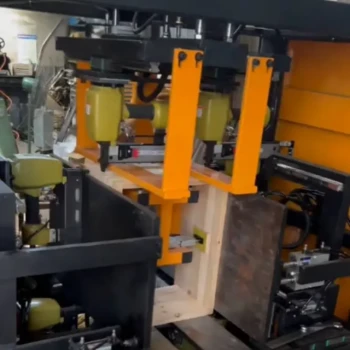
The multi-layer stacked box system drives higher honey production primarily by vertically expanding the colony's available habitat. By introducing empty wooden boxes to the existing hive structure, beekeepers provide the critical space needed for continued storage and population growth. This intervention directly counteracts the colony’s natural instinct to swarm, ensuring the workforce remains concentrated on honey accumulation rather than migration.
Core Takeaway Honey yield is strictly limited by the availability of storage space and the colony's energy expenditure. The multi-layer system solves both problems by modularly expanding the hive to prevent swarming and enabling the reuse of honeycomb, which redirects bee energy from wax production to honey collection.
The Mechanics of Volume Management
Suppressing the Swarm Impulse
The primary driver of increased yield is the prevention of swarming. When a colony runs out of physical space, its biological imperative is to divide and swarm, which drastically reduces the population of worker bees.
Continuous Accumulation
By inserting new boxes—referenced specifically as adding space beneath existing structures in some management styles—beekeepers create a "vacuum" for resources. This allows the colony to continue filling storage cells without interruption.
Selective Harvesting
The layered design allows for the removal of specific honeycomb layers that are full. This maximizes collection efficiency by harvesting only the ripe resources while leaving the active colony structure undisturbed.
The Energy Efficiency Equation
The High Cost of Wax Production
Bees consume a significant amount of energy to secrete wax and construct honeycombs. In a natural setting or single-stage harvest, this structure is often destroyed or lost, forcing the bees to rebuild.
Redirecting Metabolic Resources
The multi-layer system utilizes movable frames that can be extracted via centrifugal force, keeping the wax comb intact. Returning these empty, intact combs to the hive allows bees to bypass the construction phase.
Compounding Yields
Because the bees do not need to rebuild the comb, their preparation time for the next cycle is significantly shortened. They immediately redirect their metabolic energy toward foraging and nectar processing, substantially increasing the total annual yield.
Standardization and Scalability
Modular Growth
The utilization rate of the hive is linked to the bee population size. The stacked system allows the physical vessel to grow in tandem with the biological colony, adding "supers" (layers) as the population expands vertically.
Mechanized Efficiency
Standardized boxes and frames create a uniform environment that supports high-speed mechanical operations. This compatibility with extraction machinery reduces the time the hive is open and minimizes physical damage to the bee population during harvest.
Understanding the Trade-offs
Equipment Reliance
While highly efficient, this system relies heavily on the availability of standardized, interchangeable components (boxes and frames). Inconsistencies in equipment manufacturing can disrupt the "bee space," leading to burr comb that makes box separation difficult.
Management Intensity
The system requires active monitoring to determine the precise moment to add new layers. Adding space too early can make it difficult for bees to regulate the hive's internal temperature, while adding it too late risks triggering the swarm impulse you are trying to avoid.
Making the Right Choice for Your Goal
To maximize the benefits of a multi-layer system, align your operational approach with your specific production targets:
- If your primary focus is Maximum Volume: Prioritize the use of centrifugal extractors to preserve drawn comb, as limiting wax production is the single biggest factor in boosting honey volume.
- If your primary focus is Colony Health: Monitor vertical growth closely and add boxes only when the current layer is nearing capacity to ensure the bees can maintain optimal thermal regulation.
Ultimately, the multi-layer system transforms beekeeping from simple gathering into a managed production cycle by converting the bees' biological energy into honey rather than structural wax.
Summary Table:
| Factor | Multi-Layer System Impact | Benefit to Honey Production |
|---|---|---|
| Space Management | Vertically expands habitat & storage | Prevents swarming; keeps workforce concentrated. |
| Energy Expenditure | Reuses intact wax combs | Redirects metabolic energy from wax building to foraging. |
| Harvest Method | Selective removal of full layers | Enables continuous accumulation without colony disruption. |
| Scalability | Modular additions (supers) | Hive size grows in tandem with population expansion. |
| Efficiency | Standardized mechanical extraction | Reduces processing time and minimizes hive damage. |
Scale Your Honey Production with HONESTBEE Professional Equipment
Maximize your apiary's efficiency and output with the right tools. At HONESTBEE, we specialize in helping commercial apiaries and distributors scale their operations through high-quality, standardized beekeeping solutions.
Our comprehensive wholesale offering includes:
- Hive-Making & Honey-Filling Machines: Automate your production line for maximum consistency.
- Standardized Boxes & Frames: Precision-engineered hardware to maintain perfect bee space and prevent burr comb.
- Centrifugal Extractors: Preserve your drawn comb to redirect bee energy toward honey accumulation.
- Specialized Machinery & Consumables: A full spectrum of professional tools designed for the modern beekeeper.
Whether you are expanding your commercial colony or supplying the industry, our portfolio of beekeeping hardware and honey-themed cultural merchandise provides the competitive edge you need.
Ready to boost your yields? Contact us today to discuss your wholesale needs!
References
- David Pattinson. Pre-modern Beekeeping in China: A Short History. DOI: 10.3098/ah.2012.86.4.235
This article is also based on technical information from HonestBee Knowledge Base .
Related Products
People Also Ask
- How is the Bee Box machine adjusted for different box sizes? Maximize Your Woodworking Versatility and Precision
- How is the Bee Box machine operated? Optimize Your Commercial Hive Production with Scalable Staffing Solutions
- How was the Bee Box machine designed? Industrial Engineering for High-Volume Beekeeping Production
- What is the production capacity of the Bee Box machine? Boost Output up to 1,000 Boxes Daily
- What are the power requirements and control system for the Bee Box machine? Optimize Your Apiary Equipment Production