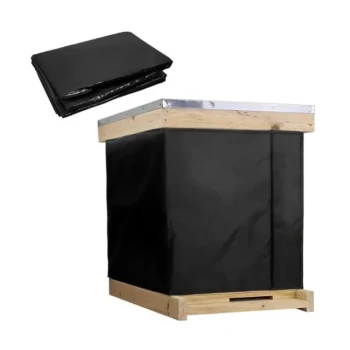
The use of an insulation pad is the single most critical factor for ensuring sensor precision in variable environments. When placed over a temperature sensor, the pad creates a barrier of thermal isolation. This prevents external variables—specifically wind and ambient temperature shifts—from distorting the reading, ensuring the sensor measures the heat generated by the bees rather than the weather outside.
By effectively filtering out environmental "noise," the insulation pad drastically improves the signal-to-noise ratio. This allows monitoring systems to capture the true metabolic state of the colony, which is a prerequisite for reliable swarming detection algorithms.
The Mechanics of Thermal Isolation
Blocking Environmental Interference
External weather conditions are the primary enemy of accurate internal hive monitoring.
Without protection, a sensor is exposed to rapid ambient temperature fluctuations and the cooling effects of wind.
An insulation pad acts as a physical shield, decoupling the sensor from these external erratic changes.
Focusing on Internal Heat Production
The objective of hive monitoring is to measure the specific thermal footprint of the bee colony.
By neutralizing external cold or heat, the pad forces the sensor to reflect the internal heat production of the hive.
This ensures the data collected represents the colony's biological activity, not the local weather report.
Enhancing Data Quality for Analysis
Improving Signal-to-Noise Ratio
In technical terms, the heat from the bees is the "signal," and the weather is the "noise."
When wind cools an uninsulated sensor, it creates data spikes that look like biological events but are actually environmental artifacts.
The insulation pad suppresses this noise, resulting in a cleaner, higher-fidelity data stream.
Optimizing Algorithm Performance
Modern hive monitors often use algorithms to automatically detect events like swarming.
These swarming recognition algorithms rely on precise temperature patterns to identify specific colony behaviors.
If the input data is corrupted by wind noise, the algorithm becomes unreliable; the insulation pad provides the stable baseline required for these calculations to function correctly.
Understanding the Risks of Unprotected Sensors
The Illusion of Volatility
A sensor without insulation will produce data that appears highly volatile.
You may mistakenly interpret a sharp drop in temperature as a hive issue, when it is simply a gust of wind hitting the sensor.
This leads to false positives and makes it nearly impossible to distinguish between a colony in distress and a stormy day.
Data Validity
Data collected without thermal isolation is often chemically "diluted" by the environment.
While it may give you a general idea of the temperature, it lacks the granular accuracy needed for scientific analysis or precise colony management.
Making the Right Choice for Your Goal
To maximize the utility of your hive monitoring setup, consider your specific objectives:
- If your primary focus is Colony Behavior Analysis: You must use an insulation pad to ensure the data reflects the bees' metabolic heat rather than external weather.
- If your primary focus is Swarm Detection: The insulation pad is non-negotiable, as it provides the high signal-to-noise ratio required for recognition algorithms to work.
Reliable insights begin with the physical integrity of your data collection method.
Summary Table:
| Feature | Impact on Data Accuracy | Importance Level |
|---|---|---|
| Thermal Isolation | Blocks wind and ambient temperature shifts from affecting the sensor. | Critical |
| Signal-to-Noise Ratio | Increases the clarity of biological heat signals by filtering external noise. | High |
| Algorithm Support | Provides a stable baseline for reliable swarming recognition alerts. | Essential |
| Data Granularity | Ensures readings reflect the true metabolic state of the bee colony. | Essential |
Elevate Your Beekeeping Operations with HONESTBEE
At HONESTBEE, we understand that precision is the foundation of successful commercial beekeeping. As a leading global provider for commercial apiaries and distributors, we supply more than just tools—we provide the technological edge you need. From specialized hive-making machinery and honey-filling systems to high-quality industrial consumables, our comprehensive wholesale offering ensures your operation runs at peak efficiency.
Ready to scale your business with professional-grade beekeeping equipment and hardware? Contact our expert team today to discuss how our tailored solutions can support your growth and maximize your colony productivity.
References
- Aleksejs Zacepins, Jurijs Meitalovs. Remote detection of the swarming of honey bee colonies by single-point temperature monitoring. DOI: 10.1016/j.biosystemseng.2016.05.012
This article is also based on technical information from HonestBee Knowledge Base .
Related Products
- Professional Insulated Winter Hive Wrap for Beekeeping
- Professional Insulated Plastic Bee Hives
- Australian Pine Wood Langstroth Screen Bottom Board for Wholesale
People Also Ask
- What are the steps to properly wrap a beehive for winter? Ensure Your Colony Survives the Cold
- When is the best time to wrap a beehive for winter? A Guide to Perfect Winterization Timing
- How do professional insulation wraps provide protection for bee colonies? Optimize Winter Survival & Energy Efficiency
- What are the technical benefits of using winter wraps for beehive insulation? Boost Colony Survival & Hive Health
- What are the benefits of using insulated covers for hives? Ensure Colony Survival and Health