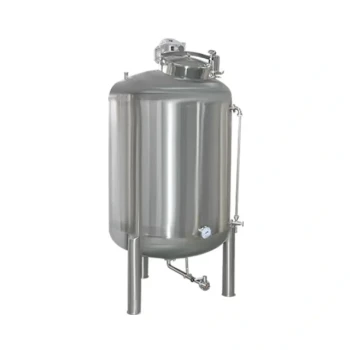
The use of food-grade stainless steel tanks is a definitive factor in elevating and sustaining honey’s market value. By acting as a robust barrier against moisture, acidity, and contaminants, these tanks ensure the final product retains the premium physical and biochemical traits required for high-end retail and export markets.
Core Insight: The value of honey is dictated by its purity and stability. Stainless steel tanks provide the necessary inert, airtight environment to prevent spoilage and heavy metal leaching, transforming raw harvest into a standardized, premium commodity suitable for global trade.
Preventing Devaluation Through Contamination Control
Resisting Acidic Corrosion
Honey is naturally acidic and corrosive. Storage in ordinary metal containers often leads to heavy metal contamination as the vessel degrades over time.
Food-grade stainless steel (specifically grades like AISI 304 or 316L) offers superior acid and corrosion resistance. This chemical inertness prevents the leaching of metals or plastic residues, ensuring the product remains pure and safe for consumption.
Blocking Moisture and Fermentation
Honey is highly hygroscopic, meaning it naturally absorbs moisture from the air. If moisture content rises too high, the honey will ferment and spoil, rendering it unsellable.
Stainless steel tanks provide superior airtight sealing capabilities. This isolates the honey from external humidity, preventing fermentation and maintaining the precise viscosity and crystallization pressure required for a shelf-stable product.
Enhancing Visual Quality and Consistency
Clarification via Static Sedimentation
Market value is heavily influenced by the visual clarity of the honey. Stainless steel tanks utilize a static sedimentation process driven by gravity.
Micro-bubbles and wax debris rise to the surface, while heavier impurities settle at the bottom. This natural separation results in a crystal-clear product without stripping away beneficial pollen or altering the honey's structure.
Preserving Biochemical Integrity
Premium markets, particularly export sectors, test for biochemical markers like diastase activity and color stability.
By isolating the honey from environmental fluctuations, stainless steel tanks ensure these delicate biochemical properties remain stable during long-term storage. This stability is often a prerequisite for meeting export-grade standards.
Operational Efficiency and Standardization
Enabling Precision Packaging
Market value is also derived from professional presentation and accurate volumes. These tanks often integrate with filtration and precision filling systems.
This integration simplifies the conversion from raw material to commercial product. It ensures accurate volumetric filling, which is essential for meeting strict commercial weights and measures regulations.
Facilitating Organic Certification
For producers targeting the high-value organic market, hygiene is non-negotiable. Stainless steel allows for Cleaning-In-Place (CIP) systems.
The high surface smoothness of these tanks prevents bacterial harborages and ensures total cleanliness. This capability is frequently a critical requirement for passing organic inspections and maintaining certification.
Understanding the Trade-offs
Initial Capital Investment
While stainless steel adds value to the end product, it represents a significant upfront capital cost compared to plastic drums or lower-grade metals.
Producers must weigh this initial expense against the long-term gains in product price and reduced spoilage rates.
Maintenance Rigor
The "food-grade" status of these tanks is only as good as the maintenance protocol.
To maintain market value, operators must adhere to strict cleaning schedules. Neglecting the CIP process can negate the benefits of the equipment, leading to the very contamination the tanks are designed to prevent.
Maximizing Value Based on Production Goals
To ensure your investment in storage infrastructure translates to higher market value, align your equipment choice with your specific market strategy:
- If your primary focus is Export and Organic Markets: Prioritize high-grade AISI 304 or 316L steel to ensure chemical inertia and compliance with organic certification audits.
- If your primary focus is Long-Term Storage: Focus on tanks with superior airtight sealing mechanisms to prevent moisture absorption and fermentation over extended periods.
- If your primary focus is Commercial Scaling: Select tanks with integrated sedimentation and filling systems to streamline the transition from bulk storage to retail packaging.
Ultimately, food-grade stainless steel is not merely a storage vessel; it is an investment in product integrity that directly justifies a premium price point.
Summary Table:
| Feature | Impact on Honey Quality | Market Value Contribution |
|---|---|---|
| Acid Resistance | Prevents heavy metal leaching & contamination | Ensures food safety & premium purity |
| Airtight Sealing | Blocks moisture absorption & fermentation | Extends shelf life & maintains viscosity |
| Static Sedimentation | Naturally clarifies honey without additives | Enhances visual appeal for retail |
| CIP Compatibility | Facilitates rigorous hygiene & sterilization | Essential for Organic & Export certification |
Maximize Your Honey’s Value with HONESTBEE
Elevate your apiary's output to premium export standards. HONESTBEE provides commercial apiaries and distributors with high-grade food-grade stainless steel storage solutions, honey-filling machinery, and comprehensive beekeeping equipment. Whether you are scaling up production or seeking organic certification, our industrial-grade tools ensure your honey retains its purity and market-leading price point.
Ready to upgrade your facility? Contact our specialists today to find the perfect equipment for your business!
References
- Suraj P. Sharma. Factors affecting adoption of beekeeping and associated technologies in Kamrup (rural) district, Assam state, India. DOI: 10.15406/bij.2018.02.00069
This article is also based on technical information from HonestBee Knowledge Base .
Related Products
- Stainless Steel Honey Storage Tank with Lid for Honey
- Stainless Steel Honey Storage and Settling Tank with Double Strainer
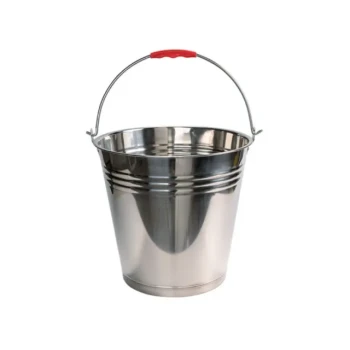
- Premium Stainless Steel Honey Tank Bucket Pail with Reinforced Handle and Polished Finish
- Stainless Steel Honey Tank Stand for Honey Storage
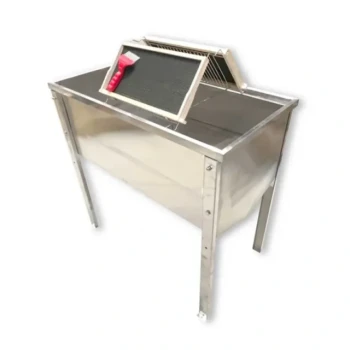
- Heavy Duty Stainless Steel Honey Processing Machine Decrystallizing Tank
People Also Ask
- What economic role do honey storage tanks play? Boost Your Revenue Through Strategic Inventory Management
- What roles do industrial honey storage tanks and filtration meshes play in processing? Ensure Purity & Consistency
- What is the purpose of a honey storage tank? Streamline Your Honey Processing for Quality & Efficiency
- What are honey storage tanks used for? Essential Features for Quality Preservation and Profit
- How do large honey storage tanks and gravity fall filling systems improve honey packaging efficiency and safety?