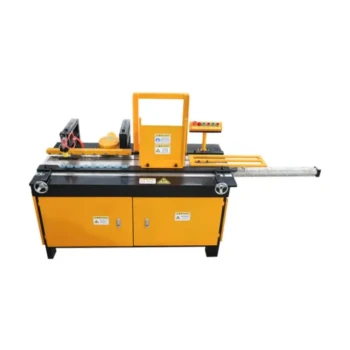
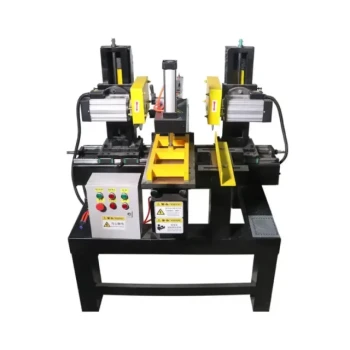
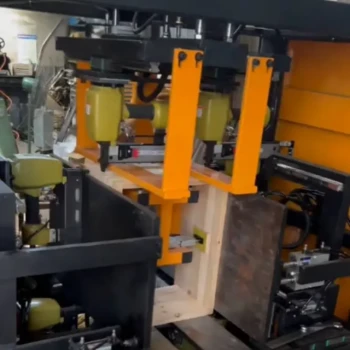
Industrial-grade hive-making machines revolutionize apiary efficiency by guaranteeing precise dimensional standards. These machines ensure the exact maintenance of "Bee Space," preventing bees from creating erratic wax structures or applying excess propolis, which otherwise cements frames in place and halts operations.
The Core Insight Success in large-scale beekeeping is not merely about the number of hives, but the uniformity of the hardware. Industrial precision transforms the hive from a simple wooden box into a standardized engineering unit, enabling mechanized harvesting, rapid inspections, and interchangeable component management.
The Critical Role of Precision in "Bee Space"
Maintaining Biological Standards
The primary function of an industrial hive-making machine is not just carpentry; it is the strict enforcement of "Bee Space" (the specific gap bees leave between combs).
preventing Structural Chaos
When dimensions vary even slightly, bees instinctually fill the gaps with erratic wax combs (burr comb) or stick frames together with propolis.
Reducing Inspection Friction
Accurate spacing ensures frames remain movable. This allows beekeepers to remove frames for inspection or harvesting without fighting stuck components, a necessity when managing hundreds of colonies.
Operational Standardization and Scalability
Component Interchangeability
In a large apiary, you cannot afford to have a specific frame that only fits a specific box. Industrial machines produce standardized hardware where every part is interchangeable.
Facilitating Mechanization
Standardized dimensions are the prerequisite for advanced automation. You cannot utilize mechanized honey harvesting lines or automated uncappers if the frames vary in size or shape.
Streamlining Disease Management
Uniform equipment supports Good Beekeeping Practices (GBPs). Standardized boxes and frames make it easier to isolate, treat, or swap out components during disease outbreaks, protecting the broader apiary.
Enhancing Colony Health and Productivity
Environmental Stability
Machine-cut joints provide tighter seals than manual construction. This improved structural integrity helps regulate internal temperature and humidity, creating a controlled living environment for the colony.
Energy Efficiency for Bees
When hives are well-insulated and draft-free, bees expend less energy maintaining the hive's internal climate.
Redirecting Energy to Production
Because the bees are not wasting energy on thermoregulation or fixing structural gaps, they can redirect their caloric energy toward nectar collection and pollination, directly increasing yields.
Understanding the Trade-offs
Initial Capital Investment
Implementing industrial-grade machinery or purchasing high-precision hives requires a higher upfront cost compared to basic manual construction.
The Return on Investment (ROI)
While the initial expense is higher, the reduction in labor costs and the increase in honey production typically result in a capital recovery period of approximately two years.
Making the Right Choice for Your Goal
To maximize the efficiency of your apiary, align your equipment strategy with your specific operational needs:
- If your primary focus is Speed and Scalability: Prioritize machines that guarantee 100% component interchangeability to enable automated honey harvesting lines.
- If your primary focus is Colony Health: Select machinery capable of producing high-precision joints to maximize insulation and minimize the bees' energy expenditure on climate control.
Standardization is the bridge that allows an apiary to cross from a labor-intensive craft to a streamlined, efficient enterprise.
Summary Table:
| Key Benefit | Impact on Apiary Management | Operational Outcome |
|---|---|---|
| Dimensional Precision | Maintains exact 'Bee Space' | Prevents burr comb and stuck frames |
| Standardization | Universal component interchangeability | Facilitates automated harvesting & cleaning |
| Structural Integrity | Tighter joints and better insulation | Enhances colony health and energy efficiency |
| Scalability | Transition from manual labor to mechanization | Reduces labor costs with 2-year ROI potential |
Scale Your Beekeeping Business with HONESTBEE Precision
Transitioning from a labor-intensive craft to a high-yield enterprise requires more than just more hives—it requires the industrial precision of HONESTBEE. As a dedicated partner to commercial apiaries and global distributors, we provide the comprehensive infrastructure needed for modern success.
Why choose HONESTBEE?
- Advanced Machinery: From high-precision hive-making machines to high-speed honey-filling lines.
- Full-Spectrum Supply: We offer a complete range of beekeeping tools, specialized hardware, and essential industry consumables.
- Commercial Expertise: Our wholesale offerings are designed to maximize your ROI by ensuring every frame and box meets rigorous engineering standards.
Ready to modernize your operations and increase your apiary's productivity? Contact HONESTBEE today to discuss our wholesale equipment solutions.
References
- Ajabush Dafar. Review of Economical and Ecological Importance of Bee and Bee Products in Ethiopia. DOI: 10.22259/2637-5354.0202003
This article is also based on technical information from HonestBee Knowledge Base .
Related Products
- High-Efficiency Pneumatic Bee Hive Making Machine for Rapid Box Assembly
- Beehive Handle and Frame Rest Cutting Machine: Your Specialized Hive Machine
- Beehive Machine Double End Saw for Precision Hive Component Manufacturing
- Mini Desktop Bee Hive Frame Forming Making Machine
- Automatic High-Speed Bee Hive Box Stapling Machine
People Also Ask
- How does the introduction of professional beehive-making machinery benefit sustainable beekeeping? Scale Your Apiary
- Why is specialized beehive-making machinery critical for low-defense breeding? Enhance Selection with Precision Tools
- How does the introduction of specialized beehive making machinery contribute to increasing the scale of regional beekeeping industries?
- What is the importance of specialized beehive making machinery in a circular bio-economy? Build Local Sustainability
- Why is specialized beehive-making machinery essential? Scale Your Apiary with Precision Industrial Standards