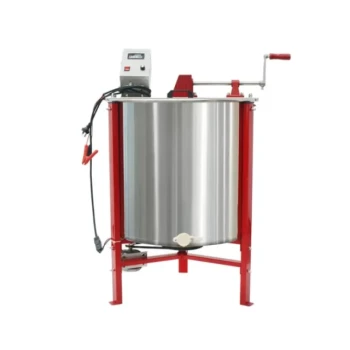
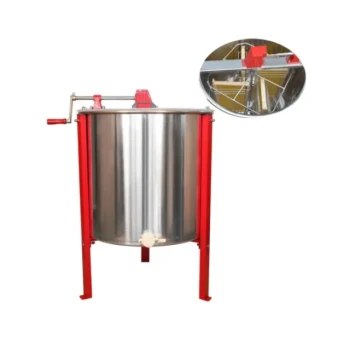
Eliminating the source of contamination is the primary mechanism. Upgrading to food-grade stainless steel reduces lead exposure by physically removing older machinery that relies on lead-based solder or lead-alloy coatings. By replacing these reactive materials with inert stainless steel, you effectively block the migration of lead elements into the honey during the critical extraction and storage phases.
Core Takeaway: Upgrading equipment is a definitive safety control, not just a modernization effort. By swapping out legacy components for food-grade stainless steel, producers eliminate the physical source of lead migration within the facility, safeguarding the product throughout the supply chain.
The Mechanics of Contamination
Identifying the Hazard
Legacy honey processing equipment often poses a hidden risk due to its construction materials. Older machines frequently utilized lead-based solder to join metal components or relied on lead-alloy coatings for tank linings.
The Migration Pathway
When honey flows through extractors or sits in storage tanks containing these materials, contact occurs. Over time and under specific chemical conditions, lead elements can leach from the solder or coatings.
This process allows heavy metals to migrate directly into the food product. The upgrade to modern materials severs this pathway entirely.
Why Stainless Steel is the Standard
Material Inertness
Food-grade stainless steel is chosen for its chemical stability. Unlike older alloys, it does not require lead solder for structural integrity.
This eliminates the possibility of heavy metal leaching. The material effectively blocks the migration of lead elements because the source of the lead is no longer present in the processing line.
A Critical Process Measure
The switch to stainless steel acts as a "critical process measure" for food safety control. It moves safety from a reactive stage (testing for lead) to a proactive stage (prevention).
By securing the processing environment, you ensure that the honey remains as pure as it was when it entered the facility. This creates a safer product across the entire supply chain.
Understanding the Scope of Protection
Processing vs. Environmental Factors
While upgrading equipment is vital, it is important to understand its limitations. This measure specifically prevents secondary contamination introduced during processing.
The Source Limitation
Stainless steel prevents the machinery from adding lead to the honey. However, it cannot remove lead that may already be present due to environmental pollution in the bees' foraging area.
It is a containment strategy for the facility, not a filtration method for the raw material.
Strategies for Implementation
Prioritizing Your Upgrade
If your primary focus is immediate risk mitigation:
- Identify and replace storage tanks or extractors with visible soldering or unknown linings, as these are the highest-risk points for long-term contact.
If your primary focus is comprehensive supply chain safety:
- Standardize all honey-contact surfaces to food-grade stainless steel to establish a verifiable baseline for purity and compliance.
True process integrity begins with the materials you trust to hold your product.
Summary Table:
| Feature | Legacy Equipment Risk | Stainless Steel Advantage | Impact on Honey Purity |
|---|---|---|---|
| Material Joinery | Uses lead-based solder | Seamless welding/Inert joints | Eliminates heavy metal leaching |
| Surface Coating | Lead-alloy linings | High-grade inert surface | No chemical migration during storage |
| Safety Control | Reactive (testing for lead) | Proactive (prevention at source) | Establishes a verifiable safety baseline |
| Chemical Stability | Reactive with acidic honey | Non-reactive and stable | Preserves natural honey composition |
Elevate Your Honey Production Standards with HONESTBEE
At HONESTBEE, we specialize in empowering commercial apiaries and distributors with the highest-grade beekeeping infrastructure. Upgrading to food-grade stainless steel is more than an equipment change—it's a commitment to consumer trust and global compliance.
From advanced honey-filling machines and industrial extractors to a complete range of beekeeping tools and consumables, our portfolio is designed to eliminate contamination risks and maximize operational efficiency. Whether you are scaling a commercial operation or supplying the industry, we provide the hardware and expertise needed to safeguard your supply chain.
Ready to modernize your facility with lead-free solutions?
Contact HONESTBEE Today for a Wholesale Consultation
References
- Jérémie Théolier, Samuel Benrejeb Godefroy. Lead exposure from honey: meta-analysis and risk assessment for the Arab region. DOI: 10.1080/19440049.2024.2306647
This article is also based on technical information from HonestBee Knowledge Base .
Related Products
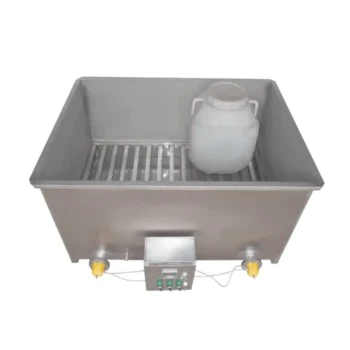
- Heavy Duty Stainless Steel Honey Processing Machine Decrystallizing Tank
- Professional Stainless Steel Honey Filtering Machine with Water Bath Heating for Beekeeping
- Modern Stainless Steel Honey Dipper Stirrer
- 10L Stainless Steel Electric Honey Press Machine
- Stainless Steel Manual Honey Press with Guard for Pressing Honey and Wax
People Also Ask
- What are the features of the processing tanks offered? Engineered for Purity and Efficiency
- What types of stainless steel processing tanks are used for honey? Essential Equipment for Quality Honey Production
- What design options are available for honey processing tanks? Optimize Efficiency with Custom Geometries
- What types of stainless steel are used for honey processing? Ensure Food Safety with 304 & 316 Grade Equipment
- Why is industrial-grade stainless steel processing equipment required for honey harvesting? Ensure Purity & Compliance