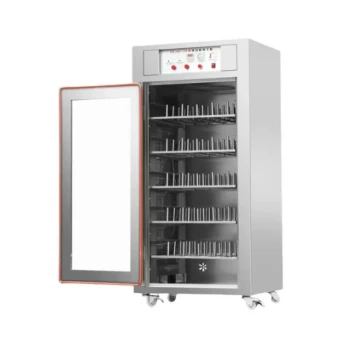
In propolis extraction, a constant temperature drying oven functions as a precision tool for controlled solvent removal. It creates a stable, low-temperature environment—typically maintained at 45°C—to gently evaporate ethanol from the crude extract. This process concentrates the dilute liquid into a viscous paste or powder while strictly limiting thermal stress.
The primary value of this equipment is thermal protection. By maintaining a strict low-temperature threshold, the oven concentrates the extract without denaturing the heat-sensitive antibacterial components that give propolis its therapeutic value.
The Mechanism of Controlled Concentration
Gentle Solvent Evaporation
The extraction process uses solvents, commonly ethanol, to pull bioactive compounds from raw propolis. To create a usable product, this solvent must be removed. The constant temperature oven facilitates this by maintaining a steady thermal environment that encourages evaporation without boiling.
Preserving Bioactivity
Propolis contains complex antibacterial components that are highly heat-sensitive. Subjecting these compounds to high temperatures or rapid boiling would degrade their molecular structure. The oven's ability to hold a steady 45°C ensures the solvent is removed while the medicinal integrity of the propolis remains intact.
Ensuring Scientific Objectivity
From Volume to Mass
Beyond simple concentration for production, the oven is critical for analytical standardization. Researchers use the oven to dry a known volume of extract until it reaches a constant weight.
Calculating Exact Concentration
By weighing the solid matter remaining after the oven cycle, researchers can convert vague volume percentages into precise mass concentrations (mg/ml). This step is fundamental for ensuring scientific objectivity, allowing for accurate comparisons of antimicrobial efficacy across propolis samples from different regions.
Operational Trade-offs and Considerations
The Efficiency vs. Quality Balance
Using a low-temperature drying oven is inherently slower than high-heat methods. You are trading speed for potency. While increasing the temperature would speed up evaporation, it introduces a high risk of degrading the active ingredients you are trying to isolate.
Dependency on Precision
For analytical purposes, the oven is only one part of the equation. Achieving accurate mass concentration data requires pairing the drying process with a high-precision analytical balance. Deviations in either temperature stability or weighing accuracy will compromise the data.
Optimizing Your Extraction Strategy
To utilize a constant temperature drying oven effectively, tailor your approach to your specific end goal:
- If your primary focus is Potency Preservation: Maintain the temperature strictly at or below 45°C to protect heat-sensitive antibacterial components from degradation.
- If your primary focus is Scientific Analysis: Use the oven to dry samples to a "constant weight" to derive accurate mass-per-volume (mg/ml) metrics for objective comparison.
Precision in temperature control is the specific factor that separates a degraded byproduct from a potent, scientifically quantifiable extract.
Summary Table:
| Key Feature | Role in Propolis Extraction | Benefit to Final Product |
|---|---|---|
| Temperature Stability | Maintains a strict 45°C environment | Prevents denaturation of antibacterial components |
| Controlled Evaporation | Gentle removal of ethanol/solvents | Concentrates extract without thermal stress |
| Constant Weight Drying | Facilitates exact mass measurement | Enables precise mg/ml concentration analysis |
| Low-Heat Mechanism | Replaces high-heat boiling methods | Ensures maximum potency and bioactivity preservation |
Elevate Your Propolis Production with HONESTBEE
At HONESTBEE, we understand that precision is the foundation of high-potency propolis extracts. As a premier partner for commercial apiaries and distributors, we provide more than just equipment; we provide the tools for scientific excellence. Our comprehensive wholesale portfolio includes:
- Specialized Machinery: From honey-filling and hive-making machines to precision processing equipment.
- Full-Spectrum Supplies: High-quality beekeeping tools, machinery, and essential industry consumables.
- Expert Solutions: Tailored hardware designed to maintain the integrity of your hive products.
Whether you are scaling up a commercial extraction line or sourcing reliable tools for a distribution network, HONESTBEE delivers the quality you need to stay competitive. Contact us today to explore our wholesale offerings and discover how our expertise can optimize your beekeeping operations.
References
- Adnan H. Al-Hamadani. The use of propolis and black cumin in treatment of some wounds and burn infections. DOI: 10.28922/qmj.2010.6.9.210-222
This article is also based on technical information from HonestBee Knowledge Base .
Related Products
- Professional Thermostatic Conical Honey Melter
- Economy Small Scale Honey Dryer Dehumidifier Thickening Machine
- Solar Beeswax Melter Easy Solar Wax Melter for Beeswax
- HONESTBEE Professional Cabinet Bottle Dryer
- HONESTBEE Commercial Upright Honey Melter
People Also Ask
- What is melter honey used for? A Low-Cost Ingredient for Bakers and Brewers
- How does a honey melter address the issue of crystallized honey in storage? Restore Flow and Quality Efficiently
- How do you melt a bucket of honey? Safely Reliquefy Crystallized Honey Without Damage
- When is a honey melter necessary? Optimize Your Facility's Workflow for Crystallized Honey
- What factors should be considered when selecting a heater for honey containers? Optimize Your Warming Efficiency