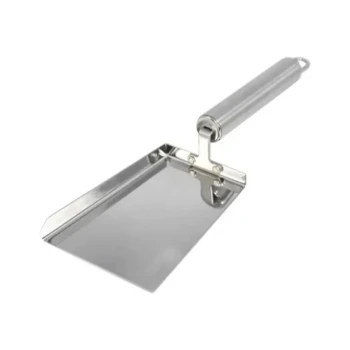
A Pollen Collector evaluates pollination value by physically intercepting foraging bees at the hive entrance to strip pollen pellets from their legs. Researchers weigh and analyze these gathered samples to calculate the average pollen load per bee, which provides a quantifiable metric of the colony's interaction with specific crops.
By capturing the pollen bees bring back to the hive, the collector transforms anecdotal observation into hard data. It allows for the precise calculation of pollen loads and resource sourcing, serving as the definitive method for determining a bee species' efficiency as a cross-pollination vector.
The Mechanics of Data Collection
To understand the pollination value of a colony, one must first quantify the resources they are gathering. The pollen collector automates this process through a simple mechanical intervention.
Interception at the Source
The device is installed directly at the entrance of the beehive. This ensures that every returning forager must interact with the mechanism before entering the colony.
Mechanical Separation
The core component of the collector is a perforated steel plate, typically featuring apertures measuring 5.5mm.
As foraging bees navigate through these specific metal holes, the pollen pellets attached to their hind legs are mechanically dislodged. These pellets fall into a collection tray, separating the biological data (pollen) from the carrier (the bee).
Converting Samples into Metrics
Collecting the material is only the first step. The true value lies in how this biological data is analyzed to assess the "pollination value" of the bee.
Calculating Average Pollen Load
By weighing the accumulated pellets and dividing by the number of foragers, researchers can calculate the average pollen load carried by a single bee.
This weight serves as a core parameter. A higher load suggests a more efficient carrier, directly reflecting the species' potential contribution to the cross-pollination of crops.
Identifying Resource Origins
Quantity alone does not equal quality. Researchers perform botanical identification on the collected pellets.
This analysis reveals whether the bees are gathering resources from the target crop or getting distracted by surrounding vegetation. This quantitative proportion is essential for determining if the bees are actually visiting the plants intended for pollination.
Understanding the Trade-offs
While pollen collectors are powerful tools, relying on them requires an understanding of their limitations regarding data interpretation.
Potential vs. Actual Pollination
The collector measures the potential for pollination, not the act itself. It quantifies what the bee brings home, which implies what it visited.
However, it does not measure how much pollen was deposited on the flower stigmas during the foraging trip. It is a proxy measurement—highly correlated with pollination success, but distinct from fertilization rates.
Specificity of Design
The mechanism relies on precise aperture sizing (e.g., 5.5mm). This is calibrated for specific bee sizes. If the sizing is not appropriate for the specific subspecies or caste of bee being evaluated, the mechanical removal may be inefficient, leading to skewed data regarding the colony's actual foraging output.
Making the Right Choice for Your Goal
When designing a study or evaluating hive performance, how you utilize the pollen collector depends on your specific objective.
- If your primary focus is species efficiency: Prioritize the weight analysis to determine which bee species carries the heaviest average payload, indicating a stronger vector for pollen transfer.
- If your primary focus is crop fidelity: Prioritize the botanical identification of the pellets to ensure the colony is foraging on your target crop rather than competing local flora.
The pollen collector bridges the gap between bee activity and crop yield, turning the complex behavior of foraging into measurable, actionable science.
Summary Table:
| Metric Evaluated | Method of Measurement | Insight Provided |
|---|---|---|
| Pollen Load Weight | Mechanical stripping via 5.5mm aperture | Determines the average carrying capacity & vector efficiency of the species. |
| Botanical Origin | Microscopic analysis of collected pellets | Verifies if bees are visiting target crops or competing local flora. |
| Foraging Intensity | Total volume collected over a specific period | Indicates the colony's overall interaction level with the surrounding environment. |
| Potential Yield | Correlation between load weight and fertilization | Provides a proxy measurement for the crop's cross-pollination success. |
Maximize Your Pollination Data with HONESTBEE
At HONESTBEE, we understand that for commercial apiaries and distributors, precision is the key to profitability. Whether you are evaluating bee species efficiency or managing large-scale crop pollination, our comprehensive wholesale range provides the tools you need.
We supply everything from specialized hive hardware and pollen collection tools to advanced honey-filling machinery and essential consumables. Partner with us to access professional-grade equipment designed to turn biological activity into measurable results.
Ready to scale your beekeeping operation? Contact HONESTBEE today for wholesale solutions
References
- Madhusudan Man Singh. Foraging Behaviour of the Himalayan Honeybee (<i>Apis cerana</i> F.) on Flowers of <i>Fagopyrum esculentum</i> M. and its Impact on Grain Quality and Yield. DOI: 10.3126/eco.v15i0.1940
This article is also based on technical information from HonestBee Knowledge Base .
Related Products
- Plastic Bee Pollen Trap Strips Comb Catcher Collector
- 30 cm Plastic Entrance Hole Bee Pollen Trap and Collector
- Removable Plastic Pollen Trap With Ventilated Tray for Bees Pollen Collector
- Heavy-Duty Ergonomic Grip Galvanized Pollen Shovel
- Stainless Steel Pollen Shovel with Wooden Handle
People Also Ask
- For what reasons do beekeepers collect bee pollen? Boost Hive Health and Unlock New Revenue Streams
- What are the design principles and advantages of pollen traps in the collection of bee pollen? Boost Your Apiary Yield
- What are the ideal weather conditions for installing a bee pollen trap? Ensure Colony Safety with Expert Timing
- Why is frequent harvesting of bee pollen from traps necessary for quality control? Ensure Freshness and Prevent Mold.
- What is the primary function of bee pollen traps? Optimize Your Pollen Harvest with Advanced Extraction Efficiency