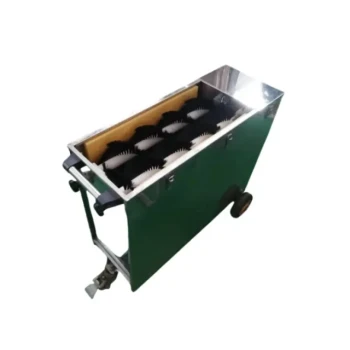
In arid and semi-arid beekeeping environments, a sprayer is not merely a convenience tool but a critical instrument for life support. It is utilized primarily to regulate the hive's internal microclimate by dispersing a fine mist that increases humidity and provides emergency cooling, while simultaneously serving as a mechanism to apply sugar water for induced feeding.
Beekeepers in dry regions must view the sprayer as a primary defense against environmental stress. By artificially maintaining humidity and stimulating feeding, you prevent the two most common causes of colony collapse in arid zones: larval dehydration and starvation.
Environmental Regulation
Preventing Larval Dehydration
In dry climates, the ambient humidity often drops below the threshold required for healthy brood development. Larvae are soft-bodied and extremely susceptible to drying out.
A sprayer allows the beekeeper to introduce a fine mist directly into the hive. This artificial moisture prevents the larvae from dying due to dehydration, bridging the gap between the arid external environment and the moist needs of the nursery.
Emergency Cooling Measures
During periods of extreme heat, the internal temperature of a hive can rise to dangerous levels. This stresses the adult bees and threatens the viability of the brood.
The sprayer functions as an emergency cooling system. As the dispersed water mist evaporates, it absorbs heat, lowering the temperature within the hive and preventing heat-related mortality.
Nutritional Management
Inducing Feeding Behavior
Arid environments often suffer from a scarcity of natural nectar sources. When resources are low, colony activity can stagnate.
Sprayers are effectively used to apply sugar water directly to the colony. This application simulates a nectar flow, inducing the bees to feed and maintaining the colony's energy levels and health during harsh climatic conditions.
Operational Considerations and Trade-offs
Managing Moisture Balance
While adding moisture is necessary, there is a risk of over-saturation. The sprayer must be capable of delivering a controlled, fine mist.
If the water is applied too heavily, it can pool at the bottom of the hive. This creates an environment conducive to mold or bacteria, potentially trading one health risk for another.
Timing and Application
The utilization of a sprayer must be responsive to immediate conditions. It is a tool for mitigation, not routine maintenance.
Overuse during cooler periods of the day can chill the brood. The application is most effective when synchronized with peak temperature spikes or clear signs of dehydration.
Optimizing Hive Management in Dry Zones
To maximize colony survival rates, align your sprayer usage with your immediate objectives:
- If your primary focus is Brood Viability: Prioritize the application of fine water mist during the hottest hours to maintain humidity and prevent larval desiccation.
- If your primary focus is Colony Energy: Utilize the sprayer to apply sugar water, stimulating feeding behavior when natural forage is unavailable.
Mastering the use of the sprayer allows you to decouple the survival of your bees from the harshness of their environment.
Summary Table:
| Application Type | Primary Purpose | Key Benefit in Arid Zones |
|---|---|---|
| Water Mist | Humidity Regulation | Prevents larval dehydration and brood desiccation. |
| Evaporative Cooling | Temperature Control | Reduces internal hive heat through emergency misting. |
| Sugar Water Spray | Induced Feeding | Simulates nectar flow to maintain energy during forage scarcity. |
| Controlled Delivery | Moisture Balance | Avoids mold growth by providing fine, uniform misting. |
Elevate Your Apiary's Resilience with HONESTBEE
In harsh arid climates, the right equipment is the difference between a thriving colony and a collapse. HONESTBEE specializes in supporting commercial apiaries and distributors with a comprehensive range of professional-grade beekeeping tools, machinery, and essential consumables.
From precision sprayers for microclimate control to advanced honey-filling machines and specialized hive-making hardware, we provide the industrial-strength solutions your business needs to scale. Partner with us to access wholesale excellence and industry-leading expertise.
Ready to optimize your beekeeping operations? Contact our specialist team today to discuss our full spectrum of equipment and consumables.
References
- Gidey Yirga, Mekonen Teferi. Participatory Technology and Constraints Assessment to Improve the Livelihood of Beekeepers in Tigray Region, northern Ethiopia. DOI: 10.4314/mejs.v2i1.49654
This article is also based on technical information from HonestBee Knowledge Base .
Related Products
- Heavy Duty Manual Bee Smoker Blower for Beekeeping
- Stainless Steel Honey Bee Smoker Hive and Honeycomb Smoker for Beekeeping
- Professional Bee Smoker with Elongated Spout and Durable Bellows for Beekeeping
- Heavy-Duty Bee Smoker with Durable Plastic Bellows for Beekeeping
- Miniature Stainless Steel Bee Smoker for Beekeeping
People Also Ask
- What are bee smokers made out of? Choose the Right Material for Your Apiary
- What are the advantages of a manual bee smoker? Enhance Hive Safety with Controlled Cool Smoke Technology
- What is the primary function of a manual bee smoker? Master Hive Control for Safe Inspections
- What is the proper technique for applying smoke to a beehive? Master Calm and Effective Hive Management
- What is the purpose of using a bee smoker for Small Hive Beetle inspections? Master Chemical Control & Hive Safety