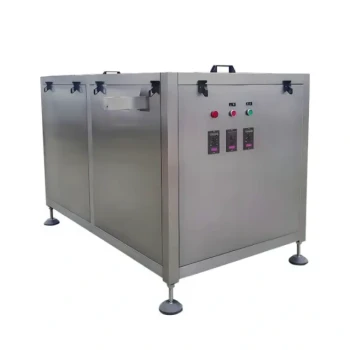
High-magnification optical detection equipment is utilized to conduct microscopic inspections of the reproductive status of Varroa mites remaining within honey bee brood cells. By providing a detailed view of these residual mites, technicians can definitively determine if the parasites have successfully produced offspring. This precise observation is the key to distinguishing between a colony's physical cleaning behavior and its physiological ability to suppress mite reproduction.
The core value of this technology lies in its ability to separate behavioral hygiene from reproductive suppression. It ensures that VSH (Varroa Sensitive Hygiene) ratings are based on a comprehensive analysis of both cell removal and mite infertility, rather than on removal rates alone.
The Role of Optics in VSH Evaluation
Assessing Mite Reproductive Status
The primary application of high-magnification equipment is the detailed observation of mites that have survived the colony's hygienic behaviors.
Technicians examine the interior of brood cells to locate these residual mites.
The specific goal is to identify the presence or absence of offspring, confirming whether the mite is reproductively active or infertile.
Distinguishing Resistance Mechanisms
VSH performance is a complex trait composed of two distinct factors: the physical removal of infested cells and a high infertility rate among the mites that remain.
Without optical magnification, it is difficult to separate these two mechanisms.
High-magnification tools allow evaluators to verify if a colony is resistant because it is actively cleaning out pests, or because it is physiologically preventing the pests from breeding.
Achieving a Comprehensive Evaluation
Reliable VSH evaluation requires more than just counting empty cells.
By verifying the reproductive failure of remaining mites, the equipment provides a complete picture of resistance levels.
This leads to a "refined evaluation," ensuring that breeding decisions are based on confirmed biological data rather than assumptions.
Understanding the Operational Trade-offs
Necessity of Skilled Observation
The use of high-magnification equipment implies a reliance on manual, detailed inspection by technicians.
This process is inherently more labor-intensive than simple visual inspections of hive bottom boards or general population estimates.
It requires a deliberate focus on individual brood cells rather than colony-wide metrics.
Focus on Residual Populations
This method specifically targets residual mites—those that were not removed by the bees.
If a colony eliminates 100% of infested cells, the utility of examining residual mite fertility becomes moot.
Therefore, this equipment is most valuable when evaluating colonies that show a mix of hygienic traits, where understanding the status of the remaining mite population is critical for genetic selection.
Optimizing Your VSH Assessment Strategy
To effectively leverage high-magnification optical detection, you must align the tool with your specific evaluation goals.
- If your primary focus is behavioral hygiene: Prioritize the observation of physical removal rates of infested pupae, as this indicates the colony's cleaning ability.
- If your primary focus is physiological resistance: Use high-magnification equipment to rigorously inspect residual mites, ensuring that the colony is actively suppressing mite reproduction.
True VSH performance is defined not just by the removal of threats, but by the sterilization of the threats that remain.
Summary Table:
| Evaluation Aspect | Role of Optical Detection | Impact on VSH Assessment |
|---|---|---|
| Mite Reproduction | Inspects offspring presence in residual mites | Identifies physiological infertility vs. health |
| Behavioral Hygiene | Verifies success of cell cleaning | Confirms physical removal efficiency |
| Mechanism Clarity | Separates removal rates from sterilization | Ensures breeding based on precise genetic traits |
| Data Accuracy | Provides microscopic proof of mite status | Eliminates guesswork in resistance ratings |
Elevate Your Commercial Apiary with HONESTBEE Precision Tools
To achieve true Varroa Sensitive Hygiene (VSH) performance, professional beekeepers and distributors need more than basic supplies—they require advanced solutions. HONESTBEE is dedicated to supporting the industry with a comprehensive wholesale range, from high-precision beekeeping tools to specialized hive-making and honey-filling machinery.
Whether you are scaling a commercial breeding program or supplying local markets with essential consumables and honey-themed cultural merchandise, we provide the hardware and expertise to drive your success.
Ready to optimize your colony health and production? Contact us today to explore our full equipment catalog and see how our tailored wholesale offerings can empower your apiary's future.
References
- Robert G. Danka, José D. Villa. Expression of Varroa Sensitive Hygiene (VSH) in Commercial VSH Honey Bees (Hymenoptera: Apidae). DOI: 10.1603/ec10401
This article is also based on technical information from HonestBee Knowledge Base .
Related Products
- Fully Automatic High Speed Centrifugal Bottle Unscrambler
- HONESTBEE Professional Telescopic Pole Bee Swarm Catcher
- Precision Honey Refractometer Instrument for Quality Assessment
People Also Ask
- What is the technical purpose of using a high-speed centrifuge in honey analysis? Ensure Purity and Quality Standards
- What role does a high-speed centrifuge play in the preliminary processing of raw honey? Enhancing Purity and Clarity
- Why are 15ml centrifuge tubes essential for honey sampling? Ensure Sample Integrity and Analytical Accuracy
- How does a rotational viscometer contribute to the quality assessment of honey? Ensure Perfect Texture and Flow
- What are the advantages of using 15 mL centrifuge tubes for bee pollen? Enhance Sample Integrity and Chemical Resistance