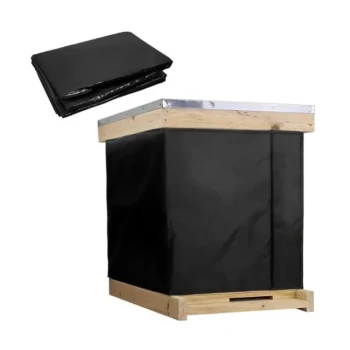
In severely cold climates, proactive insulation is not optional—it is a survival necessity.
To adapt your strategy for these conditions, you must focus primarily on trapping heat within the structure. By utilizing appropriate insulation materials, you create a critical buffer against icy winds and cold air, ensuring the colony retains the internal warmth required to survive the winter and thrive in the spring.
The core objective of insulation in severe cold is energy conservation. By creating a warm buffer that traps internal heat and blocks freezing winds, you preserve the colony's energy reserves, ensuring they possess the vitality needed for a successful spring launch.
The Mechanics of Heat Retention
Creating a Thermal Buffer
In extreme environments, the hive requires a shield against the elements. Insulation materials must act as a warm buffer that separates the colony from the external environment.
This barrier is essential for deflecting icy winds and preventing cold air from penetrating the hive walls. Without this buffer, the internal temperature fluctuates dangerously, stressing the colony.
Trapping Internal Heat
The fundamental goal of your insulation strategy is retaining internal heat. Bees generate warmth, but in severe cold, this heat dissipates rapidly without intervention.
Effective insulation minimizes thermal loss. It ensures that the energy the bees expend to generate warmth actually stays within the hive, rather than radiating out into the freezing air.
The Impact on Energy Reserves
Ensuring Winter Survival
The most immediate impact of insulation is basic survival. In severely cold weather, the ambient temperature can easily exceed a colony's ability to compensate.
By trapping heat, insulation reduces the physiological load on the bees. This allows the colony to survive winter months that would otherwise be fatal due to thermal stress.
Optimizing Spring Performance
Insulation is not just about surviving the winter; it is about preparing for the next season. A well-insulated hive allows the colony to optimally utilize its energy reserves.
When bees spend less energy fighting the cold, they preserve their metabolic resources. This ensures that when spring begins, the colony is vigorous and ready to expand, rather than exhausted and depleted.
Critical Considerations
The Necessity of Appropriate Materials
Success depends on the specific choice of insulation. The reference emphasizes the use of "appropriate insulation materials."
Not all coverings provide the necessary thermal resistance. You must select materials specifically designed to act as a barrier against wind and cold transfer to achieve the desired heat retention.
The Risk of Energy Depletion
If insulation is inadequate, the trade-off is energy consumption. The colony will be forced to consume its food stores rapidly to generate heat.
This depletion creates a high risk of starvation or weakness before spring arrives. Relying solely on the bees' metabolic heat without an insulating buffer is a high-risk strategy in severe climates.
Strategic Implementation for Colony Health
To effectively adapt your hive management for severe cold, focus on these outcomes:
- If your primary focus is Winter Survival: Prioritize materials that effectively trap heat and block icy winds to prevent thermal loss.
- If your primary focus is Spring Vitality: Ensure your insulation maximizes energy conservation, allowing the colony to enter spring with ample reserves.
By treating insulation as a critical energy-saving tool, you transform the winter from a struggle for survival into a period of conservation.
Summary Table:
| Strategic Element | Focus Area | Impact on Colony |
|---|---|---|
| Thermal Buffer | Blocking external wind & cold | Prevents dangerous internal temperature fluctuations |
| Heat Retention | Trapping internal metabolic heat | Minimizes thermal loss and reduces physiological stress |
| Energy Conservation | Preserving food/honey stores | Ensures bees enter spring with high vitality and reserves |
| Material Choice | High thermal resistance | Provides the necessary barrier against severe frost |
Maximize Your Apiary’s Resilience with HONESTBEE
In severe climates, the right equipment is the difference between a thriving colony and a total loss. HONESTBEE specializes in supporting commercial apiaries and distributors with a comprehensive wholesale range of high-performance beekeeping tools and machinery.
From specialized hive-making equipment and honey-filling machines to essential industry consumables, we provide the hardware you need to optimize your operations. Our expert-grade supplies ensure your target customers can protect their colonies and maximize spring honey production.
Ready to upgrade your wholesale supply? Contact us today to explore our full portfolio and see how HONESTBEE can deliver value to your beekeeping business.
Related Products
- Professional Insulated Plastic Bee Hives
- Professional Insulated Winter Hive Wrap for Beekeeping
- Inner Beehive Cover for Beekeeping Bee Hive Inner Cover
- Stainless Steel Round Beehive Air Vents for Ventilation
- Metal Hive Feet Bee Hive Stand for Ant Protection
People Also Ask
- What are the advantages of plastic bee hives? Boost Efficiency & Durability for Your Apiary
- Are plastic bee hives any good? Unlock Durability & Efficiency for Your Apiary
- How do plastic bee hives compare to wooden hives in handling? Reduce Strain & Boost Efficiency
- Are plastic bee hives good? Durable, Low-Maintenance Hives for Modern Apiaries
- What are the disadvantages of plastic beehives? Key Operational and Environmental Risks Exposed