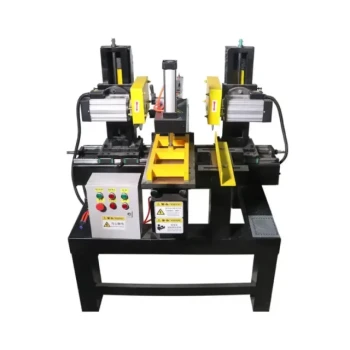
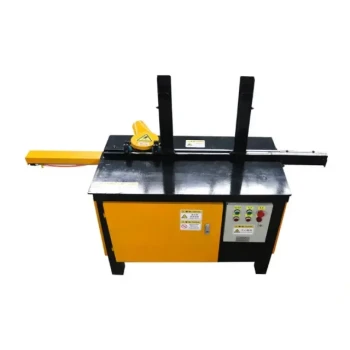
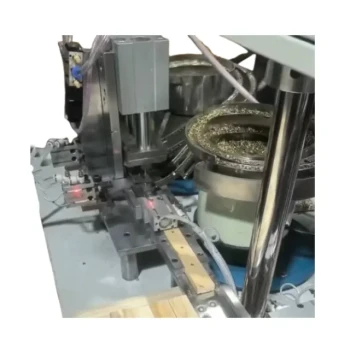
Industrial beehive manufacturing machinery establishes the logistical foundation required for competitive commercial pollination services. By utilizing high-precision equipment to standardize hive components, commercial apiaries ensure that hives are structurally compatible, stackable, and capable of withstanding the physical stress of frequent cross-regional transport. This mechanical precision allows operators to manage thousands of colonies efficiently, responding rapidly to flowering windows across different agricultural sectors without sustaining prohibitive logistical losses.
The competitiveness of a commercial pollination service depends less on individual hive craftsmanship and more on logistical scalability. Industrial manufacturing transforms the beehive from a static housing unit into a standardized, transportable asset, enabling the mass mobilization of pollinators required by modern agriculture.
The Logistics of Large-Scale Pollination
Ensuring Transport Stability
For commercial apiaries, the ability to move hives between forests and farmlands is critical. Industrial machinery produces components with uniform dimensions, ensuring that hives stack securely on transport vehicles. This structural consistency minimizes the risk of toppling or shifting during transit, significantly reducing colony loss and equipment damage.
Maximizing Interchangeability
In a large-scale operation involving thousands of hives, custom-fitted parts are a liability. Industrial manufacturing ensures that every brood box, honey super, and frame is completely interchangeable across the entire operation. This allows field crews to replace damaged parts instantly without matching specific components to specific hives, drastically improving turnover efficiency.
Economic and Strategic Advantages
Reducing Unit Costs Through Scale
To remain competitive, especially against low-priced imports, commercial operations must minimize infrastructure costs. High-precision woodworking and composite processing equipment enable the rapid, mass production of hive bodies. This lowers the unit cost of infrastructure, providing the financial headroom necessary for beekeepers to expand their colony counts to an industrial scale.
Meeting Agricultural Demand Surges
Wild pollinators often cannot cover the intense, short-term demand of large-scale monoculture flowering. Industrial machinery allows apiaries to rapidly build and deploy the physical infrastructure needed to house the massive number of colonies required for these periods. This responsiveness is a key differentiator for commercial services vying for contracts during peak seasons.
The Role of Precision in Colony Health
Optimizing "Bee Space"
Beyond simple carpentry, industrial machinery ensures adherence to strict biological standards, specifically "bee space." Precision manufacturing guarantees that internal dimensions prevent the construction of burr comb or propolis bridges. This structural accuracy is fundamental for colony overwintering success and reduces the physical strain on bees, resulting in stronger, more effective pollination units.
Enhancing Biosecurity and Management
Standardized equipment produced by modern machinery supports better health monitoring and maintenance. When hive architecture is uniform, applying treatments and managing pests becomes a repeatable, scalable process rather than a hive-by-hive challenge. This standardization helps maintain the overall health of the stock, ensuring a reliable supply of active foragers for clients.
Understanding the Trade-offs
Capital Investment vs. Operational Efficiency
While industrial machinery lowers the per-unit cost of hives over time, the initial acquisition of high-precision processing equipment represents a significant capital expense. Operations must weigh the long-term savings in labor and logistics against the upfront financial burden of mechanization.
Uniformity vs. Local Adaptation
Industrial manufacturing prioritizes standardization for the sake of logistics. However, this uniformity means that equipment is rarely optimized for specific local microclimates. Operators rely on the general robustness of the standard design rather than specialized modifications, which can occasionally lead to suboptimal thermal performance in extreme weather conditions compared to custom-built solutions.
Making the Right Choice for Your Goal
To leverage industrial manufacturing effectively, align your equipment choices with your specific operational focus:
- If your primary focus is Migratory Logistics: Prioritize machinery that guarantees high-tolerance stacking stability to minimize losses during long-haul transport.
- If your primary focus is Rapid Expansion: Focus on equipment that offers the highest production speed and lowest material waste to minimize the capital cost of new infrastructure.
- If your primary focus is Colony Health: Ensure your manufacturing specifications rigorously adhere to "bee space" standards to improve overwintering survival rates.
Industrial precision is not merely about building boxes; it is the technical prerequisite for turning beekeeping into a reliable, scalable service industry.
Summary Table:
| Key Factor | Impact of Industrial Machinery on Competitiveness |
|---|---|
| Logistics | Ensures high-precision stacking stability for safe, large-scale migratory transport. |
| Efficiency | Guarantees component interchangeability, allowing rapid field repairs and hive turnover. |
| Scalability | Lowers unit costs through mass production, enabling apiaries to meet peak seasonal demand. |
| Biological Health | Maintains strict 'bee space' tolerances to reduce colony stress and improve survival. |
| Operational Speed | Streamlines health monitoring and pest management through standardized hive architecture. |
Scale Your Apiary with Industrial Precision
At HONESTBEE, we specialize in empowering commercial apiaries and distributors with the tools needed to dominate the professional pollination market. From high-capacity hive-making machines and automated honey-filling lines to a complete range of standardized beekeeping hardware and industry consumables, we provide the infrastructure for your success.
Our value to you:
- Wholesale Excellence: Competitive pricing on bulk beekeeping equipment and specialized machinery.
- Technical Superiority: Equipment designed for high-tolerance manufacturing to ensure your hives survive the rigors of migratory logistics.
- Comprehensive Portfolio: A one-stop shop for everything from heavy machinery to honey-themed cultural merchandise.
Ready to transform your operation into a scalable, high-performance service? Contact HONESTBEE today to explore our wholesale solutions!
References
- Sylvanus Mensah, Thomas Seifert. Potential supply of floral resources to managed honey bees in natural mistbelt forests. DOI: 10.1016/j.jenvman.2016.12.033
This article is also based on technical information from HonestBee Knowledge Base .
Related Products
- High-Efficiency Pneumatic Bee Hive Making Machine for Rapid Box Assembly
- HONESTBEE Top Bar & Bottom Bar Forming Machine | Bee Frame Machine
- Automatic High-Speed Bee Hive Box Stapling Machine
- Beehive Machine Double End Saw for Precision Hive Component Manufacturing
- Mini Desktop Bee Hive Frame Forming Making Machine
People Also Ask
- How does the introduction of professional beehive-making machinery benefit sustainable beekeeping? Scale Your Apiary
- Why is specialized beehive-making machinery critical for low-defense breeding? Enhance Selection with Precision Tools
- How does the introduction of specialized beehive making machinery contribute to increasing the scale of regional beekeeping industries?
- What is the importance of specialized beehive making machinery in a circular bio-economy? Build Local Sustainability
- Why is specialized beehive-making machinery essential? Scale Your Apiary with Precision Industrial Standards