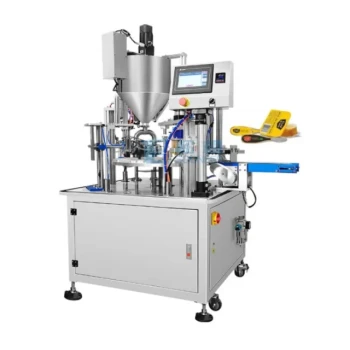
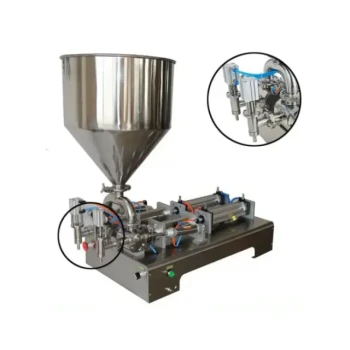
Professional honey-filling equipment ensures purity primarily through the use of closed-loop paths and high-precision filtration systems. These engineered barriers effectively isolate the honey from the external environment, ensuring that the residue-free status achieved during earlier pest and disease control phases is rigorously maintained until the product is sealed in the container.
The core function of this equipment is to act as a sanitary "lock," maintaining the biological stability and chemical safety established during hive management by preventing secondary contamination from air, machinery, or human handling.
Preserving the Integrity of Treatment
The value of effective pest and disease treatment is lost if the honey is re-contaminated during packaging. Professional equipment bridges this gap through isolation mechanics.
Closed-Loop Filling Paths
According to the primary technical guidelines, professional machinery utilizes closed-loop systems. This means the honey travels from storage to the bottle without ever being exposed to the open factory environment.
Preventing Secondary Contamination
Automated systems create a sealed and sterile operating environment. This architecture blocks the intrusion of airborne dust, bacteria, or chemical residues that could compromise the honey's purity after it leaves the extraction phase.
Isolating External Contaminants
By removing human contact and open-air exposure, the equipment ensures the "residue-free benefits" of your pest control program are not negated by environmental pollutants.
Hardware Construction and Filtration
Beyond isolation, the physical construction of the machinery plays a vital role in maintaining purity standards.
Food-Grade Material Composition
Professional equipment is typically constructed from food-grade stainless steel. This material selection prevents the leaching of metallic impurities or mechanical lubricants into the honey, which is critical for meeting organic certification standards.
High-Precision Filtration
Industrial-grade fine-pore filtration is integrated into the filling line to remove physical impurities. This system effectively strips out beeswax particles, bee remains, and other organic debris that could otherwise degrade the product's visual and chemical quality.
Maintaining Biological Stability
The machinery is designed to handle honey without altering its physical properties. By avoiding excessive heat or agitation, the equipment preserves the honey’s biological activity and prevents phase separation or uneven crystallization.
Understanding the Trade-offs
While professional filling equipment offers superior purity protection, it introduces specific operational challenges that must be managed.
Stringent Maintenance Requirements
The "closed-loop" nature of this equipment makes it difficult to inspect visually. Rigorous Clean-In-Place (CIP) protocols are required to prevent unseen bacterial buildup inside the piping, which would otherwise ruin the sterile environment.
Initial Capital Investment
High-precision filtration and automated stainless steel systems represent a significant financial overhead compared to manual filling methods. This cost is only justifiable if the market demands a premium, high-purity product.
Complexity of Operation
Operatives require specialized training to manage pressure settings and filtration maintenance. Improper handling can lead to system clogs or pressure-induced degradation of the honey's texture.
Making the Right Choice for Your Goal
Selecting the right filling technology depends on your specific market positioning and quality targets.
- If your primary focus is Organic Certification: Prioritize equipment made of high-grade stainless steel with verifiable closed-loop systems to eliminate any risk of environmental or lubricant cross-contamination.
- If your primary focus is Shelf-Life Extension: Focus on automated systems with sterile operating environments to minimize bacterial intrusion and ensure consistent stability across every bottle.
- If your primary focus is Visual Clarity: Invest in machinery with integrated fine-pore filtration to remove all wax and organic debris for a transparent, market-ready appearance.
True purity is not just about the absence of pests, but the successful isolation of the product during its final transition into the bottle.
Summary Table:
| Feature | Protection Mechanism | Benefit for Purity |
|---|---|---|
| Closed-Loop Path | Total isolation from factory air | Prevents airborne bacteria and dust intrusion |
| Food-Grade Stainless Steel | Non-reactive material construction | Eliminates leaching of metals or chemical lubricants |
| High-Precision Filtration | Industrial-grade fine-pore mesh | Removes beeswax, organic debris, and physical impurities |
| Automated Operation | Human-free filling process | Minimizes risk of cross-contamination from handling |
| Bio-Stability Control | Low-agitation processing | Preserves natural enzymes and prevents phase separation |
Secure Your Honey Purity with HONESTBEE
At HONESTBEE, we understand that your commitment to residue-free honey starts in the hive and must be protected all the way to the bottle. We provide commercial apiaries and distributors with high-performance honey-filling machines, specialized hive-making hardware, and a full spectrum of beekeeping tools designed to meet the highest organic standards.
Our Value to You:
- Comprehensive Wholesale Catalog: Access everything from industrial machinery to essential industry consumables in one place.
- Purity Assurance: Our equipment features closed-loop paths and food-grade construction to ensure your product remains uncontaminated.
- Scalable Solutions: Whether you are upgrading a commercial line or expanding your distribution, our machinery is built for efficiency and biological stability.
Ready to elevate your production standards and protect your brand’s reputation? Contact us today to explore our wholesale offerings!
References
- Melanie Parejo, Maria Bouga. Special issue on pests and pathogens in Apiculture: Navigating Old Challenges and Unveiling New Threats. DOI: 10.1080/00218839.2024.2318134
This article is also based on technical information from HonestBee Knowledge Base .
Related Products
- Precision Durable Efficient HONESTBEE Rotary Honey Filling Machine
- Economy Small Honey Filling Machine Honey Bottle Filler Packaging Machine
- Semi Automatic Small Honey Bottle Filling Machine Honey Filler
- Fully Automatic Honey Filling Packaging Machine for Processing Line
- Commercial Rotary Honey Filling Machine for Production
People Also Ask
- What quality control role does professional honey filling equipment perform? Ensure Consistency and Product Stability
- How do honey filling machines work? Achieve Precision & Speed for Your Apiary
- What are the common types of bottling machines used for honey? Choosing the Right Solution for Your Apiary
- What is a key feature of the new generation of the honey filling machine? The Advanced Electronic Control Unit
- How do high-precision honey filling machines ensure quality? Optimize Your Commercial Production with HONESTBEE