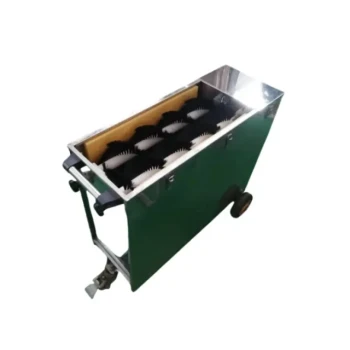
Professional bee transportation equipment acts as a primary vector for the rapid spread of honeybee pests and invasive species. While this equipment is essential for supporting commercial pollination services, the mobility it provides effectively bypasses natural geographic barriers. Consequently, localized infestations of pests like Varroa mites and Cape honeybees are transformed into widespread epidemics through the frequent movement of infested gear and colonies.
The very efficiency that enables large-scale migratory beekeeping also creates a high-speed distribution network for pathogens. Without strict monitoring, transport equipment turns localized pest issues into regional or national crises.
How Transportation Equipment Facilitates Transmission
Breaking Geographic Barriers
Professional transport equipment allows colonies to travel thousands of kilometers in short periods.
This rapid movement means that pathogens, which would normally be contained by distance or terrain, are mechanically transported to new ecosystems.
The Equipment as a Carrier
It is not just the bees that move; the physical infrastructure moves with them.
Trucks, pallets, and hive boxes themselves serve as vehicles for pests. The primary reference notes that the rapid expansion of invasive species, such as Cape honeybees, is largely facilitated by this commercial movement.
The Risk of Concentration Nodes
High-Density Mixing
Migratory beekeeping often involves converging on specific agricultural sites, such as almond orchards or other monocultures.
This practice concentrates high densities of beehives from vastly different geographic regions into a single area.
Horizontal Transmission
These concentration points act as "super-spreader" events.
When diverse apiaries interact in these high-risk nodes, pathogens like small hive beetles and Varroa mites transmit horizontally between colonies. The transport equipment brings them there, and the site density ensures they spread to neighbors.
Understanding the Trade-offs
Operational Efficiency vs. Biosecurity
There is an inherent conflict between the need for commercial pollination and disease control.
The industry relies on professional equipment to meet pollination demands, but this same equipment creates a vulnerability. The mobility that drives profit also drives pest expansion.
The Critical Role of Monitoring
Because the equipment acts as a vector, the migration process itself becomes a point of weakness.
The primary reference emphasizes that monitoring this migration process is a critical node in epidemic prevention. Ignoring the hygiene of transport equipment renders other disease control measures ineffective.
Making the Right Choice for Your Goal
To manage these risks effectively, you must adapt your protocols based on your operational focus:
- If your primary focus is Commercial Pollination: Implement rigorous inspection and sanitation protocols for all transport equipment before and after every long-distance haul.
- If your primary focus is Epidemic Prevention: Treat high-density concentration sites as quarantine zones where monitoring for horizontal transmission must be most aggressive.
By acknowledging that your transport fleet is a biological vector, you can maintain essential pollination workflows while actively mitigating the spread of destructive pests.
Summary Table:
| Transmission Factor | Impact on Pest Spread | Mitigation Strategy |
|---|---|---|
| Geographic Mobility | Bypasses natural barriers, turning local pests into epidemics | Strict monitoring of transit routes |
| Physical Infrastructure | Trucks, pallets, and boxes carry hidden pathogens | Rigorous equipment sanitation protocols |
| Concentration Nodes | High-density sites (e.g., almond orchards) cause horizontal spread | Quarantining and site-specific testing |
| Operational Efficiency | Increases profit but accelerates disease distribution | Balancing migration with biosecurity audits |
Secure Your Apiary’s Health with HONESTBEE
As a commercial apiary or distributor, you know that professional equipment is the backbone of your business—but it shouldn't be a vector for disease. HONESTBEE is dedicated to supporting the global beekeeping industry with a comprehensive range of high-quality wholesale solutions.
From durable hive-making machinery and precision honey-filling machines to professional-grade beekeeping tools and consumables, our products are designed to meet the rigorous demands of migratory beekeeping. We help you maintain the highest standards of hygiene and operational efficiency, ensuring your fleet remains a tool for growth, not a risk for infestation.
Ready to upgrade your commercial operation with industry-leading equipment?
Contact HONESTBEE Today to explore our wholesale portfolio and see how we can add value to your supply chain.
References
- Mike Allsopp. Cape honeybee (Apis mellifera capensis Eshscholtz) and varroa mite (Varroa destructor Anderson & Trueman) threats to honeybees and beekeeping in Africa. DOI: 10.1079/ijt20041
This article is also based on technical information from HonestBee Knowledge Base .
Related Products
- Plastic Transporting Bee Packages and Nuc Boxes for Beekeeping
- JZBZ Style Professional Battery Box with 20 Shipping Cages
- Durable Plastic Interlocking Hive Connector for Beekeeping
- High-Efficiency Pneumatic Bee Hive Making Machine for Rapid Box Assembly
- Heavy Duty Adjustable Hive Connector
People Also Ask
- What role do bee package boxes play in the commercial transport and expansion of honeybee colonies? - Logistic Essentials
- What are beekeeping boxes called? A Guide to Hive Bodies and Box Types
- How do standardized bee packages serve as a recovery mechanism for commercial beekeeping? Ensure Business Continuity
- What is the commercial value of using standardized bee packages? Drive Scalability in Large-Scale Apiaries
- Why is the timely introduction of high-quality bee packages critical? Save Your Apiary from Asian Hornet Invasions