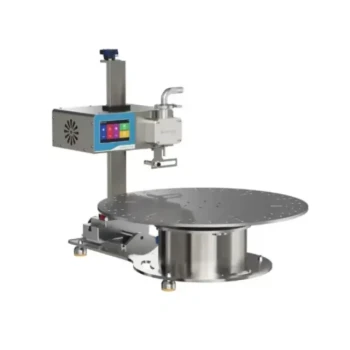
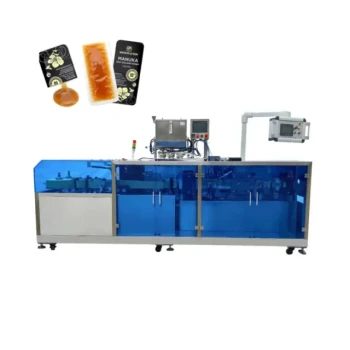
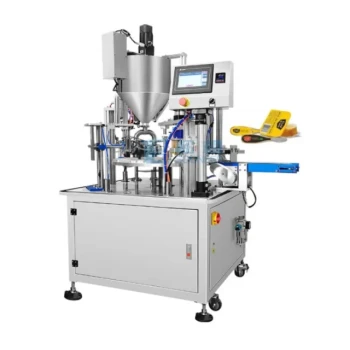
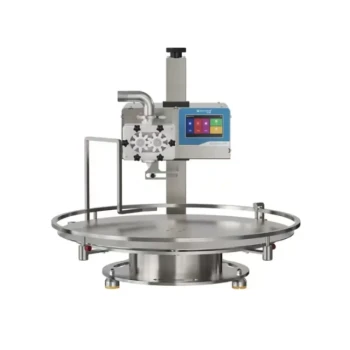
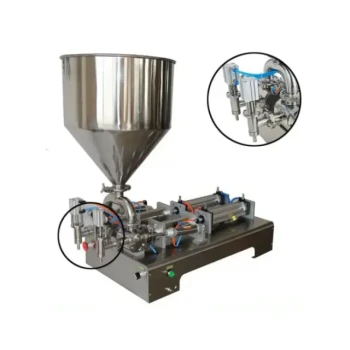
Automatic honey-filling machines facilitate the transition to professional production by fundamentally shifting an operation’s focus from manual labor to process standardization. They allow beekeepers to overcome the three primary barriers to scaling: inconsistent packaging, limited daily output, and strict food safety compliance.
The Core Transformation While hobbyist beekeeping centers on colony management, professional production demands a shift toward industrial efficiency and brand consistency. Automatic filling machines bridge this gap by ensuring high hygiene standards and packaging precision, transforming raw agricultural output into a market-ready commercial product.
Establishing Commercial Consistency
To compete in the professional marketplace, a product must be identical every time a customer purchases it. Manual filling cannot achieve this at scale.
Precision Metering
Hobbyists often eyeball fill levels or weigh jars individually, which is slow and prone to error. Professional machines utilize precise metering systems to deliver exact net weights every time. This consistency is not just an aesthetic preference; it is a legal requirement for commercial labeling and consumer trust.
Standardized Brand Image
Transitioning to professionalism requires building a recognizable brand. Automated equipment ensures consistent sealing, labeling, and filling levels. This uniformity is key to enhancing the brand image, allowing the product to stand alongside major competitors on retail shelves.
Meeting Regulatory and Hygiene Standards
The move from direct-to-consumer sales (like farmers' markets) to retail distribution involves a massive leap in regulatory scrutiny.
Closed-Loop Sanitation
Manual filling introduces human contact and open-air exposure, increasing the risk of contamination. Automatic machines employ closed filling processes and sterile technology. This minimizes the risk of secondary contamination and ensures the product remains hygienic from tank to bottle.
Market Access and Export
Retailers and export markets require proof of rigorous food safety protocols. Automated sterilization and sealing functions resolve common manual quality issues—such as unsterilized equipment or poor sealing. Meeting these national and international hygiene standards is a necessary condition for entering high-end markets and global trade.
The Economic Engine of Scaling
Professional beekeeping is a volume business. The efficiency of the bottling line directly impacts the financial health of the apiary.
Transforming Volume into Cash Flow
Harvesting honey is only half the battle; it must be packaged to generate revenue. High-efficiency machines convert bulk honey into shelf-ready products rapidly. This speed generates the immediate cash flow needed to sustain operations, whereas manual bottling creates a bottleneck that ties up capital in storage.
Funding Colony Health
For commercial apiaries—especially those maintaining Apis mellifera for pollination—honey sales are the primary economic driver. By reducing labor costs per unit and accelerating time-to-market, filling machines provide the financial resources necessary to reinvest in colony health, population management, and long-term pollination services.
Understanding the Trade-offs
While automation is essential for scaling, it introduces new complexities that the hobbyist does not face.
Capital Expenditure vs. Operational Cost
These machines represent a significant initial investment, acting as a barrier to entry for smaller startups. The trade-off is an immediate reduction in operational labor costs, but the upfront capital requires a solid business plan to ensure return on investment (ROI).
Reduced Flexibility
Manual filling allows a beekeeper to easily switch between tiny batches of different varietals or jar shapes. Automated lines are designed for consistency. Switching bottle sizes or honey types often requires recalibration and downtime, making them less agile for micro-batch experimentation.
Making the Right Choice for Your Goal
The decision to automate should be driven by your specific business objectives.
- If your primary focus is Market Expansion: Prioritize machines with advanced sterilization and precision metering to ensure your product meets the strict compliance standards of supermarkets and export channels.
- If your primary focus is Operational Sustainability: Focus on high-speed throughput to maximize cash flow, ensuring you have the liquid capital to reinvest in bee population health and pollination services.
By integrating automatic filling technology, you effectively transform your operation from a labor-intensive agricultural practice into a scalable, industrial manufacturing enterprise.
Summary Table:
| Feature | Hobbyist (Manual) | Professional (Automated) | Impact on Growth |
|---|---|---|---|
| Filling Precision | Manual weighing/Eyeballing | Precise metering systems | Legal compliance & brand trust |
| Hygiene Standards | Open-air/Manual contact | Closed-loop & sterile tech | Access to retail & export markets |
| Production Speed | Slow & labor-intensive | High-efficiency throughput | Faster cash flow & reinvestment |
| Consistency | Variable fill levels | Standardized uniformity | Retail shelf readiness |
| Cost Structure | High labor per unit | High initial CAPEX | Scalability & reduced long-term cost |
Transition Your Apiary to Professional Excellence with HONESTBEE
Moving from a hobby to a commercial operation requires more than just passion—it requires the right industrial tools. HONESTBEE specializes in empowering commercial apiaries and distributors with the high-performance machinery needed to scale.
From precision honey-filling machines that ensure market-ready consistency to specialized hive-making equipment and essential beekeeping consumables, we provide the end-to-end solutions your business needs to thrive.
Our Value to You:
- Regulatory Compliance: Our automated systems meet strict hygiene and safety standards for global export.
- Operational Efficiency: Reduce labor bottlenecks and convert your harvest into cash flow faster.
- Comprehensive Support: We supply everything from heavy machinery to honey-themed cultural merchandise.
Ready to elevate your honey production? Contact HONESTBEE today to explore our wholesale equipment and start your professional journey.
References
- Lotta Fabricius Kristiansen, Kes McCormick. Bridging research and practice: developing beekeeping knowledge and innovation systems. DOI: 10.3389/fcosc.2024.1490089
This article is also based on technical information from HonestBee Knowledge Base .
Related Products
- Fully Automatic Honey Filling Packaging Machine for Processing Line
- Automatic Honey Filling and Filtering Machine for Beekeeping Bottle Filling
- Precision Durable Efficient HONESTBEE Rotary Honey Filling Machine
- Automatic Single-Dose Snap & Squeeze Honey Sachets Packing Machine
- Semi Automatic Small Honey Bottle Filling Machine Honey Filler
People Also Ask
- Why are fully automatic honey filling and packaging lines essential? Boost Your Honey's Market Value and Quality
- What is a fully-automatic honey filler? Streamline Your Production with High-Precision Automation
- How do automated honey filling and packaging machines affect profitability? Boost Margins with HONESTBEE Technology
- How do automated honey filling and packaging machines contribute to the market value of honey products? Maximize Your ROI
- How do industrial-grade automated honey filling and packaging machines mitigate the risk of physical contamination?