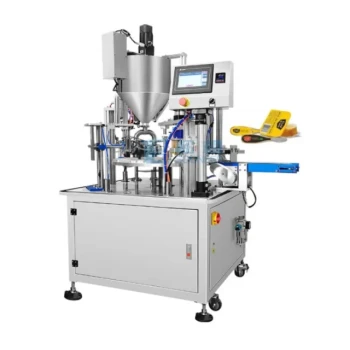
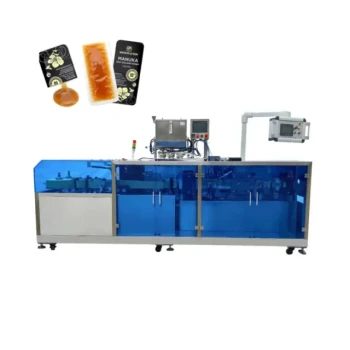
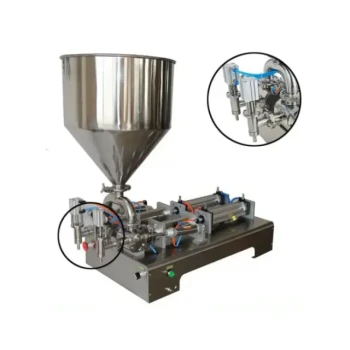
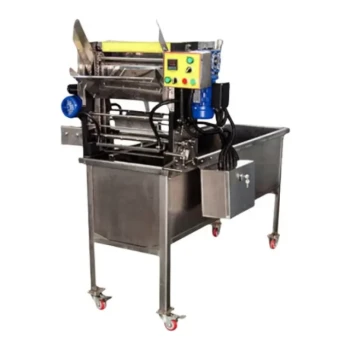
Industrial-grade honey filling and packaging machines enhance commercial competitiveness primarily through automated precision, rigorous hygiene control, and production scalability. By strictly preventing atmospheric moisture ingress—the leading cause of fermentation and spoilage—these systems ensure product stability while allowing producers to transform raw honey into standardized, high-value commodities at a speed required for modern market demands.
The core competitive advantage of industrial automation is the transition from artisanal variability to commercial reliability. By eliminating human error and environmental contamination, these machines guarantee the shelf stability and consistency required to enter formal retail channels and international export markets.
Preserving Quality Through Hygiene Control
Preventing Spoilage and Fermentation
The most critical function of industrial machinery is environmental isolation. Honey is hygroscopic, meaning it naturally absorbs moisture from the air.
Industrial machines utilize hermetic sealing and closed-loop filling systems to block atmospheric moisture. This prevents the fermentation that ruins flavor and texture, ensuring the product remains stable during storage and transport.
Minimizing Secondary Contamination
Manual filling introduces risks of biological or physical contamination. Automated lines use hygienic sealing technologies to create a "no-touch" process.
This rigor ensures the final product meets strict regulatory compliance for food, pharmaceuticals, and cosmetics, which is essential for entering sensitive or high-end markets.
Standardization and Market Access
Achieving Absolute Consistency
Retailers and consumers demand uniformity. Industrial machines utilize high-precision quantitative pumps and dosing systems.
This ensures that every container has the exact same volume and weight. This consistency builds consumer trust and reinforces professional branding, distinguishing the product from amateur or irregular suppliers.
Unlocking Retail Channels
Supermarkets and exhibitions require products that look professional and meet specific packaging standards.
Automated equipment produces clean, aesthetically pleasing seals and packages that manual operations cannot match. This "shelf-ready" appearance is a prerequisite for distribution in formal retail networks and high-end domestic markets.
Operational Efficiency and Scaling
Rapid Scalability
To compete commercially, producers must be able to meet fluctuating demand quickly. Mechanized filling allows for a dramatic increase in output speed compared to manual processing.
This speed enables suppliers to fulfill large orders for wholesale distribution without compromising on the quality or safety of the fill.
Reducing Waste and Labor Costs
Precision dosing does more than ensure consistency; it drastically reduces product giveaway (overfilling) and spillage.
Furthermore, automation reduces the reliance on manual labor. This lowers the cost per unit, allowing beekeeping enterprises to maintain price competitiveness in aggressive international markets.
Understanding the Trade-offs
The Maintenance Requirement
While these machines solve hygiene and speed issues, they introduce technical complexity. You must trade the simplicity of manual labor for the need for skilled maintenance.
If a machine is not calibrated correctly or sanitized according to strict schedules, it can become a source of systemic contamination rather than a solution to it.
Sensory Preservation Limits
High-speed processing must be balanced against the delicate nature of raw honey.
If the machinery operates at excessive speeds or temperatures, it risks altering the honey's crystallinity or sensory characteristics. Competitiveness depends on configuring the machine to preserve the "natural" qualities consumers expect.
Making the Right Choice for Your Goal
To maximize your competitiveness, align your equipment choice with your specific business objective:
- If your primary focus is Export and Retail Access: Prioritize machines with advanced hermetic sealing and moisture control to guarantee the shelf life and hygiene compliance required by international standards.
- If your primary focus is Profit Margin: Focus on equipment with high-precision quantitative control to minimize raw material waste and reduce labor overhead.
- If your primary focus is Brand Building: Select machinery that offers superior aesthetic packaging capabilities to ensure visual consistency and professional appeal on the shelf.
Automating your filling process is the definitive step in evolving from a honey producer to a competitive commercial brand.
Summary Table:
| Feature | Commercial Benefit | Competitive Advantage |
|---|---|---|
| Automated Precision | Eliminates overfilling & waste | Higher profit margins and weight consistency |
| Hermetic Sealing | Prevents moisture & fermentation | Extended shelf life for export and retail |
| Hygienic Design | Minimizes secondary contamination | Meets strict food safety and regulatory standards |
| High-Speed Output | Rapid scalability | Capability to fulfill large wholesale & retail orders |
| Professional Finish | Aesthetic, uniform packaging | Enhanced brand trust and shelf appeal |
Elevate Your Honey Brand with HONESTBEE
Transition from artisanal harvesting to global commercial success with HONESTBEE. As a premier provider for commercial apiaries and distributors, we supply the complete spectrum of beekeeping tools, from specialized hive-making machinery to high-precision honey-filling and packaging systems.
Our industrial-grade equipment ensures your product meets the rigorous standards of international export and high-end retail markets by optimizing hygiene, consistency, and professional presentation. Whether you are looking for advanced hardware or essential industry consumables, our comprehensive wholesale offering is designed to scale your business.
Ready to transform your production capacity?
Contact our experts today to find the perfect solution for your apiary
References
- Mudssar Ali, Shafqat Saeed. Yearlong association of Apis dorsata and Apis florea with flowering plants: planted forest vs. agricultural landscape. DOI: 10.13102/sociobiology.v64i1.995
This article is also based on technical information from HonestBee Knowledge Base .
Related Products
- Fully Automatic Honey Filling Packaging Machine for Processing Line
- Precision Automated Packaging Turntable Honey Spoon Filling Sealing Packing Machine
- Economy Small Honey Filling Machine Honey Bottle Filler Packaging Machine
- Automatic Single-Dose Snap & Squeeze Honey Sachets Packing Machine
- Double Nozzle Small Honey Filling Machine Honey Sachet Packing Packaging Equipment
People Also Ask
- Why are fully automatic honey filling and packaging lines essential? Boost Your Honey's Market Value and Quality
- What is a fully-automatic honey filler? Streamline Your Production with High-Precision Automation
- How do automated honey filling and packaging machines affect profitability? Boost Margins with HONESTBEE Technology
- How do automated honey filling and packaging machines contribute to the market value of honey products? Maximize Your ROI
- How do industrial-grade automated honey filling and packaging machines mitigate the risk of physical contamination?