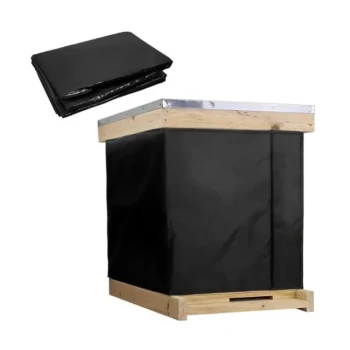
Beekeeping practices are rarely absolute, and hive insulation is no exception. It is not mandatory for all beekeepers to insulate their hives. Many colonies are naturally resilient and can survive winter conditions without human intervention, provided specific environmental and biological conditions are met.
Core Insight: Insulation is a situational aid, not a universal requirement. The decision to insulate relies entirely on an assessment of your local climate severity and the individual strength of each colony.
Evaluating the Necessity of Protection
To determine whether insulation is required for your apiary, you must look beyond general rules and analyze the specific context of your environment and your bees.
The Natural Resilience of the Colony
Honey bees are biologically equipped to handle cold weather. A healthy, strong colony generates its own heat by clustering together within the hive.
For many beekeepers, relying on this natural mechanism is sufficient. If the colony has a large population and adequate food stores, they can often regulate their internal temperature effectively without external aid.
The Factor of Local Climate
Geography plays the largest role in this decision. In regions with mild climates, insulation is generally considered unnecessary.
If your area does not experience prolonged, deep freezes, the natural insulation of the hive body combined with the bees' clustering behavior is usually adequate for survival.
Assessing Colony Health
Not all colonies go into winter with equal standing. The health and strength of the specific colony should dictate your management strategy.
A robust colony may not need help, but a weaker colony with fewer bees might lack the thermal mass to stay warm. In these specific cases, a beekeeper might intervene, but it is a response to a specific problem, not a mandatory routine for the whole apiary.
Understanding the Trade-offs
While insulation offers protection, treating it as a mandatory task can lead to inefficient management.
Assessing Risk vs. Necessity
The primary trade-off is between natural selection and intervention.
By not insulating, you are relying heavily on the colony's innate strength. In a borderline climate, this tests the genetics of your queen and the vitality of the workforce.
The Cost of unnecessary Intervention
If you reside in a mild climate, insulating hives consumes time and resources that yielded no tangible benefit to the bees.
Beekeeping requires balancing inputs against outcomes. If the climate does not demand it, insulation becomes a redundant step in your management workflow.
Making the Right Choice for Your Goal
The "right" answer depends on where you live and the condition of your bees as winter approaches.
- If your primary focus is a Mild Climate: You likely do not need to insulate, as the environment does not pose a severe thermal threat.
- If your primary focus is Colony Strength: Assess your hives individually; strong colonies can usually overwinter successfully without added protection.
- If your primary focus is Risk Management: Monitor weaker colonies closely, as they are the only candidates that might strictly require thermal assistance.
Ultimately, you should let the specific combination of your local weather patterns and colony health metrics dictate your strategy, rather than following a blanket rule.
Summary Table:
| Factor | When Insulation is Likely Needed | When Insulation is Likely Unnecessary |
|---|---|---|
| Climate | Severe, prolonged deep freezes | Mild or temperate winters |
| Colony Strength | Weak colonies with low bee population | Robust, healthy colonies with high populations |
| Food Stores | Limited or borderline honey reserves | Abundant, well-positioned food stores |
| Bee Genetics | Non-acclimated or sensitive breeds | Locally adapted, winter-hardy strains |
Secure Your Apiary’s Future with HONESTBEE
Optimizing your apiary for winter requires the right balance of strategy and professional-grade equipment. As a dedicated partner to commercial apiaries and global distributors, HONESTBEE provides the comprehensive wholesale solutions you need to scale and succeed.
Whether you are looking for high-performance beekeeping machinery (like hive-making and honey-filling machines), durable hardware, or essential consumables, our portfolio is designed to enhance your operational efficiency and colony health. From specialized tools to honey-themed cultural merchandise, we deliver the quality that industry leaders demand.
Ready to elevate your beekeeping business? Contact us today to discuss our wholesale offerings and discover how our expertise can support your growth.
Related Products
- Professional Insulated Winter Hive Wrap for Beekeeping
- Professional Insulated Plastic Bee Hives
- Inner Beehive Cover for Beekeeping Bee Hive Inner Cover
- Stainless Steel Round Beehive Air Vents for Ventilation
- Durable Plastic Interlocking Hive Connector for Beekeeping
People Also Ask
- What are the steps to properly wrap a beehive for winter? Ensure Your Colony Survives the Cold
- When is the best time to wrap a beehive for winter? A Guide to Perfect Winterization Timing
- How do professional insulation wraps provide protection for bee colonies? Optimize Winter Survival & Energy Efficiency
- What are the technical benefits of using winter wraps for beehive insulation? Boost Colony Survival & Hive Health
- What are the benefits of using insulated covers for hives? Ensure Colony Survival and Health