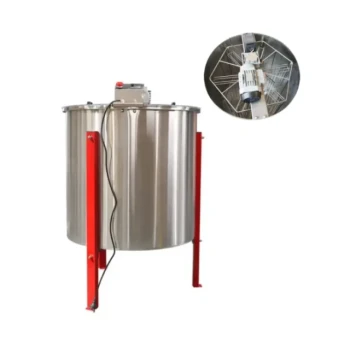
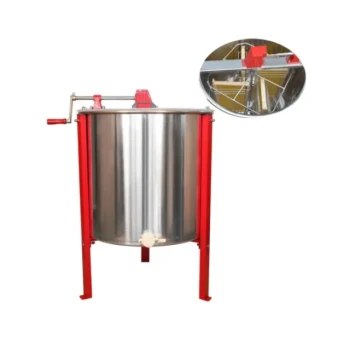
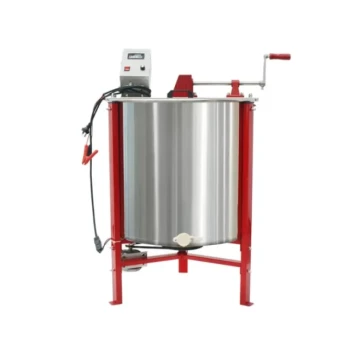
No mechanism exists to completely prevent honey from sticking to the interior of an extractor. The viscous nature of honey ensures that some adherence to the extractor walls is inevitable during the centrifuge process. While total prevention is impossible, you can manage the issue effectively by allowing the machine to drain thoroughly and manually removing excess residue from the sides immediately after use.
While you cannot change the physics of honey adhesion, you can mitigate the mess by maximizing drainage time. Treating residue management as a standard part of the extraction cycle—rather than an error to be fixed—is the most practical approach.
Managing Honey Retention
The Limits of Extraction
It is important to accept that no surface treatment or technique will render an extractor hydrophobic to honey. The centrifugal force required to spin honey out of the comb naturally flings droplets against the drum, where surface tension holds them in place.
Maximizing Yield Through Drainage
According to expert consensus, the most effective way to handle sticking is to allow the extractor to drain completely after every cycle. Rushing this process leaves excessive honey on the walls, which complicates the final cleanup.
Manual Residue Removal
Once the flow of honey stops, you must physically address the remaining coating. Use a spatula or similar tool to remove as much residue as possible from the sides before introducing water. This step recovers usable product and significantly reduces the effort required for washing.
Maintenance and Hygiene Protocols
The Necessity of Disassembly
To deal with the sticky residue effectively, you cannot rely on a surface rinse alone. Deep cleaning requires disassembling the equipment after each use. This allows you to access crevices where honey might accumulate and harbor contaminants.
Washing and Sanitation
Once disassembled, all parts should be washed thoroughly using warm soapy water. This neutralizes the stickiness and removes the sugars that feed bacteria.
Preventing Biological Growth
Failure to remove sticky residue does more than make the machine messy; it creates a health hazard. Proper cleaning is essential to prevent the growth of mold and bacteria, ensuring your next harvest remains safe for consumption.
Common Pitfalls to Avoid
Neglecting the Drying Phase
Cleaning the sticky residue is only half the battle. Storing an extractor while it is still damp—even slightly—can lead to rust and mechanical damage. The equipment must be stored in a dry, cool, and clean area to maintain its structural integrity.
Underestimating Contamination Risks
A common mistake is assuming that because honey is antimicrobial, the extractor does not need rigorous cleaning. Residue left in the machine can dilute and ferment, leading to bacterial growth that compromises the longevity of the device and the quality of future batches.
Optimizing Your Extraction Routine
To ensure the best results for your harvest and your equipment, follow these guidelines:
- If your primary focus is maximizing yield: Prioritize a long drainage period and manually scrape the drum sides to capture every ounce of usable honey.
- If your primary focus is equipment longevity: Disassemble the unit completely after use and ensure it is 100% dry before storage to prevent rust.
- If your primary focus is hygiene: Wash all components with warm soapy water immediately after extraction to eliminate the risk of mold or bacterial proliferation.
Consistent maintenance is the only reliable way to manage the inevitable nature of sticky honey.
Summary Table:
| Aspect | Practical Management Strategy |
|---|---|
| Core Reality | Complete prevention is impossible due to honey's viscosity and surface tension. |
| Yield Optimization | Allow for extended drainage time and use a spatula to scrape side walls. |
| Maintenance | Full disassembly is required; wash with warm, soapy water after every use. |
| Hygiene | Immediate cleaning prevents fermentation, mold, and bacterial proliferation. |
| Storage | Ensure the unit is 100% dry and stored in a cool, clean area to prevent rust. |
Maximize Your Harvest Efficiency with HONESTBEE
Managing sticky residue is part of a successful harvest, but having the right equipment makes all the difference. HONESTBEE provides commercial apiaries and distributors with high-performance honey-filling machines and extractors designed for easy maintenance and maximum yield. From specialized hive-making machinery to essential industry consumables, our comprehensive wholesale offering is built to support your growth.
Ready to upgrade your apiary’s productivity? Contact us today to explore our full range of professional beekeeping solutions!
Related Products
- HONESTBEE 72 Frame Industrial Electric Honey Extractor for Beekeeping
- Commercial Electric 12 Frame Honey Extractor Spinner Motorized Honey Extractor
- HONESTBEE 3-Frame Manual Acrylic Honey Extractor
- electric honey extractor honey centrifuge 3 frame honey extractor stainless steel honey frame extractor
- HONESTBEE 6 Frame Self Reversing Electric Honey Extractor for Beekeeping
People Also Ask
- What is the importance of balancing honeycomb frames within a honey extractor? Ensure Stability and Protect Machinery
- How is honey separated from the frames after they are uncapped? Efficient Extraction Methods for High Yields
- What are the main benefits of using a honey extractor? Maximize Yields and Protect Your Honeycomb
- What are the recommended methods for removing honey from the honeycomb? Top Extraction Techniques for Maximum Efficiency
- How do manual honey extractors compare to electric honey extractors? Choosing the Right Tool for Your Apiary Growth