Two honey bee colonies should be combined before winter only when a weaker colony lacks the population to survive the season independently, yet remains free of illness. This procedure is a rescue operation designed to bolster the overall apiary, provided the receiving colony has adequate food stores to support the sudden increase in population.
Merging hives is a calculated risk to prevent winter loss, not a gamble. The golden rule is to never jeopardize a healthy colony by introducing a weak one that is carrying mites or disease.
Evaluating the Weaker Colony
The Survival Threshold
A colony should be considered for combining if it is unlikely to survive the winter alone. Beekeepers often identify these as hives with populations too small to maintain the thermal cluster required to survive cold temperatures.
Rather than allowing these bees to perish from exposure, they can serve as a valuable resource to boost the population of a stronger hive.
The Health Requirement
The most critical condition for combining is that the weaker colony must not have mites or diseases. This is non-negotiable.
If the weak colony is failing due to a high Varroa mite load or pathogens, combining them will simply transmit the issue to your healthy hive. In this scenario, you risk losing both colonies rather than just one.
Assessing the Stronger Colony
Capability to Receive
The receiving colony—the "stronger" one—must be robust enough to accept the new influx of bees. While they provide the home, they also bear the burden of the merger.
Food Store Availability
The stronger colony must have enough food stores to support the combined population. More bees equate to higher resource consumption throughout the winter.
If the strong hive has only enough honey for itself, adding the population of a weak hive could lead to starvation for the entire combined unit before spring arrives.
Critical Risks and Trade-offs
The Disease Vector
The primary risk in combining hives is the inadvertent spread of illness. If your assessment of the weak hive's health is incorrect, you turn a rescue mission into a contagion event.
Resource Depletion
A large population is excellent for heat generation but dangerous for food consumption. If you combine hives without ensuring the final unit has massive food reserves, you may create a "super colony" that starves in late winter.
Making the Final Decision
If your primary focus is preserving apiary health: Do not combine a weak hive if you have any doubt regarding its disease or mite status; it is better to lose one weak hive than infect a strong one.
If your primary focus is winter survival rates: Proceed with the combination only if the receiving hive has abundant honey stores to feed the additional mouths.
By adhering to these strict conditions, you convert a probable loss into a strategic asset for your apiary's future.
Summary Table:
| Criteria | Actionable Requirement | Impact on Survival |
|---|---|---|
| Population | Weak colony lacks cluster strength | Increases thermal efficiency and heat retention |
| Health Status | Must be 100% free of mites and disease | Prevents cross-contamination and loss of healthy hives |
| Food Reserves | Receiving hive must have surplus stores | Prevents late-winter starvation from increased consumption |
| Queen Quality | Retain the most vigorous queen | Ensures a faster population explosion in early spring |
Maximize Your Apiary’s Winter Survival with HONESTBEE
Protecting your honey bee colonies requires more than just strategy; it requires the right equipment. At HONESTBEE, we specialize in supporting commercial apiaries and distributors with a comprehensive range of high-quality beekeeping tools and machinery. Whether you need advanced hive-making machines to prepare your apiary for expansion or specialized honey-filling equipment for your harvest, we have you covered.
From essential consumables to honey-themed cultural merchandise, we provide the wholesale solutions you need to scale your business. Don't let a weak season hold you back. Contact our expert team today to discover how our professional-grade equipment and industry expertise can secure the future of your apiary.
Related Products
- Langstroth Honey Bee Box Hive Boxes for Different Depths
- Honey Bee Lifecycle Model: A Detailed Honeycomb Display of Bee Development
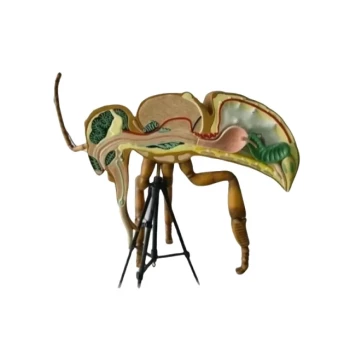
- HONESTBEE Anatomy Bee Model Detailed Anatomical Display for Education and Study
- HONESTBEE Entrance Bee Feeder Professional Hive Nutrition Solution for Beekeeping
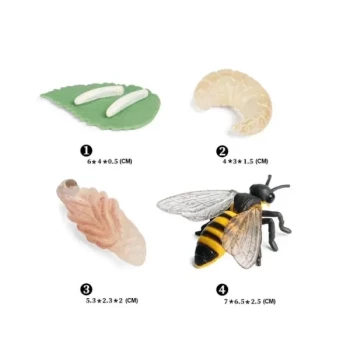
- Honey Bee Life Cycle Model 4 Stage Educational Set for Kids Learning
People Also Ask
- What role do standardized Langstroth boxes play in commercial apiary management and honey bee research? | HONESTBEE Guide
- What are the primary advantages of using standardized Langstroth boxes? Scale Your Commercial Beekeeping Operation
- What are the differences between the three standard depths of Langstroth boxes? Choose the Best Size for Your Apiary
- What features of Langstroth hive boxes contribute to expandability and honey yield? Maximize Your Apiary Production
- What are the typical uses for the different box sizes in a Langstroth hive? Master Hive Management & Efficiency