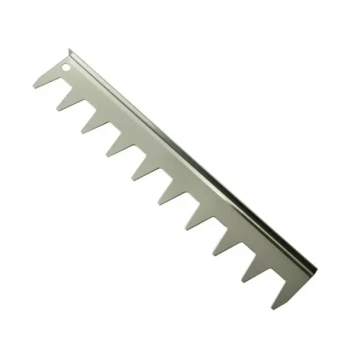
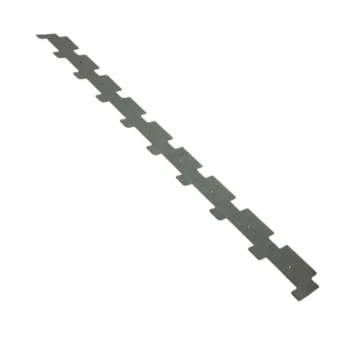
Frames and foundation serve as the internal architecture of a Langstroth hive, organizing the colony’s natural building instincts into a manageable system. A frame is a removable rectangular perimeter (usually wood or plastic) that hangs inside the hive box, while the foundation is a vertical sheet inserted into that frame to act as a starting guide for the bees' wax comb.
The interplay between frame and foundation allows beekeepers to inspect colonies, manage brood, and harvest honey without destroying the hive, transforming beekeeping from a destructive process into a sustainable one.
The Role of the Frame
Structural Boundaries
The frame provides a rigid boundary for the honeycomb. It typically consists of a top bar, bottom bar, and two side bars.
Enabling Inspection
Because bees build their comb inside these defined rectangles, you can lift individual frames out of the box. This allows for detailed observation of the brood and queen without damaging the colony's structure.
Standardization and Sizing
Frames must strictly match the size of the box they are placed in. Deep boxes require deep frames, while medium boxes require medium frames.
Capacity and Spacing
A standard Langstroth box is designed to hold either 8 or 10 frames. The centers of adjacent frames are spaced approximately 1.5 inches (38 mm) apart, mimicking the natural spacing bees use in the wild.
Understanding the Foundation
The Vertical Template
Foundation is a flat, sheet-like insert placed inside the frame. It acts as a template, showing the bees exactly where to draw out their wax cells.
Wax Coating
Most foundation is coated in beeswax. This scent and texture encourage the bees to accept the artificial surface and begin building their comb upon it rapidly.
Comb Uniformity
The primary purpose of foundation is to ensure the comb is built straight and within the bounds of the wooden frame. Without it, bees may build "burr comb" or cross-comb that connects multiple frames together, making inspection difficult.
Trade-offs: Foundation vs. Foundationless
The Argument for Foundation
Using frames with pre-installed foundation provides predictability. It maximizes honey production and ensures the hive remains easy to dismantle and inspect by forcing the bees to build straight lines.
The Rise of Natural Beekeeping
As noted in current trends, there is growing interest in foundationless frames. In this method, beekeepers place empty frames (or frames with just a starter strip) into the hive.
Letting Bees Decide
Foundationless frames allow bees to construct their own foundation from scratch. This enables the colony to build comb according to their immediate needs and natural preferences, rather than following a human-sized template.
The Management Challenge
While foundationless beekeeping is more "natural," it requires more skill. You must monitor the hive closely to ensure bees do not build cross-comb, which can fuse frames together and make the hive unmanageable.
Making the Right Choice for Your Goal
When setting up your Langstroth hive, your choice depends on your experience level and philosophy.
- If your primary focus is ease of management and honey production: Use standard frames with wax-coated foundation to ensure straight, sturdy comb that withstands extraction.
- If your primary focus is natural biology and wax production: Experiment with foundationless frames to allow the bees to determine their own cell sizes and comb structure.
Ultimately, the frame provides the necessary access, while the foundation provides the optional guidance.
Summary Table:
| Feature | Frame | Foundation |
|---|---|---|
| Function | Structural perimeter for comb | Template/guide for wax building |
| Material | Wood or High-density Plastic | Beeswax or Wax-coated Plastic |
| Purpose | Enables inspection and extraction | Ensures straight, uniform comb |
| Varieties | Deep, Medium, or Shallow sizes | Wired, Plastic, or Foundationless |
| Standard Spacing | 1.5 inches (38 mm) apart | Centered within the frame |
Scaling Your Beekeeping Operations? Partner with HONESTBEE
At HONESTBEE, we understand the specialized needs of commercial apiaries and distributors. Whether you require thousands of precision-engineered frames or industrial-grade hive-making machinery, we provide the full spectrum of wholesale beekeeping tools and consumables to keep your business thriving.
Our value to you:
- Comprehensive Wholesale Range: From specialized hardware like honey-filling machines to essential consumables.
- Commercial Reliability: Durable equipment designed for high-capacity honey production and colony management.
- Cultural Merchandise: Unique honey-themed products to diversify your retail portfolio.
Ready to enhance your productivity with premium beekeeping equipment?
Contact HONESTBEE Today to discuss our wholesale offerings and how we can support your growth.
Related Products
- Wooden Bee Hive Frames for Beekeeping and Wholesale
- Stainless Steel 9 Frame Hive Spacer Durable Precise for Commercial Beekeeping
- JZBZ Langstroth Queen Rearing Frame for Beekeeping
- Plastic Bee Frame Beekeeping Hive Frames for Wholesale
- Solid Bottom Board Australian Pine Wood Langstroth Bottom Board for Wholesale
People Also Ask
- How does balancing the number of frames impact hive productivity? Optimize Your Apiary's Biological Output
- How do wooden and plastic hive frames compare in terms of durability? Wood vs. Plastic Longevity & Repairability
- What are the main considerations when choosing between wooden and plastic bee hive frames? Optimize Your Apiary's Efficiency
- How should beehive frames be maintained to prolong their lifespan? 5 Pro Tips for Durable Beekeeping Equipment
- What is the primary function of frames within a beehive system? Structural Foundation and Hive Management