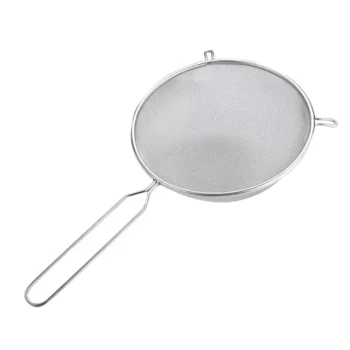
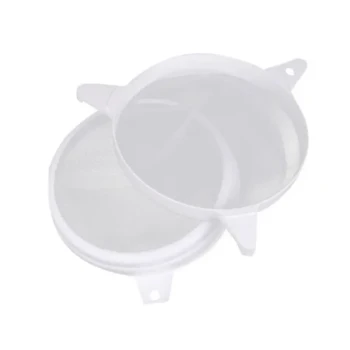
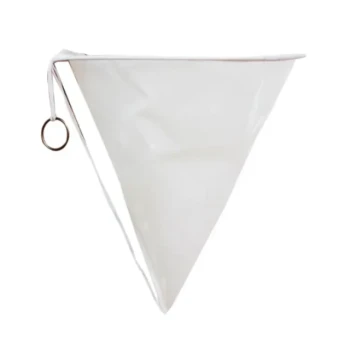
Mesh filters are specialized straining devices typically constructed from fine mesh fabric, designed specifically for the honey processing industry. They function as a physical barrier that effectively traps larger particulate matter while permitting liquid honey to pass through, making them the standard recommendation for small-scale operations.
Mesh filters provide a straightforward, fabric-based solution for clarifying honey by removing significant debris. Due to their simple mechanics and flow capacity, they are technically defined as the ideal choice for small-scale processing environments rather than industrial mass production.
Composition and Functionality
The Material Basis
Mesh filters are defined by their construction material. They are typically made of fine mesh fabric.
This fabric serves as the primary filtration medium. It is distinct from rigid metal screens or high-pressure membrane systems often found in other industries.
The Separation Mechanism
The core function of a mesh filter is physical separation.
The device works by trapping larger particles on the surface of the fabric. Simultaneously, it allows the viscous liquid honey to flow through the weave of the mesh.
Operational Suitability
Ideal for Small-Scale Processing
The primary reference explicitly categorizes mesh filters based on production volume.
They are considered ideal for small-scale honey processing operations.
Simplicity of Design
While not explicitly detailed in the reference, the reliance on "fabric" and the focus on "larger particles" implies a low-complexity approach.
This makes them accessible for producers who do not require complex machinery to manage their filtration needs.
Understanding the Trade-offs
Particle Size Limitations
It is critical to note that mesh filters are designed to catch larger particles.
They may not be suitable for applications requiring ultra-fine filtration or the removal of microscopic particulates. The definition focuses on "larger" debris, implying that finer sediment may pass through the fabric.
Volume Constraints
Because these filters are categorized as ideal for small-scale use, they are likely ill-suited for high-volume commercial facilities.
Attempting to use fabric mesh filters for industrial-scale throughput could result in process bottlenecks or frequent clogging.
Making the Right Choice for Your Goal
When selecting filtration equipment, you must align the tool with your production volume and clarity requirements.
- If your primary focus is small-scale production: Mesh filters are the recommended choice, offering an effective balance of debris removal and flow for smaller batches.
- If your primary focus is removing only large debris: Rely on the fine mesh fabric construction to effectively trap significant particulate matter while preserving the liquid state of the honey.
Mesh filters represent a functional, accessible solution for maintaining honey quality in lower-volume processing environments.
Summary Table:
| Feature | Description |
|---|---|
| Primary Material | Fine mesh fabric |
| Mechanism | Physical barrier trapping larger particles while allowing honey flow |
| Optimal Scale | Small-scale beekeeping and processing operations |
| Key Benefit | Simple, cost-effective, and easy-to-use filtration |
| Limitations | Not suitable for ultra-fine filtration or high-volume industrial use |
Elevate Your Honey Production with HONESTBEE
Are you a commercial apiary or a distributor looking to scale your operations? HONESTBEE is your premier partner for all beekeeping needs. We specialize in providing a comprehensive wholesale range, from fundamental mesh filters and consumables to advanced hive-making and honey-filling machinery.
Our expertise goes beyond simple equipment; we offer the tools and industry merchandise you need to thrive in the competitive honey market. Contact us today to discuss how our tailored machinery solutions and high-quality supplies can streamline your business and maximize your yield!
Related Products
- Professional Stainless Steel Honey Filter with Support Handle
- Conical Nylon Honey Strainer Filter Bag for Beekeeping and Honey Filtration
- Nylon Honey Strainer Square Filter Cloth for Honey Filters
- Electric Double Wall Honey Filtering Machine Purifier Equipment for Honey Processing Plant
- Stainless Steel Triangle Support Honey Strainer and Filters
People Also Ask
- Why are stainless steel filters essential during the initial purification phase of honey processing? Ensure Purity
- What are the benefits of using a high-quality honey filter? Elevate Purity and Preserve Natural Flavor
- What is the primary purpose of honey filters? Achieve Professional Clarity & Pure Honey Quality
- What micron filter should I use for honey? Choose the Right Filter for Sales or Competitions
- Why do people filter honey? For Clarity, Stability, and Consumer Appeal