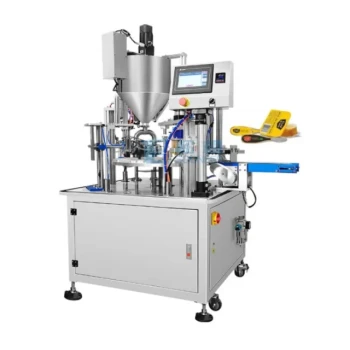
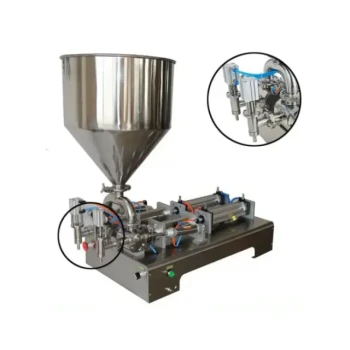
High-precision automation is the definitive standard for export compliance. In the context of export-oriented honey processing, high-precision filling machines provide critical advantages over manual bottling by enforcing exact volume control and maintaining a sterile, closed environment. These systems are designed to eliminate the variability inherent in human operation, ensuring the final product meets the rigorous safety and consistency standards required by international markets.
Core Takeaway While manual bottling introduces variability and contamination risks, high-precision machines guarantee the standardization and hygiene necessary for export success. They transform honey processing from a craft operation into a compliant, industrial workflow that preserves profit margins by minimizing material loss and prevents spoilage.
Maximizing Yield and Standardization
Eliminating Material Loss
Manual bottling inevitably leads to inconsistencies, often resulting in "overfilling" to ensure minimum weight compliance. High-precision machines utilize metering pumps and exact control systems to deliver precise volumes.
This eliminates the cumulative financial loss caused by overfilling thousands of units. By adhering to exact specifications, producers maximize the number of sellable units derived from a single batch.
Ensuring Consistent Net Weight
For export markets, product consistency is a legal requirement, not just a preference. Automated systems ensure that the net content of every bottle remains highly consistent.
This level of standardization is difficult to achieve manually but is essential for maintaining brand professionalism and meeting the weights and measures regulations of destination countries.
Meeting International Safety Standards
Reducing Contamination Risks
Manual bottling exposes honey to the open environment, increasing the risk of airborne contaminants and impurities. Industrial filling machines operate within a closed environment.
This significantly reduces the honey's exposure to air and external particulates. By preventing secondary contamination, these machines extend the shelf-life stability of the product, a key factor for goods undergoing long shipping times.
Compliance with Hygiene Regulations
Exporting honey requires adherence to strict food safety and quality management frameworks. Industrialized filling processes are designed to meet international hygiene standards.
The automated workflow prevents direct human contact with the product during the critical packaging phase. This ensures the traceability and purity required to access premium international and ecological markets.
Preserving Product Quality
Protecting Active Components
One often overlooked advantage of advanced machinery is the preservation of honey’s biological value. Unlike manual handling, which may involve uncontrolled heating or friction, industrial machines often feature precise temperature and flow control systems.
These systems prevent the degradation of enzymes and active biological components. By avoiding excessive mechanical friction, the machine maintains the honey in an active state, preserving the natural properties required for high-value medical or therapeutic sales.
Understanding the Trade-offs
Upfront Investment vs. Long-Term Efficiency
While high-precision machines drastically reduce operational waste and labor costs over time, they require a significant initial capital investment. Manual bottling has a lower barrier to entry but scales poorly due to labor intensity and product waste.
Maintenance and Technical Expertise
Transitioning to automated filling requires a shift in operational focus. You must account for regular calibration and technical maintenance of the metering pumps and control systems to maintain precision, whereas manual tools require little to no technical oversight.
Making the Right Choice for Your Goal
To determine if high-precision automation is the right step for your current operations, evaluate your specific export objectives:
- If your primary focus is Profit Margin: Prioritize these machines to eliminate the "giveaway" cost of overfilling and increase the total yield per harvest.
- If your primary focus is Market Access: Leverage this technology to guarantee the hygiene certifications and standardized weights required by strict international retailers.
- If your primary focus is Product Quality: Use machines with temperature controls to preserve the enzymatic activity and therapeutic value of premium honey grades.
Ultimately, high-precision filling is not just about speed; it is the bridge between local production and global commercial viability.
Summary Table:
| Feature | Manual Bottling | High-Precision Machines |
|---|---|---|
| Volume Control | Variable (often leads to overfilling) | Exact (via metering pumps) |
| Contamination Risk | High (exposure to open air) | Low (closed environment) |
| Consistency | Low standardization | Uniform net weight across all units |
| Enzyme Preservation | Manual handling risks degradation | Precise temperature/flow control |
| Cost Structure | Low initial cost; high product waste | High initial cost; high long-term ROI |
| Market Access | Limited to local/informal markets | Certified for international export |
Scale Your Honey Exports with HONESTBEE Precision
Transitioning from manual bottling to automated precision is essential for competing in the global market. HONESTBEE empowers commercial apiaries and distributors with the specialized machinery needed to meet rigorous international standards.
Our comprehensive wholesale range includes:
- High-Precision Honey-Filling Machines to eliminate product waste.
- Industrial Hive-Making Equipment for scalable infrastructure.
- Full Spectrum Beekeeping Tools and essential industry consumables.
Ready to maximize your yield and guarantee export compliance? Contact our specialist team today to find the right equipment solutions for your growth.
References
- Javier Becerril García, Francisco Iván Hernández Cuevas. Apicultura: su contribución al ingreso de los hogares rurales del sur de Yucatán. DOI: 10.22201/cephcis.25942743e.2020.15.2.76597
This article is also based on technical information from HonestBee Knowledge Base .
Related Products
- Precision Durable Efficient HONESTBEE Rotary Honey Filling Machine
- Fully Automatic Honey Filling Packaging Machine for Processing Line
- Semi Automatic Small Honey Bottle Filling Machine Honey Filler
- Economy Small Honey Filling Machine Honey Bottle Filler Packaging Machine
- Commercial Rotary Honey Filling Machine for Production
People Also Ask
- How do high-precision honey filling machines ensure quality? Optimize Your Commercial Production with HONESTBEE
- What quality control role does professional honey filling equipment perform? Ensure Consistency and Product Stability
- How do honey filling machines work? Achieve Precision & Speed for Your Apiary
- What is a key feature of the new generation of the honey filling machine? The Advanced Electronic Control Unit
- How do honey filling and processing machines aid native bee product conservation? Boost Value with HONESTBEE Technology