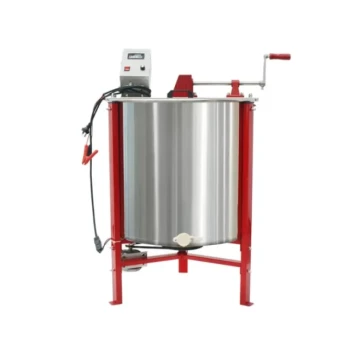
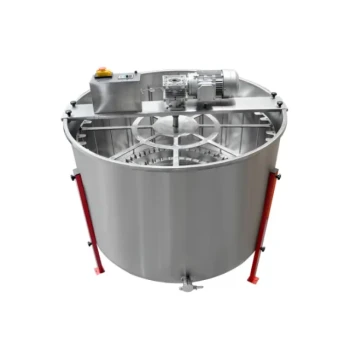
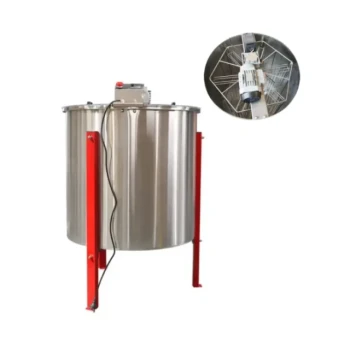
Industrial-grade honey extraction and filtration equipment significantly enhances quality assurance by utilizing food-grade stainless steel and centrifugal separation to eliminate contamination risks inherent in traditional tools. Unlike manual methods, this technology minimizes oxidation and metal leaching, ensuring the final product maintains the strict purity levels required for organic and high-level commercial certifications.
By transitioning from manual squeezing to precise, automated centrifugation and filtration, producers achieve a standardized level of hygiene and sensory consistency. This shift is not merely about speed; it is the fundamental requirement for entering high-end markets that demand verifiable purity and extended shelf life.
The Impact on Chemical Purity and Hygiene
Eliminating Material Contamination
The primary advantage of industrial equipment lies in its construction materials. As noted in the primary reference, these machines are typically built from food-grade stainless steel.
This specific material choice prevents the metal contamination often associated with older or improvised beekeeping tools. It ensures that the chemical composition of the honey remains unaltered during contact.
Controlling Oxidation
Traditional extraction often exposes honey to air for prolonged periods, leading to oxidation. Industrial extractors are designed to minimize this exposure.
By reducing the risk of oxidation, the equipment preserves the honey's natural enzymes and flavor profile. This is a critical factor for producers aiming to meet organic certification standards.
Sterile Processing Workflows
Advanced systems integrate automatic bottling and hygiene controls. This creates a "closed loop" that prevents external pathogens from entering the product.
Such sterile operations significantly reduce the risk of cross-contamination of honeybee diseases, such as foulbrood, ensuring the safety of both the consumer and the apiary.
Mechanical Preservation of Quality
Centrifugal Force vs. Manual Squeezing
Traditional methods often involve squeezing or crushing the comb, which forces wax and impurities into the honey. Industrial machines use centrifugal force.
This physical principle separates the honey cleanly without crushing the comb structure. The result is a naturally purer liquid that requires less aggressive processing later.
Preserving Nutritional Integrity
Because the extraction is rapid and mechanical rather than thermal or crushing, the honey retains its original nutritional content.
The system is designed to protect the natural flavor profile, ensuring the sensory quality meets the expectations of sophisticated palates.
Protecting the Honeycomb for Reuse
Industrial extraction keeps the structural integrity of the honeycomb intact. This allows beekeepers to return the drawn comb to the hive.
Since bees do not need to expend energy rebuilding the wax, they can focus on honey production, increasing overall yield and efficiency.
Standardization and Market Readiness
Precision Multi-Stage Filtration
Industrial setups utilize multi-stage precision filters. These effectively remove beeswax residues and particulate matter while maintaining the honey's natural clarity.
This process improves the visual appearance of the product, which is essential for brand positioning in competitive retail environments.
Consistency for Certification
High-end markets and international export channels require strict adherence to quality standards. Industrial equipment provides the consistent metrics needed for these certifications.
Standardized processing ensures that every batch meets the same food safety and sensory benchmarks, securing consumer trust.
Understanding the Trade-offs
Capital Investment vs. Output
While the quality assurance benefits are clear, industrial equipment represents a significant financial investment compared to traditional tools.
Small-scale hobbyists may find the cost prohibitive if their goal is not commercial certification or high-volume export.
Complexity of Operation
Moving from manual tools to automated machinery requires a shift in technical skills. Operators must understand proper calibration, particularly regarding temperature controls and filtration settings.
Improper use of these powerful tools could theoretically damage the honey if settings are not aligned with best practices.
Making the Right Choice for Your Goal
To determine if industrial-grade equipment is the right investment for your operation, consider your specific objectives:
- If your primary focus is obtaining organic certification: The food-grade stainless steel construction is essential to minimize oxidation and meet strict purity requirements.
- If your primary focus is scaling production volume: The reusability of honeycombs and rapid centrifugal extraction will significantly increase your annual yield per hive.
- If your primary focus is entering high-end retail markets: The multi-stage filtration and sterile bottling features are critical for ensuring the clarity, shelf life, and visual appeal required for premium branding.
Industrial equipment bridges the gap between raw agriculture and a certified, shelf-stable food product.
Summary Table:
| Feature | Traditional Manual Tools | Industrial-Grade Equipment | Quality Benefit |
|---|---|---|---|
| Material | Various/Improvised | Food-Grade Stainless Steel | Prevents metal leaching & contamination |
| Method | Crushing/Squeezing | Centrifugal Separation | Keeps wax out & preserves comb integrity |
| Hygiene | Open Air/Manual | Closed-Loop Sterile Systems | Minimizes oxidation & prevents pathogens |
| Filtration | Basic Gravity Strain | Multi-Stage Precision Filters | Ensures crystal clarity & brand consistency |
| Honeycomb | Often Destroyed | Intact & Reusable | Focuses bee energy on honey production |
Elevate Your Honey Production with HONESTBEE
Transitioning from manual tools to industrial-grade machinery is the key to unlocking high-end markets and ensuring the purity your brand deserves. At HONESTBEE, we specialize in empowering commercial apiaries and distributors with high-performance wholesale solutions. From specialized honey-filling and hive-making machines to a full spectrum of beekeeping tools and consumables, we provide the hardware and support needed to scale your operations efficiently.
Ready to achieve professional certification and superior yields? Contact our experts today to find your perfect equipment solution!
References
- Admin PRINCIPAL, Cristina Bianca Pocol. The Importance of Certification with PDO and PGI Quality Schemes: A Critical Analysis of the Romanian Beekeeping Sector. DOI: 10.15835/buasvmcn-fst:2021.0024
This article is also based on technical information from HonestBee Knowledge Base .
Related Products
- HONESTBEE 72 Frame Industrial Electric Honey Extractor for Beekeeping
- Electric 8 Frame Honey Spinner Extractor Equipment for Beekeeping
- 6 Frame Manual Stainless Steel Honey Extractor Beekeeping Equipment
- 32 Frame Commercial Electric Honey Extractor for Beekeeping and Honey Production
- HONESTBEE 2 Frame Manual Acrylic Honey Extractor Beekeeping Equipment
People Also Ask
- What is the importance of balancing honeycomb frames within a honey extractor? Ensure Stability and Protect Machinery
- How is honey separated from the frames after they are uncapped? Efficient Extraction Methods for High Yields
- What are the main benefits of using a honey extractor? Maximize Yields and Protect Your Honeycomb
- What are the recommended methods for removing honey from the honeycomb? Top Extraction Techniques for Maximum Efficiency
- How do manual honey extractors compare to electric honey extractors? Choosing the Right Tool for Your Apiary Growth