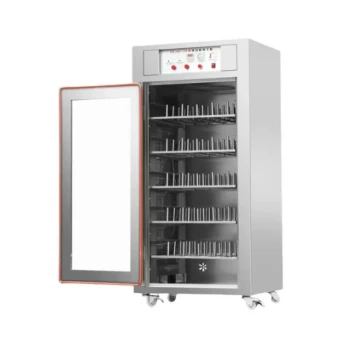
Heat pump drying technology provides a superior, controlled alternative to sun drying by utilizing a closed-loop circulation system to dehydrate bee pollen at lower temperatures. This method directly addresses the fragility of bee pollen, significantly improving the retention of heat-sensitive nutrients like Vitamin C, preventing microbial spoilage through faster drying, and reducing overall energy consumption.
By moving away from the unpredictability of open-air exposure, heat pump technology transforms bee pollen processing from a weather-dependent task into a precise scientific process that guarantees product safety and nutritional density.
Preserving Bioactivity and Nutrition
Protection from Thermal Degradation
Bee pollen is highly sensitive to heat. Heat pump technology operates at relatively low temperatures, which minimizes the thermal degradation of proteins and volatile nutritional components.
By avoiding the high, uncontrolled heat often associated with direct solar exposure or standard heating elements, this method preserves the chemical stability of the pollen.
Eliminating Ultraviolet (UV) Damage
Traditional sun drying subjects pollen to direct UV radiation, which can destroy bioactive substances.
Heat pump drying takes place in a closed environment, completely shielding the material from sunlight. This protection ensures the biological properties and natural color of the pollen remain intact.
Retention of Specific Nutrients
The primary advantage of this low-temperature approach is the efficient preservation of specific vitamins.
Research indicates that heat pump drying preserves Vitamin C much more effectively than open-air methods, which result in significant nutrient loss due to oxidation and exposure.
Ensuring Safety and Stability
Preventing Microbial Growth
Fresh bee pollen has a high water content, making it a prime target for mold and bacteria.
Sun drying is a slow process, creating a long window for potential spoilage. Heat pump drying rapidly reduces moisture, effectively preventing microbial growth that typically occurs during prolonged drying periods.
Achieving Consistent Moisture Levels
To ensure a long shelf life, bee pollen must reach a safe moisture range, typically between 6% and 8%.
Unlike sun drying, which creates uneven results based on humidity, heat pumps offer precise control to reach this target uniformly. This consistency prevents the development of "wet spots" that could lead to spoilage inside packaged products.
Operational Efficiency
Independence from Weather
Sun drying is entirely subject to environmental fluctuations like cloud cover, rain, or high humidity.
Heat pump systems provide a stable, controlled environment, allowing for consistent processing schedules regardless of external weather conditions.
Energy Conservation
Despite being a mechanical process, heat pump technology is highly efficient.
The closed-loop circulation system recycles heat within the unit, resulting in significantly lower total energy consumption compared to other mechanical drying methods or the potential product loss costs associated with sun drying.
Understanding the Trade-offs
Requirement for Precise Calibration
While heat pumps offer better control, that control must be exercised carefully.
Temperatures must be precisely calibrated; if the system runs too hot, there is still a risk of lipid rancidity or the loss of volatile aromatic compounds.
Equipment Complexity
Moving from passive sun drying to active heat pump drying introduces mechanical complexity.
Operators must understand airflow and temperature settings to ensure uniform dehydration. Improper settings can lead to case hardening, where the outside dries too fast, trapping moisture inside.
Making the Right Choice for Your Goal
To select the best processing method, consider your specific production priorities:
- If your primary focus is Nutritional Quality: Choose heat pump drying to maximize the retention of Vitamin C and protect bioactive compounds from UV damage.
- If your primary focus is Food Safety: Utilize heat pump technology to rapidly reduce moisture and minimize the risk of mold and microbial contamination.
- If your primary focus is Production Reliability: Adopt heat pump systems to eliminate weather-related downtime and ensure consistent product output.
Switching to heat pump drying is an investment in product consistency that elevates bee pollen from a raw agricultural commodity to a standardized functional food ingredient.
Summary Table:
| Feature | Heat Pump Drying | Traditional Sun Drying |
|---|---|---|
| Temperature Control | Precise, Low-Temperature | Uncontrolled, Variable |
| Nutrient Retention | High (Protects Vitamin C/Bioactives) | Low (UV & Thermal Degradation) |
| Safety | Prevents Mold & Microbial Growth | High Risk of Spoilage |
| Weather Dependency | Independent (24/7 Operation) | Dependent on Sunlight/Humidity |
| Consistency | Uniform 6-8% Moisture Content | Uneven Drying Results |
| Energy Efficiency | High (Heat Recovery System) | Passive but High Product Loss Risk |
Elevate Your Bee Pollen Production with HONESTBEE
Transitioning from traditional methods to advanced heat pump technology is essential for commercial apiaries and distributors aiming for premium quality. HONESTBEE provides the professional-grade machinery and expertise needed to scale your operations efficiently.
Our Value to Your Business:
- Specialized Machinery: From high-precision drying systems to honey-filling and hive-making machines.
- Comprehensive Wholesale Supply: Access a full spectrum of beekeeping tools, equipment, and essential industry consumables.
- Market Advantage: Ensure your bee pollen retains maximum bioactivity and meets strict food safety standards for global distribution.
Ready to modernize your facility with industry-leading equipment? Contact our experts today to find the perfect solution for your apiary!
References
- Nguyen Hay, Vo Tan Phuong. Novel Solution for High Efficiency Bee Pollen Heat Pump Dryer. DOI: 10.31080/asmi.2020.03.0687
This article is also based on technical information from HonestBee Knowledge Base .
Related Products
- 0.5T Capacity Honey Dehumidifier Dryer with Vacuum Heating and Thickening Filtering Machine
- HONESTBEE Professional Cabinet Bottle Dryer
- Automatic Continuous Heat Sealing Machine
People Also Ask
- What is the primary function of professional dehumidification equipment in honey processing? Stability & Quality
- How to dry up honey? The Safe Guide to Stabilizing Honey and Preventing Fermentation
- What is the process for using a dehumidifier to lower honey's moisture content? Expert Drying Techniques
- How to decrease moisture in honey? Prevent Fermentation and Ensure Long-Term Quality
- How to remove humidity from honey? Protect Your Harvest from Fermentation