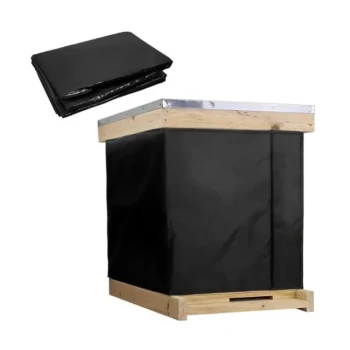
High-performance insulation fundamentally alters the thermodynamics of a wintering bee hive. Compared to traditional 19mm wooden boards, materials like Polyisocyanurate (PIR) and Expanded Polystyrene (EPS) provide significantly lower thermal conductivity and superior R-values. This material shift can increase the internal thermal resistance of the hive shell by more than ten times.
By effectively blocking heat conduction loss, high-performance insulation directly alleviates the metabolic pressure on the colony, reducing the survival stress caused by excessive heat dissipation.
The Physics of Hive Insulation
Superior Thermal Resistance
The primary advantage of modern synthetic materials over traditional timber is the massive increase in thermal resistance. Standard 19mm wooden boards offer relatively low insulation value.
In contrast, hives constructed from PIR or EPS create a thermal barrier that is exponentially more effective. The source data indicates that these materials can boost the shell's thermal resistance by a factor of greater than ten.
Reducing Conduction Loss
Heat loss in a hive occurs primarily through conduction—thermal energy transferring through the hive walls to the cold exterior.
Traditional wood allows a significant amount of this energy to escape. High-performance insulation minimizes this transfer, ensuring that the heat generated by the cluster remains inside the hive where it is needed.
Biological Impact on the Colony
Alleviating Metabolic Pressure
Winter survival is an energy equation for honey bees. To generate heat, bees consume honey and vibrate their wing muscles (shivering).
When heat dissipates rapidly through thin wooden walls, the colony faces intense metabolic pressure. They must consume more stores and exert more physical energy just to maintain a baseline survival temperature.
Reducing Survival Stress
The use of PIR or EPS directly counters the physical stress of winter. By retaining heat more efficiently, the colony does not need to work as hard to combat the external cold.
This reduction in "thermal stress" lowers the overall physiological burden on the bees, improving their likelihood of surviving the winter season intact.
The Performance Gap: Wood vs. Modern Synthetics
The Limitations of Traditional Timber
While wood is the traditional standard, it presents distinct thermal disadvantages in cold climates.
The reference highlights that 19mm boards are "thin" in the context of thermal performance. Relying solely on timber forces the bees to compensate for the material's inability to retain heat effectively.
The Efficiency of Synthetics
PIR and EPS are engineered specifically for thermal efficiency. They solve the specific problem of heat dissipation that natural timber cannot address without being impractically thick.
The trade-off here is clear: opting for traditional materials requires the bees to expend significantly more biological energy to compensate for heat loss.
Making the Right Choice for Your Goal
When selecting hive materials for wintering, the decision rests on prioritizing thermal efficiency versus traditional aesthetics.
- If your primary focus is Colony Survival: Prioritize PIR or EPS hives to increase thermal resistance by over 10x and minimize the metabolic energy your bees must burn to stay warm.
- If your primary focus is Traditional Materials: Be aware that 19mm wooden boards will result in higher heat conduction loss, placing greater metabolic pressure on your colony during deep freezes.
Ultimately, switching to high-performance insulation is the most effective structural change you can make to reduce the biological cost of winter for your bees.
Summary Table:
| Feature | Traditional Timber (19mm) | High-Performance (PIR/EPS) | Benefit for Colony |
|---|---|---|---|
| Thermal Resistance | Low (Baseline) | >10x Higher | Drastically reduces heat loss |
| Heat Conduction | Significant Loss | Minimal Loss | Maintains stable internal climate |
| Metabolic Pressure | High Energy Expenditure | Low Energy Expenditure | Bees consume less honey stores |
| Survival Stress | High Physiological Burden | Low Physiological Burden | Improved wintering success rates |
| Material Efficiency | Heavy/Thick for R-value | Lightweight/High R-value | Practical, high-efficiency design |
Maximize Your Colony Survival with HONESTBEE
At HONESTBEE, we specialize in empowering commercial apiaries and distributors with the industry's most advanced beekeeping solutions. Whether you are looking to upgrade your fleet with high-performance insulated hives or require specialized hive-making and honey-filling machinery, our comprehensive wholesale portfolio has you covered.
Why Partner with HONESTBEE?
- Superior Insulation: Reduce metabolic stress on your bees with materials that outperform traditional timber by 10x.
- End-to-End Supply: From essential consumables and specialized hardware to honey-themed cultural merchandise, we provide everything needed for large-scale success.
- Expert Scalability: We cater specifically to the high-volume needs of professional beekeepers and global distributors.
Contact us today to optimize your wintering strategy and scale your apiary operations!
References
- Derek Mitchell. Honeybee cluster—not insulation but stressful heat sink. DOI: 10.1098/rsif.2023.0488
This article is also based on technical information from HonestBee Knowledge Base .
Related Products
- Professional Insulated Winter Hive Wrap for Beekeeping
- Professional Insulated Plastic Bee Hives
- Wholesales Dadant Size Wooden Bee Hives for Beekeeping
- Inner Beehive Cover for Beekeeping Bee Hive Inner Cover
- High-Performance Langstroth Bee Hives for Global Professional Beekeeping
People Also Ask
- What are the steps to properly wrap a beehive for winter? Ensure Your Colony Survives the Cold
- When is the best time to wrap a beehive for winter? A Guide to Perfect Winterization Timing
- How do professional insulation wraps provide protection for bee colonies? Optimize Winter Survival & Energy Efficiency
- What are the technical benefits of using winter wraps for beehive insulation? Boost Colony Survival & Hive Health
- What are the benefits of using insulated covers for hives? Ensure Colony Survival and Health