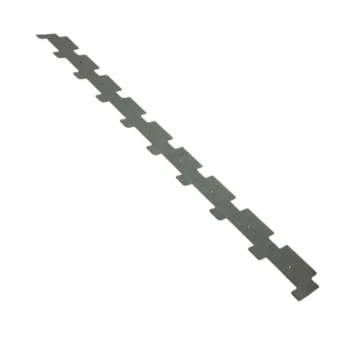
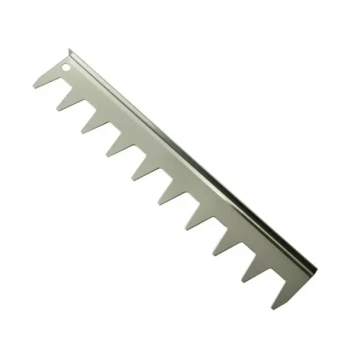
The Modified Langstroth Frame serves as a precision tool for standardizing Varroa resistance studies. By utilizing a detachable structure where the comb foundation is cut in half, researchers can inoculate a frame in a single highly infested donor colony and then split it for transfer into different test colonies. This specific mechanism eliminates the variability inherent in using multiple donor sources, ensuring that resistance traits are measured against a uniform level of mite pressure.
The core innovation of this hardware is its ability to decouple mite inoculation from the testing environment, allowing a single biological source to fuel multiple comparative studies with high statistical precision.
The Mechanics of Modular Testing
The Detachable Structure
The fundamental advantage lies in the frame’s specialized, modular hardware. The comb foundation is physically cut in half before being fitted into the frame. This allows the frame to function as a single unit during the laying and inoculation phase, yet separate into distinct units for the testing phase.
Streamlined Inoculation
Researchers begin by placing the complete modified frame into a "donor colony" known to have high Varroa infestation rates. Because the frame is intact at this stage, the donor colony accepts it readily for brood rearing. This step ensures that the developing brood is exposed to a consistent, high density of mites.
Efficient Brood Transfer
Once the brood is capped—trapping the mites inside—the frame is removed and split according to its pre-cut design. These halves can then be transferred to different test colonies. This mobility allows breeders to introduce a standardized "challenge" to various colonies without moving the entire donor hive.
Strategic Advantages for Research
Reducing Biological Overhead
The most significant logistical benefit is the reduction in required donor colonies. In traditional testing, generating enough infested brood for multiple test subjects often requires maintaining numerous high-mite colonies. The modified frame enables a single donor colony to service multiple test groups, optimizing resource allocation.
Precision in Comparative Monitoring
By splitting a single frame of brood between colonies, researchers remove a major variable: the source of the infestation. Because the brood and mites come from the same donor frame, any difference in mite levels observed later can be attributed to the specific resistance traits (such as grooming or hygiene behavior) of the test colony, rather than random variations in the initial mite load.
Operational Considerations
Specialized Hardware Requirement
While standard Langstroth systems are prized for their modularity, this specific method relies on customized detachable frames. The success of this testing protocol depends on the availability and maintenance of this specialized equipment, rather than standard commercial frames found in typical apiaries.
Timing and Execution
The effectiveness of this method hinges on precise timing. The transfer must occur after the brood is capped but before the bees emerge. This requires rigorous inspection schedules to ensure the split and transfer happen within the optimal biological window.
Making the Right Choice for Your Goal
To determine if Modified Langstroth Frames are the right tool for your apiary, consider your primary objectives:
- If your primary focus is scientific research or breeding: This hardware is essential for isolating variables, allowing you to select for specific traits like Varroa Sensitive Hygiene (VSH) with high confidence.
- If your primary focus is resource efficiency: The split-frame design will allow you to conduct wider-scale testing while maintaining fewer high-risk "donor" colonies in your operation.
By standardizing the inoculation source, you move from anecdotal observation to data-driven genetic improvement.
Summary Table:
| Feature | Advantage for Research | Impact on Result |
|---|---|---|
| Detachable Design | Allows a single frame to be split into multiple test colonies. | Ensures uniform mite pressure across samples. |
| Centralized Inoculation | Uses a single donor colony to populate multiple frames. | Eliminates variability from multiple donor sources. |
| Modular Hardware | Decouples the mite source from the testing environment. | Isolates genetic resistance traits (e.g., VSH). |
| Resource Efficiency | Reduces the number of high-mite donor colonies needed. | Lowers operational overhead and biological risk. |
Elevate Your Apiary's Research Capabilities with HONESTBEE
Precision beekeeping requires specialized tools that standard commercial equipment simply cannot provide. At HONESTBEE, we specialize in supporting commercial apiaries and distributors with high-quality, professional-grade hardware designed for excellence.
Whether you need customized frames for scientific breeding, advanced hive-making machinery, or honey-processing equipment, our comprehensive wholesale portfolio has you covered. Partner with us to access:
- Advanced Beekeeping Machinery: From honey-filling to hive manufacturing.
- Precision Research Tools: Designed for Varroa resistance and genetic studies.
- Global Distribution Support: Reliable supply chains for essential consumables and cultural merchandise.
Ready to scale your operation with data-driven tools? Contact us today to explore our wholesale solutions!
References
- Marie-Lou Morin, Pierre Giovenazzo. Mite non-reproduction, recapping behavior, and hygienic behavior (freeze-kill method) linked to <i>Varroa destructor</i> infestation levels in selected <i>Apis mellifera</i> colonies. DOI: 10.1177/10406387231172141
This article is also based on technical information from HonestBee Knowledge Base .
Related Products
- JZBZ Langstroth Queen Rearing Frame for Beekeeping
- Heavy Duty Castellated Iron Frame Spacer for Honey Supers
- Stainless Steel 9 Frame Hive Spacer Durable Precise for Commercial Beekeeping
- Wooden Bee Hive Frames for Beekeeping and Wholesale
- Plastic Honey Comb Frames Cassette Box for Honey
People Also Ask
- Why use finishing colonies for queen cell capping? Secrets to Superior Queen Quality and Performance
- How do queen rearing frames and grafting needles function together? Master the Doolittle Method for High-Quality Queens
- What is the purpose of queen rearing frames? Master Controlled Queen Production for Your Apiary
- What are the functions of queen rearing frames and artificial queen cells? Master Bee Genetic Improvement
- What roles do professional queen rearing frames and artificial queen cells play? Scaling Your Queen Bee Production