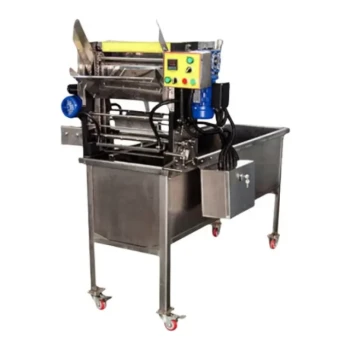
Automated honey filling machines provide a decisive advantage over manual processes by delivering high-precision quantitative control and sterile packaging technology. These systems are the technical prerequisite for transitioning from direct, short-chain sales to high-volume supermarket supply chains, ensuring both the accurate net weight and hygienic safety required for mass retail.
The core value of automation lies in its ability to transform honey from a bulk agricultural commodity into a standardized, shelf-stable retail product. By eliminating human variability and contamination risks, these machines ensure the product meets the rigorous consistency and safety standards demanded by global supply chains.
Unlocking Retail Market Access
Transitioning to Long-Chain Distribution
Manual filling limits producers to direct or local sales due to inconsistency and low throughput. Automated filling is the critical enabler for entering large-scale retail and supermarket supply chains. It provides the reliability and volume capacity necessary to satisfy commercial contracts that manual labor cannot sustain.
Ensuring Regulatory Weight Compliance
Retail markets demand strict adherence to net weight regulations. Automated machines utilize precision metering systems to provide exact quantitative control for every bottle. This eliminates the product variance inherent in manual filling, ensuring every unit meets legal industry standards.
Protecting Product Integrity and Safety
Eliminating Secondary Contamination
Manual packaging exposes honey to the open environment and human contact, increasing the risk of contamination. Industrial machines often feature closed-piping architectures and sterile packaging technologies. This isolation effectively prevents secondary contamination, ensuring hygienic safety from the storage tank to the final sealed container.
Preserving Pharmacological Stability
Honey contains oxygen-sensitive bioactive substances, such as inhibines, phenolic antioxidants, and vitamins. Automated systems significantly reduce exposure to air during the filling and sealing process. This protection preserves the honey’s pharmacological stability, maintaining its health benefits and quality during storage and transportation.
Operational Efficiency and Brand Value
Enhancing Brand Presentation
Manual filling can result in messy, inconsistent packaging that lowers perceived value. Automation ensures a standardized, professional industrial presentation for every unit. This consistency improves the product's aesthetic appeal, directly enhancing brand value in a competitive retail environment.
Optimizing Throughput and Labor
Transferring honey from large storage tanks to retail packaging is a bottleneck in manual operations. High-efficiency automated workflows significantly reduce this time and lower associated labor costs. By utilizing vacuum sealing and rapid dosing, producers can minimize product loss and maximize daily output.
Operational Considerations and Trade-offs
Managing High Viscosity
Honey is a difficult fluid to handle due to its high viscosity and tendency to drip. While manual filling relies on operator skill to manage this, automated machines require specific temperature-regulated anti-drip designs to function correctly. Without these specific technical features, automation can lead to equipment clogs or inconsistent fills.
The Necessity of Specialized Infrastructure
Implementing automation moves a facility from simple filling to a complex industrial process. It requires a shift to industrial-grade equipment capable of maintaining vacuum pressure and precise temperatures. This increases the technical requirement for maintenance compared to simple manual setups.
Making the Right Choice for Your Goal
To determine if automated filling aligns with your supply chain strategy, consider your specific end-market objectives:
- If your primary focus is Supermarket Distribution: You must adopt automation to ensure the precise net weight and standardized packaging required by retail audits.
- If your primary focus is Product Quality & Health Benefits: Automation is essential to utilize airtight, sterile sealing that preserves sensitive antioxidants and prevents oxidation.
- If your primary focus is Cost Reduction: Implementing automation will lower unit costs by increasing production speed and reducing the reliance on manual labor.
Automation is not just a speed upgrade; it is the bridge between acting as a local apiary and operating as a commercial manufacturer.
Summary Table:
| Feature | Manual Filling | Automated Filling |
|---|---|---|
| Market Reach | Local & direct sales only | Global supermarket & retail chains |
| Precision | High variance/human error | Precise quantitative metering |
| Hygiene | Risk of secondary contamination | Closed-piping & sterile technology |
| Product Integrity | Exposure to air/oxidation | Vacuum sealing & nutrient preservation |
| Output Volume | Low/Labor-intensive | High-speed industrial throughput |
| Brand Image | Inconsistent packaging | Standardized professional presentation |
Scale Your Apiary into a Commercial Powerhouse with HONESTBEE
Transitioning from manual processes to industrial automation is the key to unlocking global retail opportunities. HONESTBEE specializes in empowering commercial apiaries and distributors with high-precision honey-filling machines, advanced hive-making equipment, and comprehensive beekeeping tools. Our solutions are designed to ensure your honey meets the rigorous standards of modern supply chains while preserving its natural pharmacological benefits.
Ready to optimize your production and increase your brand value? Contact HONESTBEE Today to Explore Our Wholesale Equipment Solutions
References
- O.V. Kostenko. Beekeeping and honey production in Russia. DOI: 10.1051/bioconf/20224802007
This article is also based on technical information from HonestBee Knowledge Base .
Related Products
- Fully Automatic Honey Filling Packaging Machine for Processing Line
- Automatic Honey Filling and Filtering Machine for Beekeeping Bottle Filling
- Precision Durable Efficient HONESTBEE Rotary Honey Filling Machine
- Semi Automatic Small Honey Bottle Filling Machine Honey Filler
- Precision Automated Packaging Turntable Honey Spoon Filling Sealing Packing Machine
People Also Ask
- Why are fully automatic honey filling and packaging lines essential? Boost Your Honey's Market Value and Quality
- What is a fully-automatic honey filler? Streamline Your Production with High-Precision Automation
- How do automated honey filling and packaging machines affect profitability? Boost Margins with HONESTBEE Technology
- How do automated honey filling and packaging machines contribute to the market value of honey products? Maximize Your ROI
- How do industrial-grade automated honey filling and packaging machines mitigate the risk of physical contamination?