You do not need professional equipment to effectively melt wax. The most reliable alternatives for beginners and hobbyists are utilizing a double boiler on a standard stove, using a microwave for quick heating, or employing a makeshift setup involving a hot plate or oven.
The Core Insight While professional melters offer precise temperature control, simple household methods can achieve excellent results if you prioritize safety and patience. The fundamental rule is to use indirect heat to prevent the wax from scorching or reaching its flash point.
The Double Boiler Method
This is widely considered the safest and most effective alternative to professional gear. It mimics the indirect heating mechanism of industrial melters.
How It Works
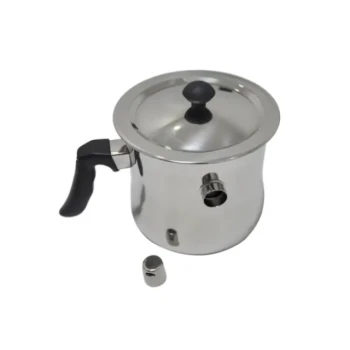
A double boiler consists of two pots: a larger one containing boiling water and a smaller, heat-safe container nesting inside it to hold the wax.
The boiling water heats the inner container, ensuring the wax never exceeds the temperature of boiling water (212°F/100°C).
Best For
This method is ideal for consistent temperature control.
It is the best choice if you are melting larger batches or need to keep the wax liquid for an extended period while you work.
Dealing with Dirty Wax
If you are processing raw or dirty wax, you can modify this method by melting the wax directly in water.
As noted in advanced techniques, you can melt wax and water together, pour the mixture into a carton, and let it set; the water and impurities will settle at the bottom for easy removal.
The Microwave Method
For those prioritizing speed over precision, the microwave is a viable option, though it requires vigilance.
The Procedure
Place your wax in a microwave-safe container (glass or thick plastic) and heat it in short intervals.
Do not heat it continuously. Heat for 30 seconds, stir, and repeat until liquid.
The Risks
Microwaves heat unevenly, creating "hot spots" that can burn the wax or degrade fragrance oils.
This method is best reserved for very small batches or for re-melting leftover wax.
Oven and Hot Plate Setups
If you lack a stove or microwave, existing kitchen appliances can serve as adequate heat sources.
The Oven Technique
You can place heat-safe containers of wax into an oven set to a low temperature (usually the lowest setting, around 170°F-200°F).
This is a slow process but allows you to melt multiple containers simultaneously.
Using a Hot Plate
A standalone hot plate can substitute for a stove burner.
However, you should still use the double boiler configuration on top of the hot plate rather than placing a pot of wax directly on the coil, which creates dangerous localized heat.
Understanding the Trade-offs
Before choosing your method, it is critical to understand the limitations of non-professional equipment.
Temperature Fluctuation
Professional melters hold a specific temperature automatically.
With a double boiler or hot plate, you must constantly monitor the wax with a thermometer to ensure it does not get too hot or cool too quickly.
Separation and Cleaning
When using alternative methods for cleaning wax (specifically melting with water), separation can be tricky.
If a single melt doesn't result in a clean disc, you may need a two-step process: re-melt the mixture in a double boiler, pour it into a carton, and cut the bottom off the next day to drain the specific impurities.
Making the Right Choice for Your Goal
Select the method that aligns with your specific constraints and project type.
- If your primary focus is Quality and Safety: Use the Double Boiler method to ensure even heating and prevent scorching.
- If your primary focus is Speed: Use the Microwave for small, quick tasks, but monitor it closely to avoid hot spots.
- If your primary focus is Cleaning Raw Wax: Use the Water/Carton method, melting the wax with water to separate heavy impurities before refining.
Success in wax melting is less about the tool you use and more about your control over the heat source.
Summary Table:
| Method | Heating Type | Best For | Primary Advantage |
|---|---|---|---|
| Double Boiler | Indirect (Water) | Large batches & precision | Safest; prevents scorching |
| Microwave | Direct (Radiation) | Very small batches | Fastest preparation time |
| Oven | Convection (Air) | Multiple containers | Hands-off; low steady heat |
| Hot Plate | Direct/Indirect | Remote workspaces | Portable; versatile setup |
Elevate Your Apiary Operations with HONESTBEE
While DIY methods work for hobbyists, commercial success requires professional-grade efficiency. HONESTBEE empowers commercial apiaries and distributors with a comprehensive range of beekeeping tools, specialized machinery, and essential consumables.
Whether you need industrial-scale honey-filling machines, precision wax processing equipment, or high-quality hive-making hardware, we provide the expertise and wholesale supply to grow your business.
Ready to scale your production? Contact us today to discover how our tailored equipment solutions can streamline your operations and maximize your yield.
Related Products
- Solar Beeswax Melter Easy Solar Wax Melter for Beeswax
- Electric Commercial Beeswax Melter for Factory Use
- Professional Stainless Steel Wax Melter for Beekeeping and Crafts
- Steam Beeswax Melter Wax Warmer for Wax Processing
- Beeswax Melter for Candle Making Honey Bee Wax Melter
People Also Ask
- How does a solar melter work to process beeswax? The Eco-Friendly Way to Pure Wax
- What is a solar wax melter and how does it work? Harness the Sun for Pure Beeswax
- What are the benefits of using a solar wax melter? Harness the Sun for Pure, Cost-Effective Beeswax
- What is the purpose of a solar wax melter in beekeeping? Sustainable Wax Processing for Modern Apiaries
- How does a solar-powered frame wax melter work? Harness the Sun for Sustainable Beekeeping