The fundamental toolkit for honey extraction consists of five primary components: an uncapping knife, an uncapping tank, a centrifugal extractor, a strainer, and a storage tank. While additional accessories can aid the process, this specific combination allows you to slice wax cappings off the comb, spin the honey out without destroying the frames, and filter the final product for bottling.
Core Takeaway: The goal of modern extraction is not just to harvest honey, but to preserve the drawn comb for the bees to reuse. While simple methods exist, investing in an extractor setup maximizes future hive productivity by keeping the wax frames intact.
Preparing the Frames for Extraction
Before honey can be removed, the wax seal placed by the bees must be broken. This stage requires tools designed to maximize yield while minimizing mess.
The Uncapping Knife
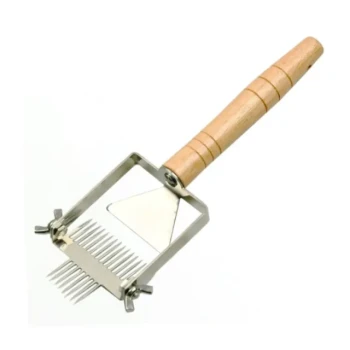
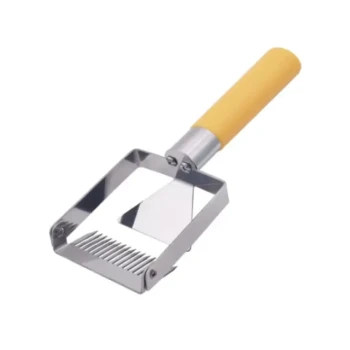
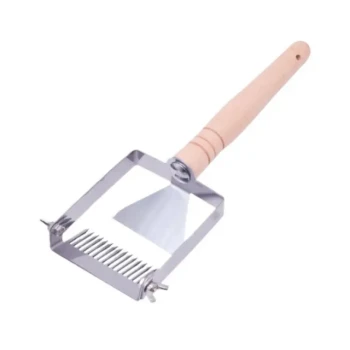
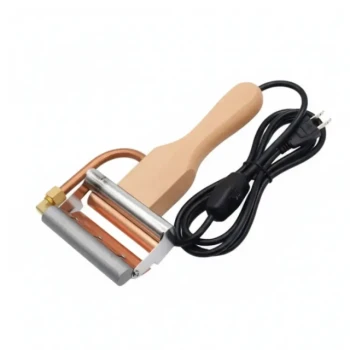
To access the honey, you must remove the thin layer of wax cappings. A heated uncapping knife is the standard tool for this task. It slices through the wax smoothly, melting it slightly to prevent tearing the delicate comb beneath.
The Uncapping Tank
You need a dedicated vessel to hold the frames while you work and to catch the wax cappings as they fall. An uncapping tank serves this dual purpose. It usually features a crossbar to rest the heavy frames on and a bottom reservoir to collect the honey that drips off the wet cappings.
The Extraction Mechanism
Once the frames are uncapped, the physical separation of honey from the comb begins. This is the heart of the operation.
The Honey Extractor
The extractor is a drum containing a rotating basket. You place the uncapped frames inside, and the basket spins—either manually or via an electric motor. This utilizes centrifugal force to fling the liquid honey out of the cells and onto the walls of the drum, where it drains to the bottom.
Preserving the Comb
The primary advantage of using a centrifugal extractor is that it keeps the wax foundation intact. Because the comb is not crushed, the bees can immediately begin refilling it after you return the frames to the hive, significantly speeding up the next production cycle.
Filtering and Settling
Honey coming straight out of an extractor contains bits of wax, propolis, and air bubbles. Finishing tools are required to clarify the product.
The Strainer
As honey exits the extractor, it must pass through a strainer. This filters out the wax cappings, bee parts, and other debris dislodged during the spinning process.
The Storage Tank
After straining, the honey flows into a storage tank (often called a settling tank or bottling pail). This vessel allows the honey to sit so that air bubbles and fine particles can rise to the top before the clear honey is bottled from a gate at the bottom.
Understanding the Trade-offs
While the mechanical extraction method described above is the professional standard, it is important to understand alternative approaches and limitations.
Mechanical Extraction vs. Crush and Strain
The Crush and Strain method is an alternative that requires fewer tools—often just a tub, a crusher (like a spoon), and cheesecloth. However, this method destroys the honeycomb. The trade-off is a lower upfront cost for equipment versus a higher biological cost for the bees, who must rebuild the wax from scratch.
Equipment Maintenance
Using specialized equipment like extractors requires strict hygiene. You must clean the drum and basket thoroughly to prevent contamination or fermentation of residue honey. Stainless steel equipment is highly recommended for its durability and ease of sanitation.
Making the Right Choice for Your Goals
Your choice of tools should depend on the scale of your operation and your long-term plans for the apiary.
- If your primary focus is preserving wax and maximizing yield: Invest in a centrifugal extractor and heated knife to keep your frames intact for immediate reuse.
- If your primary focus is low-cost entry for a single hive: Utilize the crush and strain method with basic kitchen tools, accepting that bees will need time to rebuild the comb.
- If your primary focus is clean, professional bottling: Ensure you have a multi-stage straining system and a settling tank to produce clear, debris-free honey.
With the right tools in hand, the extraction process shifts from a messy chore to a satisfying harvest that rewards your patience and the bees' hard work.
Summary Table:
| Tool Name | Primary Function | Key Benefit |
|---|---|---|
| Uncapping Knife | Removes wax seals from honey cells | Minimizes damage to the underlying comb |
| Uncapping Tank | Holds frames and catches wax drippings | Keeps workspace clean and recovers lost honey |
| Honey Extractor | Uses centrifugal force to spin out honey | Preserves the drawn comb for immediate reuse |
| Strainer | Filters wax bits and debris from honey | Produces a clean, professional-grade product |
| Storage Tank | Allows honey to settle and air to escape | Enables easy bottling via a honey gate |
Scale Your Honey Production with HONESTBEE
Are you looking to upgrade your commercial apiary or expand your distribution inventory? HONESTBEE provides professional-grade beekeeping solutions tailored for growth. We supply everything from advanced honey-filling and hive-making machinery to a full spectrum of beekeeping tools and essential consumables.
Our mission is to help commercial beekeepers and distributors maximize efficiency and honey quality. Partner with us to access high-durability hardware and specialized industry merchandise that sets you apart.
Contact HONESTBEE Today to Discuss Wholesale Solutions
Related Products
- Stainless Steel 3 Frame Manual Honey Extractor Spinner for Bee Honey Extraction
- Professional Stainless Steel Pry-Bar Hive Tool
- Stainless Steel Beekeeping Honey Extractor Lid
- HONESTBEE 2 Frame Manual Acrylic Honey Extractor Beekeeping Equipment
- Manual Hand Crank 4 Frame Honey Extractor Centrifuge for Beekeeping
People Also Ask
- Which type of honey extractor is generally more durable? Focus on Material & Build Quality for Longevity
- What are the disadvantages of a manual honey extractor? Overcome Efficiency Bottlenecks in Your Apiary
- What is a manual honey extractor? The Essential Guide to Cost-Effective Beekeeping for Beginners
- Why are manual extractors popular among beginner beekeepers? A Guide to Starting Simple & Saving Money
- What are the primary advantages of utilizing a manual honey extractor? Cost-Effective & Gentle Harvesting