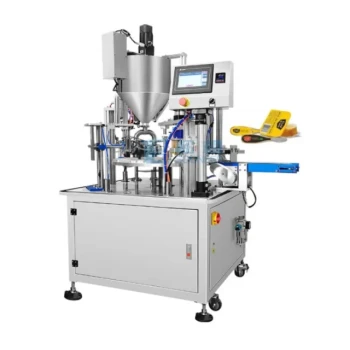
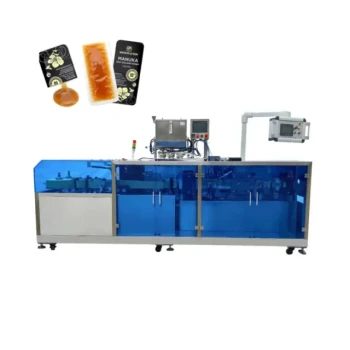
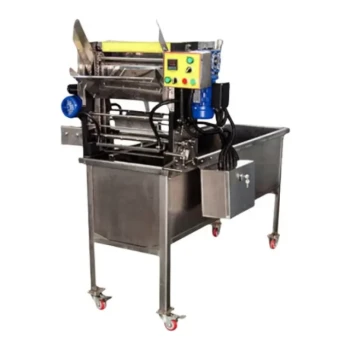
Automated honey filling lines provide the essential standardization and hygiene controls required to elevate honey production from a hobbyist activity to a commercial enterprise. By ensuring consistent packaging aesthetics and meeting rigorous logistics standards, these systems serve as the technical foundation for entering supermarket supply chains and extending product shelf life.
Core Takeaway: The transition to automated filling is not merely about speed; it is about establishing the technical capability to scale. These systems replace manual variability with industrial precision, ensuring compliance with international trade standards and enabling the shift from low-margin bulk sales to high-value retail distribution.
Bridging the Gap to Commercial Retail
Enabling Market Entry
For beekeepers aiming to scale, the primary barrier is often meeting the strict requirements of modern retail. Automated lines ensure the standardization necessary to transition from home-based sales to commercial shelves.
Supermarkets and logistics networks demand uniform packaging and consistent product presentation. Automation guarantees that every unit meets these aesthetic and physical standards, validating the brand in the eyes of retailers.
Extending Product Shelf Life
Hygiene directly correlates to longevity. Automated processes significantly improve the hygiene of the bottling process, which effectively extends the shelf life of the final product.
By removing human contact during critical filling stages, producers can guarantee a level of stability and safety that manual filling cannot consistently match.
Precision and Operational Efficiency
Eliminating Overfill and Waste
Manual filling often leads to "giveaway"—slight overfilling that accumulates into significant revenue loss over thousands of units. High-precision quantitative control systems ensure the volume in every container is consistent.
This precision significantly reduces overflow loss and material waste. By strictly controlling the weight or volume, producers maximize the yield from their bulk storage tanks.
Handling High Viscosity
Honey presents unique physical challenges due to its thickness and stickiness. Industrial-grade machines utilize temperature-regulated anti-drip designs to manage this high viscosity effectively.
These features ensure that the filling process remains clean and efficient, preventing the mess and slowdowns typically associated with handling thick fluids manually.
Reducing Labor Costs
Automation transforms the workflow. High-efficiency equipment drastically reduces the time required to transfer honey from large storage tanks to retail packaging.
This allows producers to lower labor costs significantly. Instead of manually filling bottles, staff can be redeployed to higher-value tasks, optimizing the overall production economy.
Hygiene and Contamination Control
Preventing Secondary Contamination
One of the gravest risks in food production is introducing contaminants during packaging. Automated lines often operate within a closed environment, minimizing the honey's exposure to the surrounding air.
This design effectively blocks the risk of secondary microbial contamination. It also prevents the introduction of physical impurities that can occur during open, manual operations.
Controlling Moisture Absorption
Honey is hygroscopic, meaning it absorbs moisture from the air, which can lead to fermentation and spoilage.
Closed-pipe designs limit contact between the honey and the external environment. This preserves the product's quality and ensures it meets food safety standards upon entering the global supply chain.
Understanding the Trade-offs
Complexity of Maintenance
While automation solves production bottlenecks, it introduces technical complexity. Industrial-grade equipment requires regular maintenance and calibration to maintain its high precision. Producers must be prepared to manage the technical upkeep of sensors, flow meters, and anti-drip mechanisms.
The Volume Requirement
Automation is an investment in scale. For operations with low output, the efficiency gains may not justify the capital expenditure. These systems are designed for high-efficiency workflows, meaning they generate the highest return on investment when running at capacity rather than for intermittent, small-batch runs.
Making the Right Choice for Your Goal
When evaluating automated filling lines, align your choice with your specific business objective:
- If your primary focus is Market Expansion: Prioritize systems that ensure high packaging aesthetics and standardization to meet strict supermarket and logistics entry requirements.
- If your primary focus is Cost Reduction: Look for machines with high-precision quantitative controls to eliminate material waste and overflow loss.
- If your primary focus is Quality Assurance: Select equipment with closed-pipe, hygienic designs to prevent secondary contamination and extend shelf life.
Ultimately, automated filling equipment is the critical lever that transforms a beekeeping operation into a competitive, compliant, and scalable commercial business.
Summary Table:
| Feature | Manual Filling | Automated Filling Lines |
|---|---|---|
| Precision Control | High variability (Overfill waste) | High-precision quantitative sensors |
| Hygiene Standard | Open exposure risk | Closed-pipe system/Anti-contamination |
| Labor Efficiency | Time-intensive/Manual labor | High-speed throughput/Low labor cost |
| Shelf Life | Shorter (Contamination risk) | Extended (Sterile processing) |
| Viscosity Handling | Messy & slow for thick honey | Temperature-regulated anti-drip design |
| Market Readiness | Limited to local/small-scale | Retail & Supermarket compliant |
Elevate Your Beekeeping Enterprise with HONESTBEE
Transitioning from bulk sales to high-value retail requires more than just honey—it requires industrial precision. HONESTBEE specializes in empowering commercial apiaries and distributors with the technical infrastructure needed to scale globally.
Our Value to You:
- Comprehensive Wholesale Equipment: From high-precision honey-filling machines to hive-making hardware.
- Operational Efficiency: Reduce material waste and labor costs with our specialized machinery.
- Quality Assurance: Ensure your product meets international food safety and logistics standards.
Whether you are a growing apiary or a global distributor, we supply the full spectrum of beekeeping tools, machinery, and industry consumables to keep your production running at peak performance.
Contact HONESTBEE today to optimize your production line!
References
- Ionica Soare. Some Aspects Regarding the Transhumance of the Romanian Beekeepers, Members of the Black Sea Basin Network. DOI: 10.35219/eai15840409145
This article is also based on technical information from HonestBee Knowledge Base .
Related Products
- Fully Automatic Honey Filling Packaging Machine for Processing Line
- Automatic Honey Filling and Filtering Machine for Beekeeping Bottle Filling
- Precision Automated Packaging Turntable Honey Spoon Filling Sealing Packing Machine
- Precision Durable Efficient HONESTBEE Rotary Honey Filling Machine
- Semi Automatic Small Honey Bottle Filling Machine Honey Filler
People Also Ask
- Why are fully automatic honey filling and packaging lines essential? Boost Your Honey's Market Value and Quality
- What is a fully-automatic honey filler? Streamline Your Production with High-Precision Automation
- How do automated honey filling and packaging machines affect profitability? Boost Margins with HONESTBEE Technology
- How do automated honey filling and packaging machines contribute to the market value of honey products? Maximize Your ROI
- How do industrial-grade automated honey filling and packaging machines mitigate the risk of physical contamination?