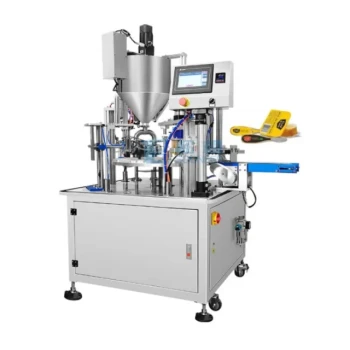
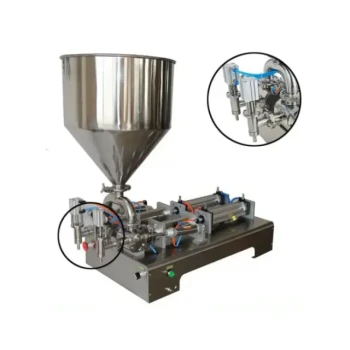
High-precision honey-filling machines act as the critical pivot point between artisanal beekeeping and industrial-scale production. By automating the dosage process, these machines eliminate the inconsistencies of manual labor, ensuring that every container meets exact weight specifications while adhering to rigorous food safety standards.
The primary value of this technology lies in standardization. By removing human error from the equation, commercial producers simultaneously reduce high-value raw material waste and guarantee a hygienic, uniform product that retail markets demand.
Cost Control and Material Efficiency
Eliminating Overfill Waste
In manual operations, producers often slightly overfill jars to ensure they meet minimum weight regulations. High-precision dosage control eliminates this need.
By strictly metering the volume, these machines prevent the accidental "giveaway" of high-value honey. Over thousands of units, saving even a few grams per jar translates to significant profit retention.
Reducing Spillage and Loss
Manual transfer of viscous liquids like honey frequently results in drips and spills.
Automated systems often utilize anti-drip technologies and precise shut-off nozzles. This ensures that the raw material goes into the container, not onto the production floor, maximizing yield.
Operational Scalability
Increasing Packaging Throughput
Manual filling is the primary bottleneck in scaling up honey production. Humans cannot maintain consistent speed over long shifts.
Automated filling machines significantly increase packaging speed, allowing producers to fulfill large orders that manual labor cannot handle. This capability is essential for meeting the volume demands of distributors and large retailers.
Transitioning to Modern Commerce
Adopting this technology marks the shift from traditional collection to modern commercial manufacturing.
It allows operations to grow revenue without a linear increase in labor costs. This scalability helps beekeeping operations expand from local sales to broader export or retail markets.
Product Safety and Quality Assurance
Minimizing Secondary Contamination
One of the greatest risks in food production is "secondary contamination"—impurities introduced during the packaging phase.
High-precision machines often feature closed-pipe designs. This minimizes the honey's contact with external air and human hands, preventing the introduction of dust, moisture, or bacteria.
Meeting Hygiene Standards
Industrial-grade equipment is built with sanitary design principles that are easier to clean and sterilize than manual tools.
This adherence to strict hygiene standards prevents spoilage and fermentation issues caused by contaminants. It ensures the final product is safe, stable, and compliant with international quality standards.
Market Positioning and Branding
Enhancing Brand Credibility
Consumers and retailers associate consistency with quality.
A professional appearance—where every jar has an identical fill level—enhances the brand's image. It signals to the consumer that the product is premium and trustworthy.
Competitive Advantage
Retail channels require standardized packaging to maximize shelf space and inventory tracking.
By delivering consistent net weights and standardized containers, producers gain market competitiveness. This technical capability is often a prerequisite for entering high-end retail chains and commanding premium prices.
Understanding the Trade-offs
Capital Investment vs. Volume
While efficient, these machines represent a significant upfront cost.
Producers must evaluate if their current production volume is high enough to generate a return on investment (ROI) through waste reduction and labor savings. For very small batches, the cost may outweigh the efficiency gains.
Maintenance and Calibration
Precision requires upkeep.
To maintain accurate dosage control, these machines require regular calibration and strict cleaning schedules. Failing to maintain the equipment can lead to the very inconsistencies and hygiene issues the machine was purchased to solve.
Making the Right Choice for Your Goal
To maximize the value of a high-precision filling machine, align your choice with your specific business objective:
- If your primary focus is Profit Margins: Prioritize machines with advanced flow control and anti-drip features to strictly minimize raw material waste.
- If your primary focus is Brand Image: Select equipment that guarantees identical fill levels and standardized container sealing to build consumer trust.
- If your primary focus is Market Expansion: Choose high-speed, automated systems with sanitary designs to meet the volume and safety requirements of large retail distributors.
Invest in precision filling not just to work faster, but to secure the consistency required to build a scalable, resilient brand.
Summary Table:
| Key Benefit | Impact on Production | Business Value |
|---|---|---|
| Precision Dosage | Eliminates overfill and raw material giveaway | Maximizes profit margins per unit |
| Automated Speed | Removes manual bottling bottlenecks | Enables high-volume retail distribution |
| Closed-Pipe Design | Minimizes exposure to air and contaminants | Ensures food safety and longer shelf life |
| Consistency | Uniform fill levels and clean packaging | Enhances brand prestige and consumer trust |
| Waste Reduction | Anti-drip technology prevents floor loss | Lowers operational costs and material waste |
Scale Your Honey Production with HONESTBEE Precision
Transitioning from manual labor to industrial-scale efficiency requires the right technology. HONESTBEE specializes in empowering commercial apiaries and distributors with high-performance honey-filling machines, hive-making equipment, and a full spectrum of beekeeping tools.
Whether you are looking to minimize raw material waste or meet the rigorous hygiene standards of international retail, our comprehensive wholesale offering provides the hardware and consumables you need to grow a resilient brand.
Ready to automate your success?
Contact our experts today to find the perfect machinery for your operation.
References
- Devapriya S. Kaimal, V. S. Amritha. Entrepreneurial Potential of Apipreneurs in South Kerala. DOI: 10.26725/jee.2020.2.32.6515-6519
This article is also based on technical information from HonestBee Knowledge Base .
Related Products
- Precision Durable Efficient HONESTBEE Rotary Honey Filling Machine
- Commercial Rotary Honey Filling Machine for Production
- Precision Automated Packaging Turntable Honey Spoon Filling Sealing Packing Machine
- Fully Automatic Honey Filling Packaging Machine for Processing Line
- Automatic Honey Filling and Filtering Machine for Beekeeping Bottle Filling
People Also Ask
- How do honey filling and processing machines aid native bee product conservation? Boost Value with HONESTBEE Technology
- What are the common types of bottling machines used for honey? Choosing the Right Solution for Your Apiary
- What quality control role does professional honey filling equipment perform? Ensure Consistency and Product Stability
- What is a key feature of the new generation of the honey filling machine? The Advanced Electronic Control Unit
- How do high-precision honey filling machines ensure quality? Optimize Your Commercial Production with HONESTBEE