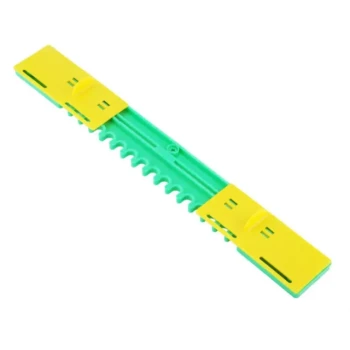
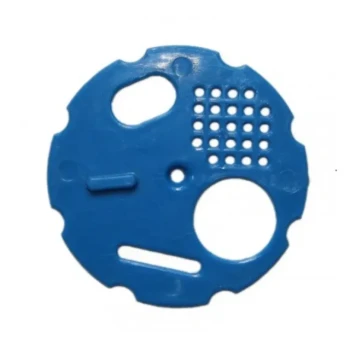
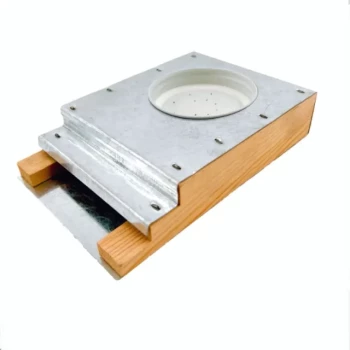
The bottom entrance on a Langstroth hive is the standard opening located at the very base of the structure, formed by the bottom board, and typically spans the full width of the hive body. Its primary function is to offer foraging bees a direct route to the broodnest while facilitating significant airflow, though this design creates inherent vulnerabilities regarding pest intrusion and colony defense.
The bottom entrance prioritizes foraging efficiency and ventilation, but its default wide opening often exceeds a colony's defensive capabilities, requiring the use of entrance reducers to balance accessibility with security.
Distinct Characteristics of the Design
Structural Placement
The entrance is created by the bottom board, which serves as the floor or base upon which all other supers and brood boxes are stacked. This board generally extends past the main hive body to create a landing zone for returning bees.
Standardized Dimensions
To maintain the "bee space" necessary for movement and interchangeable parts, the sideboards of the bottom board are typically 22 inches long. The entrance height is often set at 3/8 inch, a specific dimension chosen to allow the use of standard entrance reducers.
Modularity
Because the Langstroth system relies on standardized, interchangeable components, the bottom entrance is compatible with a wide variety of accessories. This includes entrance reducers, mouse guards, and specific feeders designed to fit this specific gap.
Primary Advantages
Direct Broodnest Access
The bottom entrance is situated immediately below the brood boxes. This allows foraging bees to deliver pollen and nectar directly to the nursery area where it is most needed, minimizing travel time within the hive.
Enhanced Ventilation
This configuration excels at airflow management, particularly during hot summers. When combined with a screened bottom board or upper entrances, the bottom opening creates a vertical draft that draws air through the hive, helping to regulate temperature and moisture.
Integrated Pest Management
When paired with a screened bottom board, the ventilation provided by the bottom entrance aids in Varroa mite control. While not a standalone treatment, the airflow and screen allow mites to fall out of the hive rather than re-attaching to bees.
Critical Disadvantages
Vulnerability to Predators
The low position of the entrance makes it easily accessible to ground-dwelling predators. Skunks can easily reach in to eat bees, and rodents often utilize the opening to seek shelter inside the warm hive during colder months.
Difficulty in Defense
A full-width bottom entrance is physically difficult for a colony to guard effectively. In weaker hives, this large opening invites "robbing," where bees from other colonies overpower the guards to steal honey resources.
Snow Blockage
In northern climates, a bottom-only entrance is susceptible to being buried by snow accumulation. If the entrance becomes blocked and there is no upper ventilation, the colony can suffocate.
Understanding the Trade-offs
The "Open Door" Risk
While a wide bottom entrance maximizes traffic flow during a heavy nectar flow, it is rarely ideal to leave it fully open year-round. The sheer size of the opening exposes the colony to drafts in winter and looters in late summer dearths.
The Necessity of Intervention
Unlike natural tree hollows which often have small, defensible entries, the Langstroth bottom entrance relies on the beekeeper for regulation. You must actively manage the size of the opening using entrance reducers or hardware cloth to mitigate the risks of mice and robbing while preserving ventilation.
Managing the Entrance for Colony Success
To effectively utilize a bottom entrance, you must adjust its configuration based on the season and the strength of your colony.
- If your primary focus is maximizing honey production: Leave the entrance fully open during the peak nectar flow to prevent congestion and allow massive foraging traffic.
- If your primary focus is colony defense or establishing a new package: Install an entrance reducer to the smallest setting, giving the bees a defensible "choke point" against robbers and wasps.
- If your primary focus is winter survival: Fit a mouse guard over the entrance and ensure the opening is clear of dead bees and snow to maintain vital oxygen flow.
Effective beekeeping with a Langstroth bottom entrance is not about set-it-and-forget-it; it requires dynamic adjustment to match the colony's immediate defensive and respiratory needs.
Summary Table:
| Feature | Advantages | Disadvantages |
|---|---|---|
| Direct Access | Fast delivery of pollen/nectar to broodnest | Low position is easy for skunks/rodents to reach |
| Ventilation | Creates vertical draft; aids cooling & moisture control | Susceptible to being blocked by snow in winter |
| Security | Supports standard reducers and mouse guards | Large opening is difficult for weak colonies to defend |
| Pest Control | Works with screened boards for Varroa management | Invites robbing from other bees during nectar dearths |
Scale Your Apiary with Professional-Grade Equipment
Optimizing your hive configuration is just the beginning. At HONESTBEE, we specialize in empowering commercial apiaries and distributors with high-performance beekeeping solutions. Whether you need precision hive-making machinery, automated honey-filling lines, or a bulk supply of standardized Langstroth components, we deliver the tools that drive productivity.
From essential industry consumables to unique honey-themed cultural merchandise, our portfolio is designed to help your business thrive in a competitive market. Partner with HONESTBEE today for comprehensive wholesale support—contact us now to discuss your specific requirements!
Related Products
- Beehive Entrance Reducer Guardian Metal Hive Entrance for Bees
- Langstroth Solid Bottom Board for Beekeeping
- Solid Bottom Board Australian Pine Wood Langstroth Bottom Board for Wholesale
- Langstroth Screen Bottom Board for Beekeeping Wholesale
- Australian Pine Wood Langstroth Screen Bottom Board for Wholesale
People Also Ask
- Why are entrance reducers used to counter hornet infestations? Protect Your Hive with Strategic Choke Points
- What is the purpose of an entrance reducer for a beehive? Strengthen Colony Defense and Prevent Robbery
- What are the proper guidelines for using hive entrance reducers? Master Temperature Control & Colony Defense
- Why is it critical to maintain a smaller entrance for a newly established bee hive? Boost Colony Growth and Security
- What is the physical mechanism behind the use of hive entrance reducers? Protect Your Bees from Vespa velutina