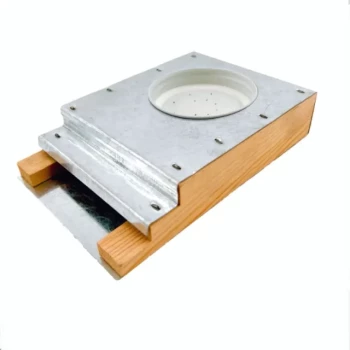
The entrance of a top-bar hive is designed to replicate nature, typically appearing as a small horizontal slot or a series of round holes approximately one inch in diameter. Unlike the large, open entrances found in some industrial hives, these smaller openings mimic the restrictive entry points bees naturally select in hollow trees to better control their environment.
Core Insight: The design of a top-bar hive entrance prioritizes thermal efficiency and colony defense. By keeping entrances small and positioned low, the hive mimics a natural cavity, preventing the escape of rising warm air during winter.
Key Design Characteristics
Simulating Natural Nest Cavities
Top-bar hive entrances are distinctively minimalist. They are commonly drilled as a series of holes—often one inch in diameter or slightly smaller (around 3/4 inch). This specific sizing aligns with the preferences of honey bees in the wild, who favor smaller, defensible openings over large, exposed gaps.
Strategic Low Placement
The vertical positioning of the entrance is critical for colony survival. The entrance should not be placed high on the hive body. Because heat naturally rises, a high entrance acts like a chimney, allowing vital warmth to escape during the winter months. A low entrance preserves this heat bubble, reducing the energy stress on the cluster.
Flexible Configuration
A popular design variation involves drilling roughly seven holes to serve as the entrance. This multi-hole approach allows for high granular control. Beekeepers can use corks or plugs to open or close specific holes, tailoring the entrance size to the current activity level of the bees or the season.
Functionality and Colony Hygiene
Facilitating Debris Removal
For a top-bar hive to remain healthy, the bees must be able to clean it efficiently. It is essential that some of the entrance holes are flush with the landing board or hive floor.
If there is a "lip" or ridge between the floor and the exit, bees struggle to drag out heavy debris and dead bees. Flush openings allow "undertaker bees" to easily sweep waste out of the hive.
Seasonal Regulation
The adjustable nature of hole-based entrances supports seasonal management. During the nectar flow, more holes can be uncorked to reduce traffic congestion. Conversely, for overwintering, it is recommended to reduce the opening significantly, often leaving only the bottom three holes open to conserve heat while maintaining necessary ventilation.
Critical Considerations for Placement
The Risk of High Entrances
While ventilation is necessary, placing vents or entrances near the top bars is generally discouraged in this specific design philosophy. The primary reference emphasizes that winter heat retention is paramount. Top vents compromise the thermal stability of the "roof" formed by the top bars.
Monitoring Bee Space
While not part of the entrance hole itself, the internal spacing near the entrance impacts flow. A 3/16 inch spacer is typically used between the front wall (where the entrance is) and the first top bar. This ensures bees have just enough room to move into the comb area without building burr comb that attaches the first bar to the front wall.
Optimizing Your Hive Entrance Strategy
When configuring or building your top-bar hive entrance, align your choices with the colony's immediate needs:
- If your primary focus is Overwintering: Minimize the entrance to the bottom-most holes to trap rising heat while allowing heavy CO2 to escape.
- If your primary focus is Hygiene: Ensure your entrance holes are drilled flush with the floor of the hive so bees can easily drag out debris.
- If your primary focus is Defense: Utilize corks to reduce the number of open holes, giving guard bees a smaller area to protect against robbers or pests.
By mimicking the small, low openings of a hollow tree, you provide your bees with an environment they can easily defend, heat, and keep clean.
Summary Table:
| Feature | Design Characteristic | Benefit for the Colony |
|---|---|---|
| Entry Style | Series of ~1" diameter holes | Mimics natural hollow trees; easier to defend against pests. |
| Vertical Position | Low placement (near hive floor) | Prevents heat from escaping (chimney effect) during winter. |
| Adjustability | Corks/plugs for multi-hole design | Allows beekeepers to scale entry size based on seasonal nectar flow. |
| Floor Alignment | Flush with the hive floor | Enables "undertaker bees" to easily remove debris and dead bees. |
| Internal Spacing | 3/16 inch front wall spacer | Prevents burr comb attachment while ensuring smooth bee passage. |
Elevate Your Beekeeping Operation with HONESTBEE
Are you looking to scale your commercial apiary or expand your distribution inventory? HONESTBEE is your premier partner for high-quality beekeeping solutions. We provide a comprehensive wholesale catalog, including everything from precision hive-making and honey-filling machinery to specialized hardware and essential consumables.
Whether you need professional-grade top-bar components or honey-themed cultural merchandise to attract retail customers, our team is ready to support your business growth with durable, field-tested equipment.
Ready to optimize your production?
Related Products
- Top Bar Beehive for Beekeeping Wholesales Kenya Top Bar Hive
- Long Langstroth Style Horizontal Top Bar Hive for Wholesale
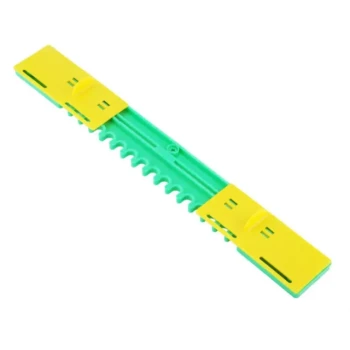
- Multi-Functional Sliding Hive Entrance for Beekeeping
- Professional Reversible Beehive Hive Entrance
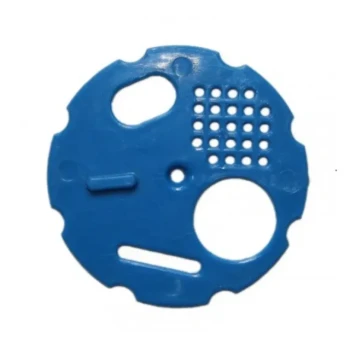
- Multi-Functional Rotary Hive Entrance Disc for Beekeeping
People Also Ask
- How is burr comb and propolis removed from a top bar hive? A Practical Guide for Hive Maintenance
- How does comb construction differ between a top bar hive and a Langstroth hive? Choose the Best Method for Your Apiary
- Why do top bar hives require beekeepers to detach comb? Master the Detach-then-Lift Technique for Comb Safety
- How does the design of a top bar hive minimize disturbance to the bees during inspection? Achieve a Calmer, More Natural Approach
- What are the main differences between a top bar hive and a Langstroth hive? A Guide to Choosing Your Hive