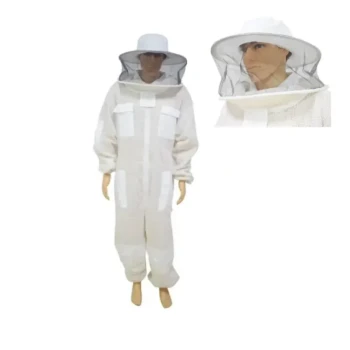
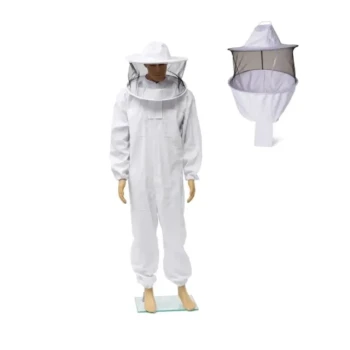
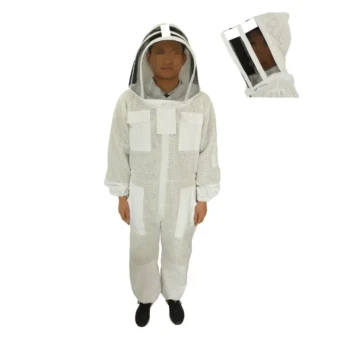
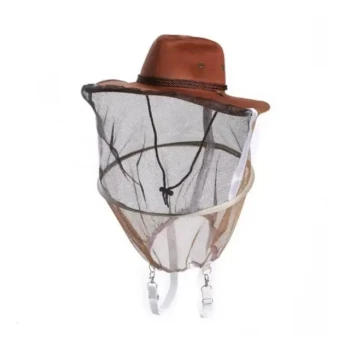
A full bee suit is a comprehensive, one-piece protective garment designed to cover the head, body, arms, and legs, leaving no skin exposed to potential stings. While it relies on thick, sting-resistant fabric for general coverage, its effectiveness is defined by specific features—such as thumb holes, elastic bands, and secure zippers—that eliminate gaps at the neck, wrists, and ankles.
The protective power of a bee suit relies not just on the fabric, but on the integrity of its seals. A quality suit acts as a seamless system where the veil, gloves, and coveralls interlock to prevent bees from crawling into openings at the body's extremities.
The Anatomy of Total Protection
To understand a full bee suit, one must view it as a system of components working together to create a barrier.
The One-Piece Coverall
The foundation of the suit is a single garment comprising a jacket and trousers joined seamlessly at the waist.
By combining the top and bottom into one piece, the suit eliminates the risk of a gap forming at the waistband, a common vulnerability in two-piece outfits.
The Integrated Veil
A hood or veil is attached directly to the suit to protect the face and neck while maintaining visibility.
This component is typically secured to the neckline with a zipper, ensuring bees cannot slip under the chin or around the neck area.
Extremity Protection
While the suit covers the limbs, it relies on add-ons to seal the ends.
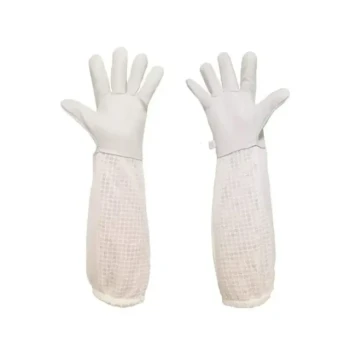
Thick gloves are essential to shield the hands, which are most vulnerable during hive inspections, while boot covers or robust footwear prevent bees from crawling up the pant legs.
Critical Features for Gap Prevention
The most dangerous aspect of beekeeping is not a sting through the fabric, but a bee entering the suit. Modern features are designed specifically to seal these entry points.
Elasticated Seals
High-quality suits feature strong elastic bands at both the wrists and the ankles.
These bands ensure a snug fit around boots and gloves, acting as the primary line of defense against bees crawling upward.
Thumb Holes and Ties
To maintain the seal at the wrist, suits often include thumb holes or loops at the cuff.
These prevent the sleeves from riding up the arm when you pull on your gloves, ensuring the wrist remains covered at all times.
Secure Zipper Systems
Zippers serve as the mechanical "lock" of the suit, found on the front for donning the garment and at the neck for the veil.
A durable front zipper is standard, while the neck zipper is critical for creating a bee-tight seal between the suit and the headgear.
Understanding the Trade-offs
While a full bee suit offers maximum protection, specific design choices can affect usability and comfort.
Veil Removability
Most reputable suits feature a detachable veil that unzips completely.
If a suit has a non-removable veil, it is often an indicator of lower manufacturing quality and makes machine washing the garment difficult or impossible.
Heat vs. Protection
The thick, sting-resistant fabric required for safety can lead to heat retention.
Beekeepers must balance the need for heavy-duty protection with the risk of overheating, often opting for suits with breathable layers if working in hot climates.
Making the Right Choice for Your Goal
When selecting a bee suit, prioritize features that match your specific safety and operational needs.
- If your primary focus is maximum safety: Prioritize a suit with aggressive elastication and thumb loops to ensure the integrity of the wrist and ankle seals is never compromised.
- If your primary focus is long-term durability: Look for a suit with a fully removable veil attached via a heavy-duty zipper, as this allows for proper cleaning and indicates higher construction quality.
The best bee suit is one that provides a confident, gap-free seal, allowing you to focus entirely on the bees rather than your gear.
Summary Table:
| Component | Key Feature | Primary Function |
|---|---|---|
| One-Piece Coverall | Seamless waist design | Eliminates gaps between jacket and trousers |
| Integrated Veil | Detachable heavy-duty zipper | Protects face/neck while allowing for easy cleaning |
| Wrist & Ankle Seals | Strong elastic bands | Prevents bees from crawling into sleeve or leg openings |
| Cuff Design | Thumb holes/loops | Keeps sleeves in place when donning gloves |
| Material | Sting-resistant fabric | Provides a physical barrier against bee stings |
Elevate Your Apiary Safety with HONESTBEE
At HONESTBEE, we understand that for commercial apiaries and distributors, equipment reliability is paramount. We provide a comprehensive wholesale range of professional-grade beekeeping tools, machinery, and protective gear designed to withstand the rigors of industrial use.
Whether you need specialized hive-making machinery, honey-filling systems, or high-quality full bee suits that ensure maximum safety for your team, our portfolio is built to support your growth.
Partner with HONESTBEE today for premium wholesale solutions.
Related Products
- Premium Three Layer Ventilated Bee Suit with Round Veil
- Professional Beekeeper Suit with Square Folding Cotton Veil
- Professional Cotton Beekeeper Suit with Round Veil Design for Commercial Apiaries
- Professional Beekeeping Suit for Kids and Girls Childrens Bee Keeper Suit
- Three-Layer Ventilated Beekeeper Suit with Structured Fencing Veil
People Also Ask
- What are the features of a ventilated bee suit? Stay Cool and Protected in Hot Weather
- What is the function of professional protective consumables? Scale Your Apiary with Ventilated Bee Suits
- What should be considered when purchasing a ventilated bee suit? Ensure Maximum Safety and Comfort
- What is the advantage of ventilated bee suits over traditional ones? Stay Cool and Protected with Mesh Technology
- What materials are used in ventilated bee suits? Choose Between 3-Layer Mesh & Foam for Optimal Protection