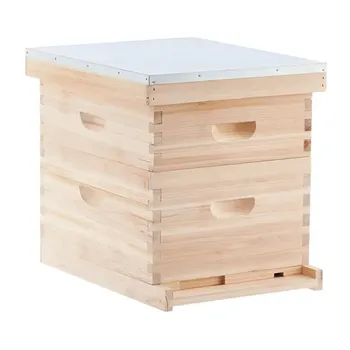
A standard modular beehive is a stack of interchangeable components that separates colony rearing from honey production. From the ground upward, the typical setup includes a hive stand, bottom board, brood chamber, optional queen excluder, honey supers with framed foundation, inner cover, and weatherproof outer roof. Together, these parts support colony health, controlled inspections, efficient honey harvesting, seasonal expansion, and practical apiary transport.
Core takeaway: The value of a modular hive lies in standardized, removable sections. Each component performs a distinct job, while interchangeability allows commercial apiaries to inspect colonies, manage space, balance frames, and process honey at scale.
How the Modular Hive Is Organized
1. Hive Stand
The hive stand elevates the assembly above wet soil and ground-level pests. It also improves working height, helping beekeepers conduct inspections with less bending.
For commercial operations, a stable stand supports consistent placement across apiary sites and improves handling during transport or seasonal relocation.
2. Bottom Board and Entrance
The bottom board forms the hive’s base and provides the main entrance through which bees leave and enter. It also supports the brood chamber above the ground.
An entrance reducer or entrance block can regulate the opening, improve draft control, and help colonies defend the entrance against pests or robbing bees.
3. Brood Chamber
The brood chamber, usually a deep hive box, is the colony’s primary living and reproductive space. Its removable frames hold eggs, larvae, developing bees, pollen, and essential food reserves.
This section is the operational center of colony management. Beekeepers inspect it to evaluate queen performance, brood development, food stores, disease indicators, and overall colony strength.
How Honey Production Is Separated from Brood Rearing
4. Queen Excluder
The queen excluder is a perforated grid placed above the brood chamber. Worker bees can pass through the openings, while the larger queen is generally prevented from entering the honey-storage boxes.
Its commercial role is to help keep harvested honey supers free of brood. However, it is a management tool rather than an unconditional requirement; some beekeepers omit it depending on colony behavior, local practices, and production goals.
5. Honey Supers
Honey supers are boxes placed above the brood chamber for surplus honey storage. They may be shallow, medium, or deep, depending on the hive standard, equipment preference, and lifting requirements.
Using dedicated supers allows commercial beekeepers to expand storage capacity as nectar flows increase. Multiple supers can be added or removed without rebuilding the entire hive.
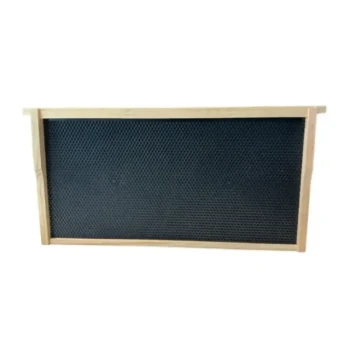
6. Frames and Foundation
Each brood box and super contains removable frames. Frames fitted with wax or plastic foundation guide bees to build straight, uniform comb.
This standardization improves inspection, frame exchange, comb management, and compatibility with mechanical honey extraction equipment. It also helps distributors supply replacement parts across a broader installed equipment base.
How the Hive Is Protected and Regulated
7. Inner Cover or Crown Board
The inner cover, also called a crown board in some product specifications, sits above the uppermost super. It helps separate the colony from the outer roof and may include ventilation or feeding ports.
It can also reduce the tendency of bees to attach the outer cover directly to the frames with propolis, making routine opening and servicing easier.
8. Outer Cover or Weatherproof Roof
The outer cover is the hive’s protective roof. Common designs include telescoping covers that overlap the hive walls to shield the colony from rain, wind, sun, and temperature extremes.
Durable weatherproof materials are particularly important for commercial apiaries, where equipment may remain outdoors for extended periods and face repeated handling.
Why Standardization Matters in Commercial Apiaries
Interchangeable Components
Standardized hive bodies, frames, covers, and supers allow equipment to be exchanged between colonies. A beekeeper can move frames from a stronger colony to support a weaker one or replace damaged equipment without changing the complete hive system.
For distributors and wholesalers, standardization also simplifies inventory planning. A full-spectrum portfolio can cover complete hives, replacement frames, foundation, covers, entrance components, and harvesting accessories.
Efficient Colony Inspection
Removable frames allow beekeepers to inspect brood patterns, queen activity, food reserves, pests, and disease symptoms without dismantling the colony. Modular boxes also make it easier to adjust hive volume as colony populations change.
This supports repeatable operating procedures across many colonies, which is essential when commercial teams must complete inspections quickly and consistently.
Streamlined Honey Harvesting
Supers dedicated to honey storage can be removed from the brood area and transported for uncapping and extraction. Standard frame sizes and box formats help apiaries integrate their hive equipment with established honey-processing workflows.
The separation also supports cleaner handling by reducing the likelihood that harvested frames contain brood.
Seasonal Expansion and Reduction
The stackable design allows beekeepers to add supers during strong nectar flows and remove them when forage declines. Brood chambers and frames can likewise be configured according to colony size and seasonal requirements.
This flexibility allows one modular equipment platform to support colony growth, honey production, overwintering, and recovery from weak populations.
Mobility and Order Fulfillment
Stackable hive components can be disassembled, loaded, and secured more efficiently than fixed structures. This is valuable for migratory pollination, apiary relocation, warehouse storage, and large-scale equipment deployment.
For B2B buyers, operational value depends not only on product design but also on reliable supply. Compatible components, rapid response, dedicated service, and efficient fulfillment reduce the risk of equipment shortages during critical seasonal windows.
Understanding the Trade-offs
Queen Excluder Use
A queen excluder can improve the cleanliness of honey supers, but it may also influence colony movement and acceptance of upper boxes. Its use should be treated as a management decision rather than a universal requirement.
Suppliers should clearly identify whether excluders are made from metal or plastic and specify their compatibility with the selected hive dimensions.
Deep Versus Shallow Supers
Deep boxes provide greater capacity but are heavier when full and can be more demanding to lift. Shallow or medium supers are generally easier to handle, but more boxes may be required to provide equivalent storage volume.
Commercial customers often need a balance between capacity, labor efficiency, lifting ergonomics, and compatibility with existing extraction equipment.
Material and Weather Resistance
Wooden components offer traditional performance and repairability, while plastic or composite options may provide different benefits in durability, weight, or maintenance. No material is automatically superior for every climate or operating model.
Product selection should account for moisture exposure, temperature variation, transport frequency, coating quality, and the customer’s replacement practices.
Compatibility Risks
A hive component can appear standardized while still differing in frame dimensions, box depth, cover fit, or hardware details. Mixing incompatible formats may create gaps, poor alignment, or difficulties during inspection and extraction.
Distributors should confirm the complete system specification before combining components from different product lines.
Making the Right Choice for Your Goal
A practical commercial setup should be selected as a complete, compatible system rather than as a collection of isolated parts.
- If your primary focus is colony health: Prioritize a stable stand, well-ventilated bottom board, functional brood chamber, removable frames, and covers that support inspection and moisture management.
- If your primary focus is honey production: Use compatible queen excluders, honey supers, and foundation-equipped frames designed for efficient removal and extraction.
- If your primary focus is apiary expansion: Choose standardized, interchangeable boxes, frames, covers, and replacement parts that can be deployed consistently across many colonies.
- If your primary focus is distribution and resale: Source a complete product portfolio with verified component compatibility, responsive technical support, dependable quality, and fast order fulfillment.
- If your primary focus is migratory or mobile beekeeping: Favor stackable, durable components that can be disassembled, transported, and reassembled securely.
Understanding each component’s role enables beekeepers and commercial buyers to build modular hive systems that are easier to manage, scale, supply, and operate.
Summary Table:
| Component | Function |
|---|---|
| Hive Stand | Elevates hive off ground, improves working height, and deters pests. |
| Bottom Board | Provides base and main entrance; supports brood chamber. |
| Brood Chamber | Houses brood, pollen, and food; central to colony management. |
| Queen Excluder | Keeps queen out of honey supers; optional management tool. |
| Honey Supers | Stores surplus honey; removable for easy harvesting. |
| Frames & Foundation | Guide bees to build straight comb; standard for extraction. |
| Inner Cover | Separates roof from frames; aids ventilation and propolis control. |
| Outer Cover | Weatherproof roof; protects hive from elements. |
Ready to upgrade your beekeeping operation with reliable modular hives? At HONESTBEE, we offer a comprehensive range of beekeeping equipment, from hive components to extraction machinery. Our one-stop sourcing and dedicated service ensure you get the right parts fast. Contact us today for a quote and experience seamless supply for your apiary!
Related Products
- Professional Observation Hive: The Ultimate Portable Solution for Beekeeping Education, Exhibitions, and Colony Displays
- Assembled Wooden Bee Frames with Plastic Foundation for Durability and Convenience by HONESTBEE
- Professional Grade Foldable Beehive Handles
- Professional Insulated Plastic Bee Hives
- Premium Nicot Style Queen Rearing Kit with Hair Roller Bee Cages
People Also Ask
- How does transitioning to modern hives boost honey yield? Increase production and product quality for your commercial apiary
- How do Langstroth and Dadant standard beehives compare regarding brood chamber management and component compatibility? Find the Perfect Fit for Your Apiary
- What are the key operational differences and structural trade-offs between Langstroth beehives and top-bar beehives for apiary management? Discover which hive system fits your operational needs.
- What are the primary differences between Langstroth, horizontal top bar, and Warré hive box designs when selecting beekeeping equipment? Choose the Right Hive for Your Apiary
- Why do commercial apiary operators transition from traditional hive structures, such as clay cylinders, to standardized Langstroth hive boxes? Discover Scalable Beekeeping Solutions