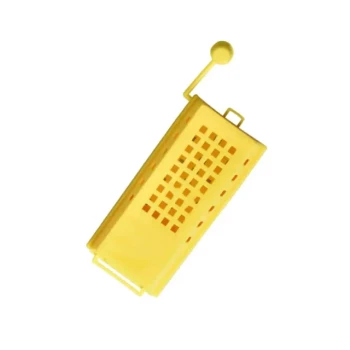
To ensure the validity of safety evaluation experiments for Apis mellifera, specialized cages must be designed as cylindrical plastic units that integrate specific life-support systems. These units require a built-in 50% sucrose solution feeding mechanism, a dedicated watering system, and sufficient internal volume to allow for natural movement.
Core Takeaway: The design of a honeybee evaluation cage is not merely about containment; it is about variable isolation. The architecture must guarantee that any observed mortality or abnormal behavior is caused strictly by the test substance, not by environmental stressors like starvation, dehydration, or spatial confinement.
The Core Objective: Experimental Integrity
Isolating the Test Variable
The fundamental purpose of specialized cage design is to create a neutral environment.
In toxicity assessments, such as those testing essential oils, the environment must not influence the bee's physiology.
The 48-Hour Observation Window
The design must support the bees for a minimum duration of 48 hours.
This timeframe is standard for acute toxicity observations, requiring systems that sustain the bees without intervention during the test.
Critical Design Specifications
Structural Configuration
The cages must be cylindrical in shape and constructed from plastic.
This geometry avoids sharp corners where bees might cluster unnaturally, while plastic ensures durability and ease of cleaning between trials.
Integrated Feeding Systems
A specific feeding system must be integrated directly into the cage structure.
This system is required to deliver a 50% sucrose solution, ensuring the bees receive adequate caloric intake throughout the experiment.
Hydration Integration
Distinct from the food source, the cage must include a dedicated watering system.
This prevents dehydration, which can mimic the symptoms of neurotoxicity or physical distress.
Spatial Volume Requirements
The cage must provide "sufficient activity space."
While specific dimensions depend on the number of subjects, the volume must prevent the physical stress associated with overcrowding or restriction.
Common Pitfalls in Cage Design
The Consequence of Confinement
If a cage fails to provide sufficient activity space, bees will exhibit abnormal behaviors due to physical stress.
These behaviors can generate false positives in toxicity data, rendering the safety evaluation invalid.
Nutritional Interruption
A common design failure is the inadequate integration of the feeding system.
If access to the 50% sucrose solution is inconsistent, mortality may occur due to malnutrition rather than exposure to the chemical agent being tested.
Making the Right Choice for Your Experiment
If your primary focus is Data Accuracy: Prioritize the integration of the feeding and watering systems to eliminate starvation as a confounding variable.
If your primary focus is Behavioral Analysis: Ensure the cylindrical design offers maximum activity space to prevent confinement-induced stress behaviors.
Design rigorous exclusion criteria into your hardware to ensure your toxicity results are statistically valid.
Summary Table:
| Design Feature | Requirement Specification | Purpose in Safety Evaluation |
|---|---|---|
| Geometry | Cylindrical Plastic Structure | Prevents clustering and ensures easy decontamination |
| Nutrition | 50% Sucrose Feeding System | Eliminates starvation as a confounding variable |
| Hydration | Dedicated Watering Unit | Prevents dehydration-induced physiological stress |
| Spatial Volume | Sufficient Activity Space | Avoids false positives from confinement-induced stress |
| Test Window | Minimum 48-Hour Support | Accommodates standard acute toxicity observation periods |
Precision Equipment for Rigorous Apis Mellifera Research
At HONESTBEE, we understand that experimental integrity starts with high-quality hardware. Whether you are a commercial apiary conducting internal safety trials or a distributor supplying research institutions, we provide the specialized tools necessary for success.
Our comprehensive wholesale range includes:
- Advanced Bee Research Tools: Precision-engineered cages and containment systems.
- Beekeeping Machinery: From hive-making to honey-filling machines.
- Industry Consumables: A full spectrum of essential supplies for large-scale operations.
Ensure your toxicity results are statistically valid with equipment designed for professional beekeepers. Contact HONESTBEE today to discuss our wholesale offerings and how we can support your business with industry-leading machinery and consumables.
References
- Roberto Bava, Ernesto Palma. Chemical Profile of Essential Oils of Selected Lamiaceae Plants and In Vitro Activity for Varroosis Control in Honeybees (Apis mellifera). DOI: 10.3390/vetsci10120701
This article is also based on technical information from HonestBee Knowledge Base .
Related Products
- Durable Plastic Push In Queen Bee Cage
- Plastic Queen Marking Tube Cage with Plunger for Beekeeping
- Durable 16 Way Circular Bee Escape for Efficient Honey Harvesting
- Professional Durable Two-Piece Plastic Bee Escape
- Plastic Long Marker Device for Catching and Marking Bees Queen Bee Marking Tube and Cage
People Also Ask
- What advantages do push-in queen cages offer? Boost Acceptance Rates for Artificially Inseminated Queens
- What is a push-in queen cage and how does it differ from a standard queen cage? Boosting Your Queen Acceptance Rates
- How can a beekeeper obtain a push-in queen cage? DIY vs. Professional Sourcing Guide
- Why are specialized queen bee cages used for the banking of mated queen bees? Maximize Commercial Apiary Storage Efficiency
- What is a push-in queen cage and how does it differ from standard cages? Achieve Higher Queen Acceptance Rates