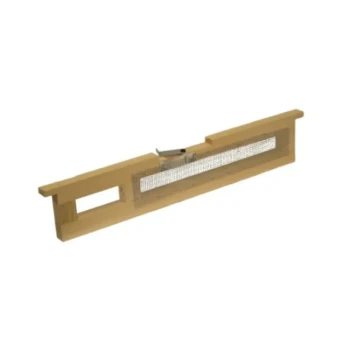
The four primary categories of beehive frames are Langstroth frames, Flow frames, foundationless frames, and plastic frames. While Langstroth frames serve as the ubiquitous industry standard, Flow frames have emerged as a modern solution for simplified harvesting. Conversely, foundationless and plastic frames represent distinct approaches to hive management, prioritizing either natural comb construction or equipment longevity and hygiene.
The choice of frame is not merely about structural support; it defines your interaction with the hive. It dictates your extraction method, the durability of your equipment, and how much autonomy you grant the bees in comb construction.
distinct categories of hive frames
Langstroth Frames
These are the most widely used frames in beekeeping today, serving as the benchmark for compatibility across equipment. They typically utilize a rectangular wooden outer structure that holds a sheet of foundation.
Bees build their comb upon this foundation, which keeps the comb straight and manageable. This standardization allows for the easy interchange of frames between different hive bodies.
Flow Frames
Flow frames represent a significant modern innovation designed specifically to streamline the honey extraction process. They utilize a mechanical mechanism that allows beekeepers to harvest honey directly from the hive without opening it.
This design minimizes disturbance to the colony during harvest. It eliminates the need for traditional centrifuging equipment, making it popular among hobbyists prioritizing convenience.
Foundationless Frames
These frames consist of a top bar and sides but lack the pre-patterned sheet of foundation found in standard frames. They permit the colony to draw out "natural comb" according to their own needs and dimensions.
This approach is favored by proponents of natural beekeeping. It allows bees to determine their own cell size for brood and honey storage, rather than being forced into a size dictated by a manufacturer.
Plastic Frames
Plastic frames are typically molded as a single unit combining the frame and the foundation. They are valued primarily for their extreme durability compared to wooden alternatives.
In addition to robustness, they offer ease of cleaning and resistance to pests like wax moths. They do not rot or separate, providing a long-term investment for the apiary.
structural variables and trade-offs
Understanding Frame Sizes
Beyond the material type, frames are categorized by depth to fit specific hive boxes. The supplementary data indicates that common sizes include Deep, Medium, and Shallow frames, as well as Nuc Half Frames.
Deep frames are generally used for the brood chamber where the queen lays eggs. Medium and Shallow frames are often used in honey supers to reduce the weight the beekeeper must lift during harvest.
The Trade-off: Convenience vs. Tradition
Flow frames offer unmatched ease of extraction but introduce complex mechanical parts into the hive. Langstroth frames require more effort to harvest (uncapping and spinning) but rely on simple, time-tested mechanics.
The Trade-off: Durability vs. Natural Instinct
Plastic frames are nearly indestructible and easy to sanitize, making them ideal for high-volume operations. However, foundationless frames allow for natural bee behavior, though the resulting comb is more fragile and requires careful handling to prevent collapse.
Making the Right Choice for Your Goal
Select your frame type based on whether you prioritize harvest efficiency, equipment longevity, or biological mimicry.
- If your primary focus is standard compatibility and availability: Choose Langstroth frames, as they are the universal standard and easily replaceable.
- If your primary focus is ease of harvest with minimal equipment: Choose Flow frames to extract honey without purchasing a centrifuge or disturbing the bees.
- If your primary focus is equipment longevity and pest resistance: Choose plastic frames for their durability and ease of cleaning.
- If your primary focus is natural bee health and biology: Choose foundationless frames to allow the colony to build natural comb structures.
Your frame choice ultimately shapes the workflow of your apiary and the environment of your colony.
Summary Table:
| Frame Type | Primary Benefit | Durability | Ease of Harvest | Best For |
|---|---|---|---|---|
| Langstroth | Universal standard | High | Moderate | General beekeeping & compatibility |
| Flow Frames | No-disturbance harvest | Moderate | Very High | Efficiency & convenience |
| Plastic | Pest & rot resistance | Excellent | Moderate | Commercial durability & hygiene |
| Foundationless | Natural comb build | Low | Low | Biological mimicry & natural health |
Scale Your Apiary with HONESTBEE Premium Equipment
At HONESTBEE, we specialize in empowering commercial apiaries and distributors with high-grade, wholesale beekeeping solutions. Whether you are looking for durable plastic frames for long-term use, hive-making machinery to expand your production, or specialized honey-filling equipment to streamline your workflow, we provide the full spectrum of industry-essential tools and consumables.
Why partner with HONESTBEE?
- Comprehensive Inventory: From specialized hardware to honey-themed cultural merchandise.
- Commercial Grade Quality: Equipment designed to withstand high-volume operations.
- Global Distribution: Reliable supply chains for professional beekeeping businesses.
Contact us today to discuss your wholesale needs and let us help you optimize your honey production efficiency!
Related Products
- Wooden Bee Hive Frames for Beekeeping and Wholesale
- Assembled Wooden Bee Frames with Plastic Foundation for Durability and Convenience by HONESTBEE
- HONESTBEE Wired and Assembled Wooden Bee Frames Foundation for a Thriving Hive
- Heavy-Duty Stainless Steel Clip-On Frame Perch
- Professional Galvanized Steel Frame Rest for Beehives
People Also Ask
- How do wooden and plastic hive frames compare in terms of durability? Wood vs. Plastic Longevity & Repairability
- How does balancing the number of frames impact hive productivity? Optimize Your Apiary's Biological Output
- What are the main considerations when choosing between wooden and plastic bee hive frames? Optimize Your Apiary's Efficiency
- How should beehive frames be maintained to prolong their lifespan? 5 Pro Tips for Durable Beekeeping Equipment
- What are frames and combs used for in beekeeping? The Foundation of Modern Hive Management