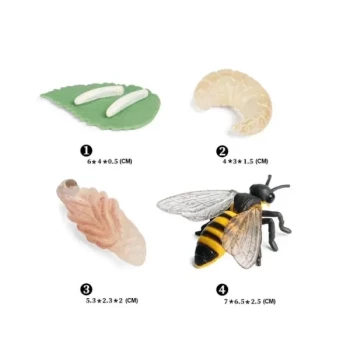
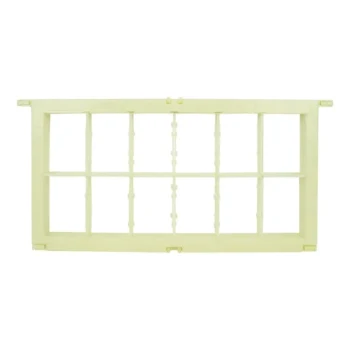
The primary disadvantage of a package of bees is the inherent uncertainty regarding the queen's acceptance and quality. Because the queen in a package is newly caged and foreign to the worker bees, there is no guarantee the colony will accept her, nor is there proof of her laying ability prior to installation.
Core Insight: A bee package forces a colony to start from zero, requiring them to accept a stranger as their queen and build their home from scratch. In contrast, a nuc is a functioning biological engine that arrives with established momentum, proven leadership, and developing resources.
The Queen: Risk vs. Certainty
The Risk of Rejection
In a package, the queen is not the mother of the bees surrounding her; she is a foreigner in a cage. There is no guarantee the workers will accept her leadership.
While you wait for the bees to eat through the sugar plug to release her, there is a constant risk they may kill her instead. A nuc avoids this entirely, as the queen is already accepted, established, and laying.
Unproven Genetics
A package queen is a "wild card" because you cannot see her work before you buy her. She is newly mated and caged, meaning her productivity is theoretical until she is installed.
Conversely, a nuc features a quality-controlled queen. Her brood patterns have been monitored by a beekeeper (often for 4 weeks), proving she is fertile and productive before she ever arrives in your apiary.
The Momentum Gap
The "Standing Start" Problem
A package colony experiences a significant lag time because it has no developing brood (unborn baby bees). The queen must be released, start laying, and then you must wait weeks for those first eggs to hatch.
A nuc arrives with frames of capped brood ready to emerge. This results in immediate, rapid population expansion that a package simply cannot match in the early stages.
The Comb Building Bottleneck
If you install a package into a new hive, the bees often start with nothing but bare foundation frames. Before the queen can lay a single egg, the workers must consume massive amounts of syrup to secrete wax and build comb.
This energy-intensive process delays colony establishment. A nuc arrives with drawn comb, allowing the queen to continue laying without interruption.
Installation and Management Complexity
A More Stressful Installation
Installing a package is a chaotic process that involves shaking or dumping roughly 3 pounds of agitated bees into a box. You must then manually manage the queen cage release mechanism.
Installing a nuc is significantly more straightforward. You simply transfer the frames from the nuc box to your hive, minimizing disturbance to the colony structure.
The Risk of Absconding
Because a package has no brood, comb, or food stores to defend, the bees have no loyalty to the new box.
There is a higher statistical likelihood that a package colony will abscond (leave the hive entirely) if they are unhappy with the conditions. A nuc is anchored by its brood and food, making it much more stable.
Understanding the Trade-offs
Why Choose a Package?
Despite the disadvantages regarding stability and speed, packages solve a logistical problem. Nucs are difficult to ship and are usually limited to local pickup only.
Packages can be shipped through the mail, making them the only viable option for beekeepers who live far from local apiaries. However, you must accept that this convenience comes at the cost of slower growth and higher initial management labor.
Making the Right Choice for Your Goal
To decide between a package and a nuc, you must balance your need for stability against availability.
- If your primary focus is rapid growth and stability: Choose a nuc, as the proven queen and established brood provide a significantly higher chance of first-year survival.
- If your primary focus is logistical availability: Choose a package, but be prepared to feed them heavily and monitor the queen closely during the first two weeks.
The best choice depends on whether you want a colony that is ready to run or one that needs to be built.
Summary Table:
| Feature | Bee Package | Nucleus Colony (Nuc) |
|---|---|---|
| Queen Status | Foreign/Unproven | Established & Laying |
| Starting Momentum | Zero (No brood/comb) | High (Brood & food present) |
| Installation | High stress (Shaking bees) | Low stress (Transferring frames) |
| Absconding Risk | Higher (No ties to hive) | Lower (Anchored by brood) |
| Comb Availability | Must be built from scratch | Arrives with drawn comb |
| Logistics | Shipped easily | Usually local pickup only |
Scale Your Apiary with Confidence
Transitioning from packages to high-performance colonies requires the right infrastructure. HONESTBEE specializes in supporting commercial apiaries and distributors with a comprehensive wholesale offering.
Whether you need precision hive-making machinery, high-efficiency honey-filling lines, or a reliable supply of beekeeping tools and consumables, we provide the hardware necessary to overcome the 'standing start' problem.
Ready to upgrade your operation? Contact us today to discover how our professional-grade equipment and honey-themed cultural merchandise can drive growth for your beekeeping business.
Related Products
- Plastic Transporting Bee Packages and Nuc Boxes for Beekeeping
- Professional 600D Oxford Cloth Beekeeping Tool Bag with 8 Pockets and Elastic Loops
- Australian Langstroth Beehive Boxes for Beekeeping Wholesales
- Durable Plastic Hive Number Set for Beekeeping
- Assembled Wooden Bee Frames with Plastic Foundation for Durability and Convenience by HONESTBEE
People Also Ask
- What role do bee package boxes play in the commercial transport and expansion of honeybee colonies? - Logistic Essentials
- What are beekeeping boxes called? A Guide to Hive Bodies and Box Types
- How do standardized bee packages serve as a recovery mechanism for commercial beekeeping? Ensure Business Continuity
- What is the commercial value of using standardized bee packages? Drive Scalability in Large-Scale Apiaries
- Why is the timely introduction of high-quality bee packages critical? Save Your Apiary from Asian Hornet Invasions