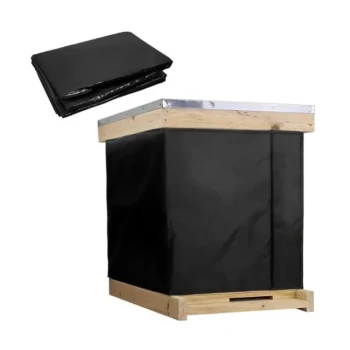
A composite beehive outer cover serves as the primary defense system for a colony, leveraging the distinct physical properties of two materials to solve different environmental challenges. The metal exterior acts as a reflective shield against solar radiation and precipitation, while the wooden lining functions as a thermal buffer to regulate the hive's internal microclimate.
By combining a weather-resistant metal skin with an insulating wooden core, this design prevents structural rot while maintaining the stable temperature and humidity levels essential for colony survival.
The Role of the Metal Exterior
Deflecting Thermal Radiation
The outermost layer is designed to manage external heat sources. The metal surface reflects thermal radiation away from the top of the hive.
This prevents the sun's heat from penetrating directly into the living quarters of the bees, which is critical during high-temperature months.
Blocking Moisture and Preventing Rot
The primary mechanical function of the metal is to act as an impermeable barrier against rainwater.
By shedding water effectively, the metal prevents the underlying wooden structure of the cover and the hive itself from becoming damp.
Keeping the wood dry is the single most effective method for preventing wood rot and extending the lifespan of your apiary equipment.
The Function of the Wooden Lining
Critical Thermal Insulation
While metal shields against external elements, it offers poor insulation. The wooden lining compensates for this by providing substantial thermal insulation.
This layer slows the transfer of heat, preventing rapid temperature fluctuations that can stress the colony.
Stabilizing Internal Humidity
Beyond temperature, the wooden interior helps maintain stable humidity levels within the hive.
Wood naturally buffers moisture changes, creating a consistent environment that allows bees to rear brood and process nectar efficiently.
Understanding the Maintenance Trade-offs
Vulnerability to Structural Aging
While the composite design is robust, it is not immune to degradation. Over time, these covers can sustain damage or simply age, leading to the formation of cracks.
If the integrity of the cover is compromised, the very layers designed to protect the bees can become a liability.
The Risk of Pest Infestation
Damaged covers create ideal breeding grounds for pests. Cracks in the wood or gaps between the metal and lining can serve as parasitic environments.
The primary reference explicitly warns that these compromises allow pests such as spiders and the Greater Wax Moth (Galleria mellonella) to establish themselves.
Once established in the cover, these pests can easily migrate into the hive proper, threatening the colony's resources and brood.
Ensuring Hive Health Through Maintenance
To maximize the benefits of a composite cover, you must treat it as a dynamic component that requires regular inspection.
- If your primary focus is climate control: Ensure the wooden lining remains dry and intact to maintain maximum insulation value for the colony.
- If your primary focus is equipment longevity: Regularly inspect the metal exterior for dents or breaches that could admit rainwater and initiate rot.
- If your primary focus is pest management: Immediately repair or replace covers showing signs of cracking to deny breeding space to the Greater Wax Moth.
Proactive maintenance of your outer cover is the most effective way to secure the structural and biological integrity of the entire hive.
Summary Table:
| Feature | Material Component | Primary Benefit |
|---|---|---|
| Radiation Shield | Metal Exterior | Reflects solar heat to prevent summer overheating |
| Moisture Barrier | Metal Exterior | 100% waterproof to prevent wood rot and structural decay |
| Thermal Buffer | Wooden Lining | Insulates the colony against rapid temperature fluctuations |
| Climate Regulation | Wooden Lining | Buffers internal humidity for efficient brood rearing |
| Pest Prevention | Composite Structure | When maintained, denies entry to wax moths and spiders |
Scale Your Apiary Operations with HONESTBEE
Are you looking to enhance your colony survival rates and equipment lifespan? At HONESTBEE, we specialize in empowering commercial apiaries and distributors with high-performance beekeeping solutions. From innovative composite hive components to professional-grade hive-making and honey-filling machinery, our comprehensive wholesale offering is designed to meet the rigorous demands of the modern honey industry.
Whether you need bulk supplies of specialized hardware or essential consumables, our team is ready to support your growth with reliable logistics and expert manufacturing. Contact us today to discuss your wholesale needs and find out how our premium beekeeping equipment can optimize your business efficiency!
References
- Joaquin Florez Reuto, Ciro Vera Mantilla. Impacto generado por infestación y colonización de plagas en colmenas de Apis mellifera en el municipio de Puerto Carreño (Vichada). DOI: 10.23850/25004468.5249
This article is also based on technical information from HonestBee Knowledge Base .
Related Products
- Telescopic Beehive Outer Cover Lid Roof with Galvanised Sheeting for Langstroth Hive and Beehive Outer Cover
- Professional Insulated Winter Hive Wrap for Beekeeping
- Inner Beehive Cover for Beekeeping Bee Hive Inner Cover
- Wooden Bee Hive Frames for Beekeeping and Wholesale
- Assembled Wooden Bee Frames with Plastic Foundation for Durability and Convenience by HONESTBEE
People Also Ask
- What is a telescoping outer cover and what are its advantages? Maximize Hive Protection in Harsh Climates
- What is the function of an outer telescoping cover on a beehive? Ultimate Weather Protection for Your Colony
- What is the purpose of the outer telescoping cover in a beehive? The Key to Weatherproofing Your Hive
- What are the benefits of the telescoping outer cover? Essential Protection for Hive Health & Longevity
- How should a telescoping outer cover be removed? Expert Techniques for Smooth Beekeeping Operations