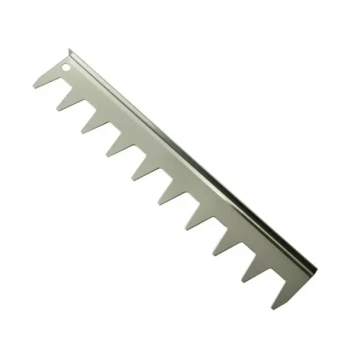
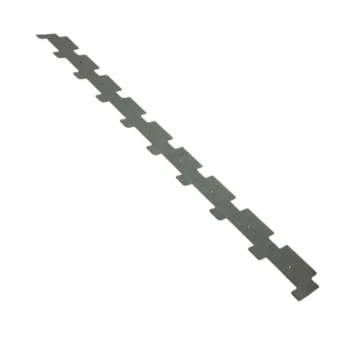
Langstroth hive frames are standardized, movable structures typically characterized by a top bar length of approximately 19 inches (48 cm). Whether made of wood or plastic, these frames are designed to sit inside the hive box with a specific spacing of about 1.5 inches (38 mm) from the center of one frame to the center of the next.
The frame is the structural skeleton of the modern hive, acting like "studs in a house" to support the comb. Its standardized dimensions allow beekeepers to inspect the colony and manage resources without destroying the honeycomb or disrupting the brood.
The Anatomy of a Frame
Essential Components
A standard frame consists of four parts: a top bar, two side bars, and a bottom bar. The top bar features protruding ends (often called lugs or ears) that rest on the rabbet—a shelf-like groove—inside the hive body.
Foundation vs. Foundationless
Frames are designed to hold a foundation, which is a vertically oriented plane that acts as a template for bees to build comb. This foundation can be a pre-installed sheet made of wax or plastic, or the frame can be left "foundationless" to allow bees to construct natural comb from scratch.
Wiring and Support
To support the heavy wax and honey, wooden frames often utilize wire reinforcement. The side bars typically feature holes to accommodate 28-gauge wire, which adds structural integrity to the comb.
Configuration and Sizing
Box Capacity
Langstroth hives are modular and generally come in two width configurations: 8-frame or 10-frame boxes. The frames themselves are identical in size for both configurations; the box width simply determines how many frames fit inside.
Vertical Depth
While the top bar length remains constant at 19 inches, the vertical depth of the frame varies. You must select frames that match the depth of your specific box (e.g., deep frames for deep boxes and medium frames for medium boxes).
Spacing Precision
The 1.5-inch spacing is not arbitrary; it maintains the correct "bee space." This precise gap allows bees to move freely between combs to tend to brood and store honey without encouraging them to build burr comb (excess wax bridges) that would fuse the frames together.
Understanding the Trade-offs
Weight vs. Volume
Choosing between an 8-frame and a 10-frame setup is a major decision for beekeepers. An 8-frame box is significantly lighter and easier to lift, reducing physical strain during inspections. However, a 10-frame box offers more volume for brood and honey storage, potentially requiring fewer boxes overall.
Material Durability
Frames are available in wood or plastic. Plastic frames are generally more durable and come with the foundation molded in, requiring no assembly. Wooden frames offer a more natural material for the bees but often require assembly, wiring, and the installation of a separate wax foundation.
Making the Right Choice for Your Goal
When selecting frames and hive configurations, consider your physical capabilities and management philosophy.
- If your primary focus is Ease of Management: Choose 8-frame boxes, as the reduced weight makes lifting supers and performing inspections significantly easier on your back.
- If your primary focus is Natural Beekeeping: Opt for wooden frames without foundation, allowing the bees to build their own comb size and structure naturally.
- If your primary focus is Durability and Speed: Select plastic frames, as they are pre-assembled, rot-resistant, and impervious to pests like wax moths burrowing into the frame itself.
The right frame specification balances the biological needs of the bees with the ergonomic needs of the beekeeper.
Summary Table:
| Feature | Specification | Key Details |
|---|---|---|
| Top Bar Length | 19 inches (48 cm) | Standard size with lugs for resting on rabbets |
| Frame Spacing | 1.5 inches (38 mm) | Maintains critical "bee space" between centers |
| Material Options | Wood or Plastic | Wood for natural feel; Plastic for durability |
| Configurations | 8-frame or 10-frame | Affects total box weight and storage volume |
| Frame Depths | Deep, Medium, Shallow | Must match the corresponding hive box depth |
Scaling Your Beekeeping Operation? HONESTBEE Has You Covered.
At HONESTBEE, we specialize in supporting commercial apiaries and distributors with high-quality, standardized Langstroth components and beyond. From precision-engineered hive-making and honey-filling machinery to a comprehensive range of wholesale beekeeping tools and essential consumables, our portfolio is designed to maximize your productivity and efficiency. Whether you are expanding your commercial colony or stocking your distribution shelves, our expert team provides the hardware and honey-themed merchandise you need to succeed. Contact us today to discuss your bulk requirements and custom solutions!
Related Products
- Wooden Bee Hive Frames for Beekeeping and Wholesale
- Stainless Steel 9 Frame Hive Spacer Durable Precise for Commercial Beekeeping
- JZBZ Langstroth Queen Rearing Frame for Beekeeping
- Durable Plastic Frame Spacer
- Solid Bottom Board Australian Pine Wood Langstroth Bottom Board for Wholesale
People Also Ask
- How do wooden and plastic hive frames compare in terms of durability? Wood vs. Plastic Longevity & Repairability
- How does balancing the number of frames impact hive productivity? Optimize Your Apiary's Biological Output
- What are the main considerations when choosing between wooden and plastic bee hive frames? Optimize Your Apiary's Efficiency
- How should beehive frames be maintained to prolong their lifespan? 5 Pro Tips for Durable Beekeeping Equipment
- What are frames and combs used for in beekeeping? The Foundation of Modern Hive Management