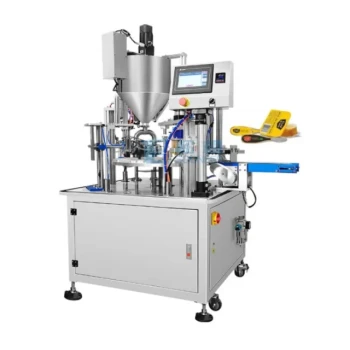
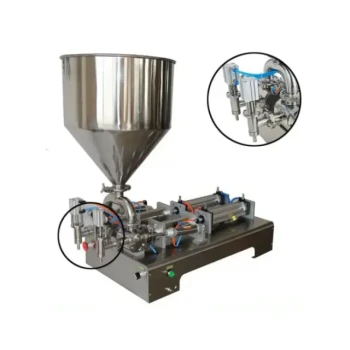
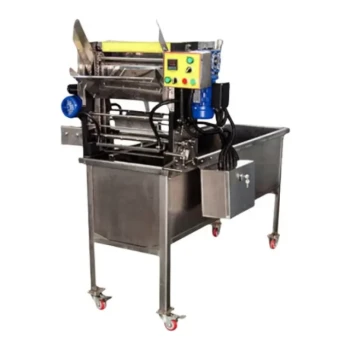
Automated honey filling machines drastically improve hygiene by physically isolating the product from human contact and environmental contaminants. While manual methods rely on open handling that exposes honey to airborne microbes and operator errors, automated systems utilize closed-loop piping and precision metering to maintain a sterile environment from storage tank to final packaging.
Core Takeaway The primary hygiene benefit of automation is the prevention of "secondary contamination." By utilizing sealed, closed-loop systems, automation mitigates the two biggest threats to honey quality: microbial introduction from human handling and fermentation caused by environmental moisture absorption.
The Mechanics of Contamination Control
The Closed-Loop Barrier
The most critical advantage of an automated system is the closed-loop piping design. In manual processing, honey is often exposed to open air during transfer and pouring.
An automated machine moves honey through sealed pipes directly into the container. This physical barrier effectively blocks dust, airborne pathogens, and environmental debris from entering the product stream.
Eliminating Human Contact
Human operators are the most common source of biological contamination in food processing. Manual filling involves repetitive movements near open containers, increasing the risk of hair, skin cells, or respiratory droplets entering the product.
Automation removes the operator from the immediate filling zone. By limiting human interaction to machine oversight rather than direct product handling, you significantly reduce the bio-burden on the final product.
Controlling Moisture and Stability
Preventing Moisture Absorption
Honey is hygroscopic, meaning it naturally absorbs moisture from the surrounding air. If moisture content rises above 20%, dormant yeasts in the honey can activate, leading to fermentation and spoilage.
Automated machines minimize the contact time between honey and air. The high-speed, sealed nature of the process prevents the honey from pulling humidity from the facility environment, serving as a critical safeguard for shelf life.
Inhibiting Yeast Reproduction
By strictly maintaining moisture levels within a safe range, automated fillers create an environment where yeast cannot reproduce. This is particularly vital for products like stingless bee honey, which has a naturally higher moisture content and is more prone to spoilage.
Reducing Air Incorporation
Manual pouring and stirring often trap air bubbles within viscous liquids. This "air incorporation" can negatively affect the visual clarity of the honey and accelerate oxidation.
Automated systems, often equipped with vacuum sealing or bottom-up filling technology, reduce turbulence. This maintains the honey's transparency and sensory quality while preserving the product's chemical stability during storage.
Understanding the Trade-offs
The Sanitation Complexity
While automation reduces contamination during operation, the machines themselves introduce new cleaning challenges. A complex network of pipes, pumps, and nozzles creates potential harborage points for bacteria if not cleaned rigourously.
Dependence on CIP Systems
Unlike simple manual tools, automated fillers require strict Clean-in-Place (CIP) protocols. If the cleaning cycle is flawed, the entire batch can be contaminated systematically. The hygiene advantage is only as strong as your maintenance routine.
Making the Right Choice for Your Goal
When deciding between manual and automated processes, consider your specific production priorities:
- If your primary focus is Extended Shelf Life: Prioritize automation for its ability to prevent moisture absorption and inhibit fermentation.
- If your primary focus is Sensory Quality: Choose automation to minimize air bubbles and maintain the visual clarity of high-viscosity varietals like chestnut honey.
- If your primary focus is Regulatory Compliance: Leverage the high dosing precision of automation to meet strict international weight and hygiene standards.
Automation transforms hygiene from a variable human effort into a consistent, engineering certainty.
Summary Table:
| Hygiene Factor | Manual Handling | Automated Filling | Benefit of Automation |
|---|---|---|---|
| Physical Contact | High (Human proximity) | Zero (Closed-loop) | Eliminates biological contaminants |
| Air Exposure | Constant (Open containers) | Minimal (Sealed pipes) | Prevents moisture absorption & fermentation |
| Consistency | Variable (Human error) | High (Precision sensors) | Ensures regulatory & weight compliance |
| Oxygen Levels | High (Air bubbles) | Low (Vacuum/Bottom-up) | Preserves clarity and prevents oxidation |
| Cleaning Needs | Simple (Manual wash) | Complex (CIP Required) | Systematic, verifiable sanitation cycles |
Elevate Your Honey Production Standards with HONESTBEE
Maintaining the highest hygiene standards is critical for commercial apiaries and distributors aiming for global markets. HONESTBEE provides the advanced machinery you need to eliminate contamination risks and ensure every jar meets premium quality standards.
From precision honey-filling machines to specialized hive-making equipment, we offer a comprehensive wholesale portfolio of beekeeping tools and essential industry consumables. Partner with us to enhance your production efficiency and product shelf life today.
Ready to scale your operation? Contact us today to discover how our professional beekeeping equipment can transform your business.
References
- Carolina de Gouveia Mendes da Escóssia Pinheiro, Jean Berg Alves da Silva. Microbiological quality of honey from stingless bee, jandaíra (Melipona subnitida), from the semiarid region of Brazil. DOI: 10.1590/0103-8478cr20180151
This article is also based on technical information from HonestBee Knowledge Base .
Related Products
- Fully Automatic Honey Filling Packaging Machine for Processing Line
- Automatic Honey Filling and Filtering Machine for Beekeeping Bottle Filling
- Precision Durable Efficient HONESTBEE Rotary Honey Filling Machine
- Precision Automated Packaging Turntable Honey Spoon Filling Sealing Packing Machine
- Semi Automatic Small Honey Bottle Filling Machine Honey Filler
People Also Ask
- Why are fully automatic honey filling and packaging lines essential? Boost Your Honey's Market Value and Quality
- What is a fully-automatic honey filler? Streamline Your Production with High-Precision Automation
- How do automated honey filling and packaging machines affect profitability? Boost Margins with HONESTBEE Technology
- How do automated honey filling and packaging machines contribute to the market value of honey products? Maximize Your ROI
- How do industrial-grade automated honey filling and packaging machines mitigate the risk of physical contamination?