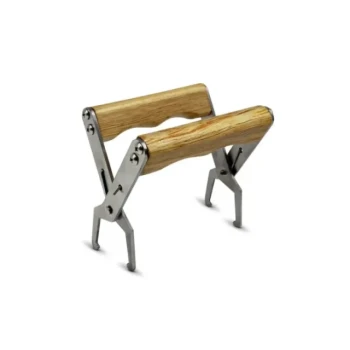
Modern movable-frame hives give Apis cerana beekeepers far greater control over colony management, inspection, and harvesting than traditional cylinder hives. Individual frames can be removed without destroying the nest, allowing beekeepers to assess brood, food stores, pests, and colony strength. They also support reusable combs, controlled expansion, artificial colony splitting, and cleaner honey extraction.
Traditional cylinder hives are simple and inexpensive, but their fixed or freely built combs limit inspection and intervention. Movable-frame hives provide the structure needed to manage Apis cerana colonies more precisely, sustainably, and efficiently, especially in commercial or expanding apiaries.
Why Movable Frames Improve Apis cerana Management
Individual Comb Inspection
Movable frames allow beekeepers to inspect brood combs, honey reserves, pollen stores, and adult bee populations one frame at a time.
This makes it easier to identify weak colonies, queen problems, insufficient food, pest activity, or abnormal brood patterns before they become serious production issues.
Better Control of Colony Space
Beekeepers can adjust the number and position of frames according to colony strength and seasonal conditions.
Maintaining a close balance between the occupied comb area and the bee population helps avoid excessive unused space, which can contribute to wax moth pressure and inefficient colony development.
Easier Hive Expansion
As an Apis cerana colony grows, additional frames or foundation sheets can be introduced in a controlled manner.
This gives the colony room to develop without requiring the bees to rebuild the entire nest from scratch, while also reducing the disruption associated with replacing or reconstructing comb.
Higher Harvesting Efficiency
Honey Removal Without Destroying Brood Comb
In a traditional cylinder hive, harvesting may require cutting or damaging freely built comb. This can disturb the colony and remove brood comb that could otherwise be reused.
Movable-frame equipment separates harvestable honey frames from brood areas, allowing honey to be collected while preserving the structure of the colony.
Reusable Comb Saves Bee Resources
Established comb can be reused across production cycles. Because bees do not need to produce as much new wax, more of the colony’s energy can remain available for brood rearing and honey storage.
This can shorten the time required to rebuild the nest after harvesting and improve operational efficiency.
Cleaner and More Consistent Honey Handling
Frames can be removed, transported, inspected, and processed using a more organized workflow.
For wholesalers, distributors, and commercial beekeepers, this supports cleaner harvesting, better batch control, and more consistent product handling than destructive comb removal.
Stronger Disease and Pest Management
Faster Detection of Colony Problems
Regular access to individual frames provides a practical way to monitor brood health, adult bee population, food reserves, and pest conditions.
Early detection is especially valuable because beekeepers can isolate, strengthen, split, or merge colonies before problems spread or reduce production substantially.
More Precise Colony Interventions
Movable frames support targeted actions such as rearranging combs, adding foundation, removing damaged material, and managing colony strength.
They also make controlled artificial colony splitting more practical, which is important for expanding colony numbers without relying exclusively on natural swarming.
Better Seasonal Management
Apis cerana colonies may experience seasonal changes in population, forage availability, and swarming pressure.
A movable-frame hive gives the beekeeper more flexibility to adjust colony space, maintain suitable stores, and reduce the likelihood of uncontrolled migration or swarming.
Advantages for Commercial Apiaries and Suppliers
Standardized Equipment
Modern movable-frame hives use a more standardized internal structure than traditional cylinder hives.
Standardization simplifies frame replacement, spare-parts sourcing, equipment training, and routine hive management across multiple colonies.
Easier Scaling
A commercial apiary can use consistent inspection and harvesting procedures across a larger number of colonies.
This improves labor planning and makes it easier to monitor colony performance, organize maintenance, and expand production capacity.
Greater Product Portfolio Potential
Movable-frame systems can support the organized production of honey and other hive products, including beeswax, propolis, and royal jelly, where the colony and harvesting method are suitably managed.
For B2B suppliers, offering complete systems—hives, frames, foundation sheets, extraction equipment, and replacement components—creates a more useful one-stop sourcing solution for beekeepers.
Support for Migratory Beekeeping
Portable movable-frame hives can be relocated according to flowering periods.
This can help apiaries target different nectar sources, support more deliberate honey production planning, and improve the separation of harvests from particular floral sources.
Understanding the Trade-offs
Higher Initial Cost
Movable-frame hives generally require a greater initial investment than simple cylinder hives.
The system may also require additional components, such as standardized frames, foundation sheets, stands, tools, and honey-extraction equipment.
More Management Skill
The flexibility of movable frames is valuable only when inspections and interventions are performed correctly.
Poor frame spacing, excessive hive opening, unsuitable expansion, or rough handling can stress Apis cerana colonies and reduce the benefits of the system.
Greater Need for Maintenance
Frames, hive bodies, covers, and other components must be kept clean, aligned, and in good condition.
This is different from the relatively simple maintenance profile of a traditional cylinder hive, where bees build comb freely and the equipment contains fewer moving or standardized parts.
Standardization Must Match Local Practice
A movable-frame design should be compatible with the beekeeper’s Apis cerana management method, local climate, available frames, and extraction workflow.
A poorly selected or inconsistently manufactured system can create sizing problems and make replacement parts more difficult to source.
Making the Right Choice for Your Goal
The best choice depends on whether the priority is simplicity, colony control, production scale, or supply-chain efficiency.
- If your primary focus is simple, low-cost beekeeping: A traditional cylinder hive may be suitable where minimal equipment and limited intervention are more important than inspection and harvesting efficiency.
- If your primary focus is colony health management: Choose movable-frame hives to inspect brood, stores, pests, and colony strength without dismantling the nest.
- If your primary focus is honey production: Use reusable movable frames and controlled harvesting to preserve comb and reduce the bees’ need to rebuild it.
- If your primary focus is apiary expansion: Standardized movable-frame equipment provides a more practical foundation for colony splitting, merging, expansion, and routine monitoring.
- If your primary focus is commercial supply or resale: Build a complete product offering around compatible hives, frames, foundations, extraction tools, and replacement parts, supported by reliable fulfillment and technical service.
For Apis cerana management, movable-frame hives turn beekeeping from largely destructive observation into a controlled, repeatable, and scalable production process.
Summary Table:
| Advantage | Description |
|---|---|
| Individual Comb Inspection | Inspect brood, honey, pollen, and pests without destroying the nest. |
| Controlled Expansion | Adjust frame space to match colony strength and season. |
| Higher Harvesting Efficiency | Remove honey frames without damaging brood, reuse comb, and handle honey more cleanly. |
| Stronger Disease and Pest Management | Detect problems early and intervene precisely. |
| Standardization and Scalability | Standardized frames simplify management and support apiary expansion. |
| Migratory Beekeeping | Portable hives allow relocation to follow flowering periods. |
At HONESTBEE, we provide a comprehensive range of movable-frame hives, frames, and extraction equipment designed for Apis cerana management. Whether you're a commercial apiary, distributor, or B2B reseller, our one-stop sourcing ensures you get high-quality, standardized equipment with fast delivery and expert support. Contact us today to boost your beekeeping efficiency and profitability! Contact us now.
Related Products
- Professional Observation Hive: The Ultimate Portable Solution for Beekeeping Education, Exhibitions, and Colony Displays
- Professional Grade Foldable Beehive Handles
- Modern Flat-Mount Hive Number Set for Beekeeping
- Heavy-Duty Stainless Steel Clip-On Frame Perch
- Heavy Duty Adjustable Hive Connector
People Also Ask
- How does transitioning to modern hives boost honey yield? Increase production and product quality for your commercial apiary
- How do Langstroth and Dadant standard beehives compare regarding brood chamber management and component compatibility? Find the Perfect Fit for Your Apiary
- What are the primary differences between Langstroth, horizontal top bar, and Warré hive box designs when selecting beekeeping equipment? Choose the Right Hive for Your Apiary
- Why do commercial apiary operators transition from traditional hive structures, such as clay cylinders, to standardized Langstroth hive boxes? Discover Scalable Beekeeping Solutions
- What is the recommended frame and box setup for a standard Langstroth hive configuration? Discover the optimal Hive Configuration for Best Results