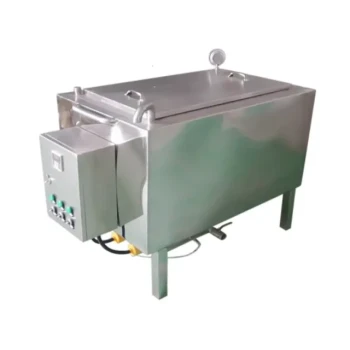
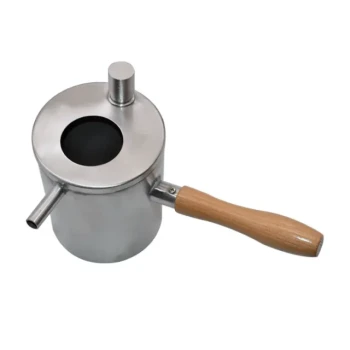
A direct heat melter is a thermal processing unit defined by its specific construction where the heating element is placed in direct contact with the tank walls. Typically built from aluminum, these units are capable of reaching temperatures exceeding 260°C (500°F) and are designed to process materials ranging from soft waxes to industrial solder.
Direct heat melters prioritize thermal intensity and conductive efficiency. By eliminating intermediate barriers between the heat source and the material, they achieve high temperatures rapidly, though this design physically restricts them to smaller batch capacities.
The Mechanics of Direct Heating
The Contact Principle
The defining characteristic of this technology is the absence of an insulating layer or heat transfer fluid. The heating element is physically attached to the exterior of the tank.
Efficient Heat Transfer
Because the element touches the tank, and the tank touches the material, thermal transfer is immediate. This direct chain of contact ensures that energy is not lost to surrounding jacket fluids.
Aluminum Construction
These tanks are typically manufactured using aluminum. This material is chosen for its high thermal conductivity, allowing it to rapidly absorb heat from the element and pass it to the contents of the tank.
Operational Capabilities
High-Temperature Thresholds
Direct heat melters are engineered for high-heat performance. They can consistently reach and maintain temperatures of over 260°C (500°F).
Material Versatility
This broad temperature range makes the equipment highly adaptable. It effectively handles low-melting-point substances like wax, as well as materials requiring significant thermal energy, such as solder.
Understanding the Trade-offs
Volume Restrictions
The direct application of intense heat creates a physical limitation on the size of the unit. To maintain safety and thermal uniformity, these melters are generally restricted to a capacity of 20 to 40 litres.
Scaling Difficulties
Attempting to use direct heat on volumes larger than 40 litres can result in uneven melting or "hot spots." Therefore, these units are not suitable for massive industrial bulk processing.
Making the Right Choice for Your Goal
If you are evaluating whether a direct heat melter fits your production line, consider your specific volume and material needs.
- If your primary focus is high-temperature intensity: This unit is ideal for materials like solder that require temperatures exceeding 260°C (500°F).
- If your primary focus is small-batch agility: The 20-40 litre capacity limits you to specialized, lower-volume runs rather than continuous bulk melting.
Direct heat melters provide a compact, high-intensity solution for precise thermal applications where large volume is not a prerequisite.
Summary Table:
| Feature | Description |
|---|---|
| Heating Method | Direct contact between heating element and aluminum tank walls |
| Max Temperature | Exceeds 260°C (500°F) |
| Material Compatibility | Soft waxes to industrial solder |
| Construction Material | High-conductivity aluminum |
| Batch Capacity | Small-scale (typically 20 to 40 litres) |
| Key Advantage | Rapid thermal intensity and immediate heat transfer |
Scale Your Production with HONESTBEE Beekeeping Solutions
Are you looking to optimize your processing efficiency? HONESTBEE specializes in supporting commercial apiaries and distributors with premium wholesale beekeeping tools and industrial machinery. Whether you need specialized wax-processing equipment, honey-filling machines, or essential apiary consumables, our comprehensive portfolio is designed to meet your rigorous standards.
Maximize your apiary's potential—contact us today to explore our full hardware and machinery range!
Related Products
- Steam Beeswax Melter Wax Warmer for Wax Processing
- Professional Thermostatic Conical Honey Melter
- HONESTBEE Commercial Upright Honey Melter
- Solar Beeswax Melter Easy Solar Wax Melter for Beeswax
- Electric Commercial Beeswax Melter for Factory Use
People Also Ask
- How does a steam wax melter work? A Fast, Efficient Method for High-Quality Wax
- How does a professional steam wax melter optimize the recovery of beeswax? Maximize Yield & Hygiene for Your Apiary
- What are the steps to use a steam wax melter? Master Safe & Efficient Wax Rendering
- How do steam wax melters function in the disinfection of apiary equipment? Achieve Chemical-Free Organic Sterilization
- How do you operate a steam wax melter? Master Efficient Wax Extraction and Frame Sterilization