Standardized modular beehives give commercial apiaries a repeatable operating platform. Their interchangeable boxes, frames, supers, and covers simplify colony management, support mechanical honey extraction, improve transport efficiency, and make equipment replacement easier. For distributors and B2B buyers, the same standardization also enables broader product compatibility, more predictable inventory planning, and faster order fulfillment.
The main advantage is operational consistency: one modular hive system allows commercial beekeepers to manage colonies, harvest honey, move equipment, and scale their apiaries with fewer custom parts and fewer process variations.
Why Standardization Matters at Commercial Scale
Interchangeable components reduce management complexity
Standardized hive bodies, brood frames, honey supers, and covers are designed to work together across the same system. Common Langstroth-style configurations include 8-frame and 10-frame formats, with dimensions that must remain consistent within the selected product range.
This compatibility allows beekeepers to move frames between colonies when balancing brood, food stores, or colony strength. It also reduces the need to modify, repair, or custom-fit components during routine operations.
Uniform equipment improves inspection and maintenance
When every hive follows the same internal layout, workers can inspect colonies using a consistent procedure. This makes it easier to monitor brood patterns, food reserves, pests, diseases, and queen performance across a large apiary.
Standardized equipment also simplifies training. New staff can learn one inspection and handling method rather than adapting to multiple hive designs.
Standardization supports systematic apiary planning
Uniform hive dimensions make it easier to arrange colonies, allocate equipment, and schedule inspections. Commercial operators can plan labor, replacement components, and seasonal operations around a repeatable physical system.
Standardization does not guarantee higher yields by itself, but it creates the infrastructure needed to manage colony performance consistently and identify problems earlier.
How Modular Design Improves Daily Operations
Frame movement enables flexible colony management
Interchangeable frames allow operators to redistribute resources between colonies when appropriate. For example, a strong colony may provide brood or food resources to help support a weaker colony, subject to sound beekeeping practice and disease-control procedures.
This flexibility is particularly valuable in large apiaries, where colony strength can vary significantly across the season.
Stackable boxes make capacity adjustable
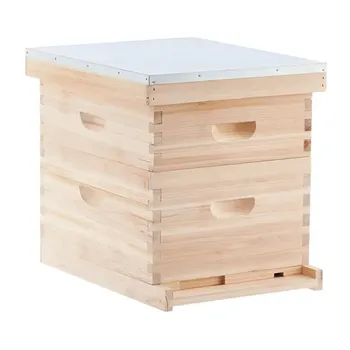
Modular hive bodies can be added or removed as colony needs change. Brood chambers, shallow supers, and medium supers allow the operator to adjust available space for colony growth and honey storage.
The same stackable principle also supports seasonal management, including ventilation adjustments during hot periods and improved enclosure or thermal efficiency during winter.
Standard frames support non-destructive harvesting
Removable frames allow honey to be inspected and harvested without dismantling the entire hive structure. This supports more controlled interventions and helps preserve the colony’s established internal organization.
The result is a more repeatable process for inspection, super management, and honey removal across multiple colonies.
How Standardization Improves Honey Processing
Compatible supers integrate with extraction equipment
Standardized shallow and medium honey supers can be matched with compatible centrifugal extractors and other processing equipment. This is important for commercial apiaries because extraction capacity often becomes a major operational constraint.
A consistent frame format allows equipment to process honey from many hives without repeated adjustments or manual handling changes.
Consistent formats simplify yield measurement
When supers and frames follow uniform specifications, operators can compare production more consistently between colonies, apiary locations, and harvest periods. This supports better production records and helps identify colonies requiring attention.
The measurements are not automatically identical across every hive system, however. Beekeepers should select compatible frame, super, and extractor specifications before purchasing.
Maintenance and replacement become easier
Standardized components are generally easier to replace than proprietary or irregular parts. A broken frame, damaged cover, or worn super can be replaced from an established inventory rather than requiring a custom order.
For distributors and wholesalers, this creates a practical advantage: a coordinated portfolio of compatible hive bodies, frames, supers, covers, and hardware can serve multiple customer requirements within the same system.
How Modular Hives Improve Mobility and Logistics
Stackable equipment speeds loading and unloading
Modular boxes can be separated, stacked, secured, and transported more efficiently than fixed or non-standard hive structures. This is valuable for migratory beekeeping, pollination contracts, seasonal relocations, and apiary expansion.
The design also supports more organized warehouse storage and easier preparation of equipment before deployment.
Standard dimensions simplify transport planning
Uniform hive sizes make it easier to estimate vehicle capacity, pallet requirements, storage space, and loading procedures. Commercial operators can plan movement with fewer variations in footprint and handling method.
Transport still requires appropriate hive securing, ventilation, timing, and colony-safety procedures. Modularity improves logistics, but it does not eliminate the need for careful transport management.
Modular systems support rapid deployment
Pre-compatible components can be assembled or replaced quickly when colonies are added, equipment is damaged, or apiary layouts change. This is especially useful for operators managing large seasonal orders or expanding into new pollination locations.
For B2B suppliers, reliable stock availability and fast fulfillment can be as important as the hive design itself. A standardized product range is most valuable when replacement parts can be supplied quickly.
Structural Advantages for Commercial Apiaries
The system creates a controlled working environment
A standardized hive provides a consistent physical structure for colony development, ventilation, inspection, and honey storage. Properly selected insulation and ventilation features can help buffer colonies against temperature fluctuations.
The hive design should still be matched to the local climate, seasonal conditions, and management practices. Standardization provides consistency; it does not replace environmental assessment.
Uniform hardware supports larger labor teams
Commercial apiaries often rely on multiple employees, seasonal workers, or service contractors. Standardized equipment reduces variation in handling methods and makes work instructions easier to implement.
This can improve operational consistency across locations, although performance still depends on training, supervision, and disciplined procedures.
The platform is scalable
A modular hive system can be expanded by adding compatible boxes, frames, supers, and accessories. This allows a business to increase colony numbers without introducing a completely different equipment ecosystem.
Scalability is strongest when the selected supplier can provide a full product range, consistent manufacturing quality, responsive technical support, and dependable delivery.
Understanding the Trade-offs
Standardization is system-specific
Not every “Langstroth-style” component is interchangeable with every other product. Differences in dimensions, frame rests, box tolerances, wood thickness, materials, and manufacturing specifications can create compatibility problems.
Buyers should confirm technical drawings, actual component dimensions, and compatibility between hive bodies, frames, supers, covers, bottom boards, and extraction equipment.
Inventory can become complex
A standardized system reduces variation, but commercial operators may still stock multiple box depths, frame types, spare parts, and seasonal accessories. Poor inventory planning can create shortages in the components that operations depend on most.
A supplier offering one-stop sourcing can reduce this risk by coordinating the complete compatible product set rather than supplying isolated hive parts.
Hive design does not replace management quality
Standardized equipment can support inspection, disease monitoring, ventilation, and overwintering, but it cannot independently prevent disease or guarantee colony survival. Biosecurity, nutrition, queen quality, pest control, and seasonal management remain decisive.
The equipment should therefore be evaluated as part of a complete apiary operating system.
Upfront compatibility decisions matter
Choosing 8-frame versus 10-frame equipment, or shallow versus medium supers, affects labor, extraction capacity, transport, and future replacement purchases. Switching systems later may create stranded inventory or force partial standardization.
Commercial buyers should select a configuration based on the entire workflow, not only the initial hive purchase price.
Making the Right Choice for Your Goal
The best modular hive system is the one that remains compatible throughout the apiary’s full operating cycle.
- If your primary focus is colony management: Choose a fully interchangeable system with consistent frames, boxes, covers, and clear compatibility specifications.
- If your primary focus is honey-processing efficiency: Match super and frame dimensions with the apiary’s centrifugal extractor and planned processing capacity.
- If your primary focus is migratory pollination: Prioritize stackable construction, secure transport features, ventilation options, and rapid availability of replacement components.
- If your primary focus is apiary expansion: Select a scalable product range supported by dependable inventory, responsive service, technical expertise, and fast order fulfillment.
- If your primary focus is distribution or resale: Build a coordinated portfolio of compatible hive components and accessories so customers can source complete solutions from one supplier.
Standardized modular beehives turn commercial beekeeping from a collection of individual hives into a more manageable, scalable, and serviceable operating system.
Summary Table:
| Advantage | Description |
|---|---|
| Interchangeable components | Reduced management complexity, easier frame movement |
| Uniform equipment | Simplified inspections, training, and maintenance |
| Systematic planning | Better apiary layout and resource allocation |
| Flexible capacity | Stackable boxes adjust to colony needs |
| Non-destructive harvesting | Removable frames preserve colony structure |
| Enhanced honey processing | Compatible supers integrate with extractors |
| Efficient logistics | Stackable design speeds transport and deployment |
| Scalability | Expand colony numbers with compatible parts |
Upgrade your commercial apiary with standardized modular beehives. At HONESTBEE, we provide a full spectrum of beekeeping tools, machinery, and equipment. Our one-stop sourcing ensures you get compatible components, rapid delivery, and dedicated support. Contact us today to streamline your operations and maximize efficiency. Get in touch now.
Related Products
- Professional Observation Hive: The Ultimate Portable Solution for Beekeeping Education, Exhibitions, and Colony Displays
- Assembled Wooden Bee Frames with Plastic Foundation for Durability and Convenience by HONESTBEE
- Premium Nicot Style Queen Rearing Kit with Hair Roller Bee Cages
- Wholesales Dadant Size Wooden Bee Hives for Beekeeping
- High-Performance Langstroth Bee Hives for Global Professional Beekeeping
People Also Ask
- How does transitioning to modern hives boost honey yield? Increase production and product quality for your commercial apiary
- How do Langstroth and Dadant standard beehives compare regarding brood chamber management and component compatibility? Find the Perfect Fit for Your Apiary
- What are the key operational differences and structural trade-offs between Langstroth beehives and top-bar beehives for apiary management? Discover which hive system fits your operational needs.
- What are the primary differences between Langstroth, horizontal top bar, and Warré hive box designs when selecting beekeeping equipment? Choose the Right Hive for Your Apiary
- Why do commercial apiary operators transition from traditional hive structures, such as clay cylinders, to standardized Langstroth hive boxes? Discover Scalable Beekeeping Solutions