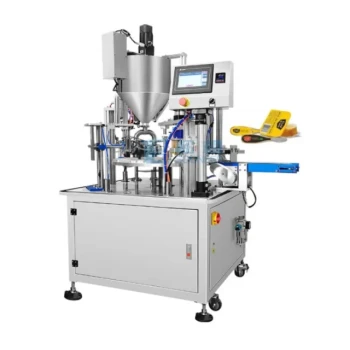
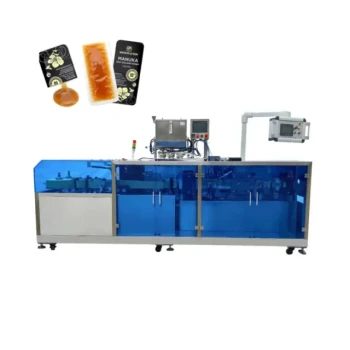
Industrial honey filling lines serve as the technological bridge that transforms raw agricultural harvest into standardized, retail-ready commodities. These systems utilize precise metering and sterile packaging technologies to ensure product consistency, maintain high hygiene standards, and drastically reduce labor costs through automation. By functioning as a critical delivery node, they connect upstream apiary production with downstream commercial distribution channels.
Core Takeaway Industrial filling lines are not merely packaging tools; they are the central mechanism for commercial standardization. They convert variable raw honey into a consistent, safe, and cost-trackable product, enabling beekeeping operations to scale from local agriculture to industrial commerce.
Transforming Raw Material into Standardized Product
Precision Metering and Dosage
The primary function of these lines is to utilize precise metering systems to control the volume of honey in every package.
Unlike manual filling, which varies by operator, industrial machines ensure identical fill levels. This precision is essential for accurate unit product cost accounting, allowing businesses to track margins down to the gram.
Ensuring Hygiene and Sterility
Raw honey is susceptible to contamination during handling. Industrial lines employ sterile packaging technologies to mitigate this risk.
By automating the flow from tank to jar, these systems significantly reduce the risk of secondary contamination associated with manual interaction. This ensures the final product meets the strict sanitary requirements necessary for broad market distribution.
Professional Presentation and Sealing
To enter the retail market, a product must look professional and be physically secure.
Automated processes include airtight sealing and consistent capping, which preserve the honey's quality and shelf life. Furthermore, these lines often integrate labeling processes that convey mandatory legal data—such as botanical origin and batch numbers—ensuring regulatory compliance.
Maximizing Operational Efficiency
Drastic Reduction of Labor Costs
The most immediate economic impact of a filling line is the replacement of manual labor with high-speed automation.
A single automated line can process large-scale annual harvests rapidly, a task that would otherwise require a massive, temporary workforce. This shifts the cost structure from variable labor expenses to fixed asset investment.
Minimizing Material Loss
Honey is a viscous, valuable fluid that is easily wasted during manual transfer.
Industrial filling machines are designed to minimize material loss through controlled dispensing. By eliminating drips, overfills, and spills, producers retain more sellable product, directly improving the operation's bottom line.
Enabling Economic Scalability
These systems create a dual-revenue model for beekeepers by adding value to the raw product.
The efficiency of industrial processing helps compensate for the high management investment required for pollination services. It allows beekeepers to expand their scale, knowing they have the industrial capacity to process the resulting harvest efficiently.
Understanding the Trade-offs
Capital Investment vs. Operational Cost
While these systems lower labor costs over time, they require significant upfront capital investment.
Producers must weigh the initial cost of the machinery against the long-term savings in wages and material waste. For smaller operations, the return on investment (ROI) may take longer to realize compared to high-volume commercial producers.
Maintenance and Technical Complexity
Moving from manual to automated processing introduces a need for technical maintenance.
The complexity of precise metering systems and conveyor belts means that downtime can halt production entirely. Operators must account for the costs of maintenance and potential repairs to keep the "critical delivery node" functional.
Making the Right Choice for Your Goal
To maximize the value of an industrial filling line, align the technology with your specific business objectives:
- If your primary focus is cost reduction: Prioritize machines with high-speed automation and waste minimization features to lower the unit cost of every jar produced.
- If your primary focus is market expansion: Focus on lines that offer sterile packaging and precise labeling integration to ensure compliance with strict food safety regulations and export standards.
Industrial honey filling lines are the defining factor that allows a beekeeping operation to graduate from agricultural production to commercial manufacturing.
Summary Table:
| Core Function | Key Benefit | Impact on Business |
|---|---|---|
| Precision Metering | Accurate volume control | Precise unit cost accounting & margin tracking |
| Sterile Packaging | Contamination prevention | Compliance with global food safety standards |
| High-Speed Automation | Labor cost reduction | Shift from variable labor to fixed asset ROI |
| Airtight Sealing | Preserved shelf life | Professional presentation & quality assurance |
| Waste Minimization | Reduced material loss | Improved bottom line by saving valuable honey |
Elevate Your Honey Production with HONESTBEE
Transitioning from raw harvest to a retail-ready brand requires precision and industrial-grade efficiency. HONESTBEE specializes in empowering commercial apiaries and distributors with the high-performance tools needed to dominate the market.
From advanced honey-filling machines that eliminate waste to a full spectrum of beekeeping hardware and essential consumables, we provide the end-to-end solutions your business needs to scale. Our portfolio even extends to honey-themed cultural merchandise to help you build a comprehensive brand identity.
Ready to automate your success? Contact us today to discover our wholesale opportunities and machinery solutions!
References
- Miklós Sárospataki. Pollinators and Their Importance. DOI: 10.1111/cobi.13460
This article is also based on technical information from HonestBee Knowledge Base .
Related Products
- Fully Automatic Honey Filling Packaging Machine for Processing Line
- Precision Durable Efficient HONESTBEE Rotary Honey Filling Machine
- Commercial Rotary Honey Filling Machine for Production
- Small Honey Filling Machine Sachet Packing Equipment Single Nozzle
- Automatic Honey Filling and Filtering Machine for Beekeeping Bottle Filling
People Also Ask
- Why are fully automatic honey filling and packaging lines essential? Boost Your Honey's Market Value and Quality
- What is a fully-automatic honey filler? Streamline Your Production with High-Precision Automation
- How do automated honey filling and packaging machines affect profitability? Boost Margins with HONESTBEE Technology
- How do automated honey filling and packaging machines contribute to the market value of honey products? Maximize Your ROI
- How do industrial-grade automated honey filling and packaging machines mitigate the risk of physical contamination?