The primary operational risks in honey production are disease and pest outbreaks, winter colony mortality, inadequate nutrition, equipment and labor limitations, and post-harvest losses. Specialized tools and consumables mitigate these risks by enabling safer inspections, more consistent hive sanitation, controlled pest-treatment application, better colony handling, and hygienic extraction, storage, and filling. For commercial operators, the objective is not simply to own more equipment—it is to standardize the entire workflow from hive management through final packaging.
Reliable honey production depends on controlling risks at every stage: healthy colonies, trained personnel, suitable equipment, and disciplined post-harvest handling work together to protect yield, product quality, compliance, and operating continuity.
Where Honey Production Is Most Vulnerable
Pest and disease outbreaks
Pests and diseases can spread rapidly between colonies, especially when inspections, sanitation, or treatment procedures are inconsistent. An outbreak can reduce colony strength, lower honey yields, and create wider biosecurity problems across an apiary.
Disease monitoring tools, hive-cleaning consumables, and dedicated pest-control application equipment help beekeepers identify problems earlier and apply treatments more consistently.
Winter colony mortality
Wintering is a major operational stress point. Weak colonies, insufficient reserves, poor hive conditions, and inadequate environmental management can increase mortality and reduce the number of productive colonies available for the next season.
The risk is managed through regular inspections, appropriate hive maintenance, and careful resource planning. Harvesting must also avoid over-extraction, leaving sufficient honey reserves to sustain the colony.
Nutritional deficiencies
Colonies depend on adequate pollen and nectar resources to maintain population strength and productivity. Shortages can weaken colonies, interfere with development, and reduce their ability to withstand pests, disease, and seasonal stress.
Protective clothing and inspection tools enable personnel to monitor food reserves more regularly while reducing unnecessary exposure and disturbance during inspections.
Equipment and labor limitations
Insufficient or poorly standardized equipment creates several linked risks: slower inspections, inconsistent hive maintenance, avoidable colony disturbance, hygiene failures, and dependence on individual worker experience.
For larger operations, these weaknesses can become bottlenecks. Standardized hive equipment, professional handling tools, and modern processing machinery improve consistency while reducing labor inefficiency and operational dependency on particular personnel.
Storage and post-harvest losses
Honey quality can decline after harvesting if extraction, filtration, storage, or filling is poorly controlled. Inadequate facilities may also increase contamination risk, product loss, and delays between harvest and sale.
Temperature-regulated storage, hygienic extraction systems, filtration equipment, and automated filling machinery help protect raw honey quality and reduce avoidable post-harvest loss.
How Specialized Tools Reduce Operational Risk
Protective clothing enables better management
Protective suits, veils, and gloves create a physical barrier that reduces the risk of stings. This makes it easier for workers to perform routine and detailed inspections rather than postponing essential management tasks.
The operational benefit is broader than personal safety. More consistent inspections support earlier detection of pests and disease, better assessment of pollen and nectar reserves, and more accurate harvest timing.
Protective equipment should be treated as part of a workforce-readiness system, not merely as individual safety apparel. Commercial buyers benefit from maintaining sufficient inventory in multiple sizes and replacing damaged or degraded items promptly.
Hive tools support controlled handling
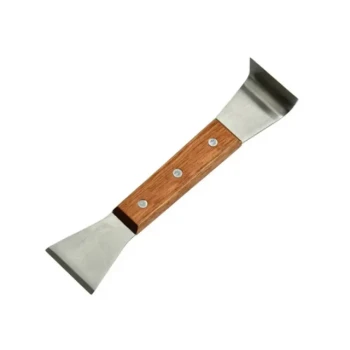
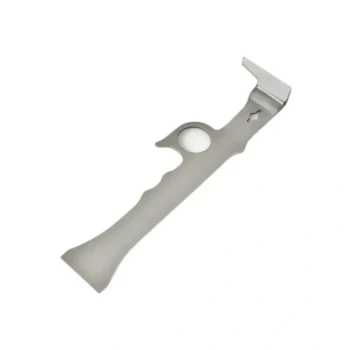
Specialized hive tools allow beekeepers to open, inspect, separate, and maintain hive components with greater control. Proper handling reduces unnecessary disturbance and supports more efficient management across a large number of colonies.
This is especially important for commercial apiaries, where small inefficiencies or repeated rough handling can compound across hundreds or thousands of hives.
Sanitary consumables limit contamination
Sanitary hive-maintenance consumables support cleaner working conditions and reduce the likelihood of transferring contaminants between colonies or equipment. Their effectiveness depends on consistent use and appropriate replacement.
Sanitation should be integrated into standard operating procedures covering hive tools, protective equipment, extraction surfaces, containers, and filling lines.
Pest-control application tools improve treatment consistency
Dedicated fumigation or treatment-application equipment helps personnel apply authorized products in a controlled and repeatable manner. Consistent application reduces the risk of under-treatment, over-application, and uneven exposure between colonies.
Training is essential. Personnel must understand approved materials, correct equipment use, treatment timing, and the need to avoid prohibited drugs or improper chemical practices.
This is also a food-safety control. Poor chemical management can contribute to residues such as sulfonamides, excessive Lindane, or PAHs, potentially compromising consumer safety and export eligibility.
How Processing and Storage Equipment Protect Yield
Extraction equipment reduces handling losses
Professional honey extractors allow honey to be removed from comb efficiently while limiting unnecessary handling. This supports cleaner processing and helps preserve the characteristics of raw honey.
Dedicated extraction tools are particularly valuable when production volume increases and manual methods begin to create delays, inconsistent sanitation, or product losses.
Filtration equipment supports product consistency
Filtration systems help remove unwanted particles after extraction and support a more uniform finished product. They should be selected and operated in a way that protects the desired characteristics of the honey rather than applying unnecessary processing.
A standardized filtration stage also makes quality control easier across multiple harvest batches.
Temperature-regulated storage protects quality
Controlled storage conditions reduce the risk of quality deterioration caused by unsuitable temperatures or prolonged holding times. Storage units should be matched to production volume, workflow, and expected turnover.
The goal is to create a controlled transition between harvesting, processing, filling, and dispatch—not simply to add storage capacity.
Filling machinery removes bottlenecks
Automated or semi-automated honey-filling machinery improves filling speed, repeatability, and sanitary control. It reduces dependence on manual bottling and helps commercial operations respond more efficiently to large orders.
For distributors, wholesalers, and resellers, reliable filling capacity also supports more predictable availability, packaging consistency, and order fulfillment.
Standardization Is the Core Risk-Control System
Equipment uniformity improves operational control
Standardized hive-making and maintenance equipment simplifies repairs, replacement, training, and inventory planning. Workers can follow repeatable procedures instead of adapting to incompatible or inconsistent components.
Uniformity also supports hygiene because equipment can be cleaned, inspected, and replaced according to defined standards.
Training turns equipment into protection
Tools do not reduce risk automatically. Workers must be trained to use protective gear, inspection tools, sanitation products, extraction systems, and pest-control equipment correctly.
Training should cover both routine use and escalation procedures—for example, what to do when a colony shows signs of disease, when a treatment may affect honey safety, or when storage conditions fall outside specification.
Workflow integration prevents isolated improvements
Buying a high-quality extractor will not solve a sanitation failure upstream. Similarly, protective clothing cannot compensate for inadequate colony monitoring or improper chemical use.
The strongest risk-control model links inspection, treatment, harvesting, extraction, storage, filling, and dispatch into one documented operating process.
Understanding the Trade-offs
More equipment increases management requirements
Specialized machinery can improve throughput and consistency, but it also introduces maintenance, cleaning, training, and spare-parts requirements. Equipment that is difficult to service may create a new operational bottleneck.
Commercial buyers should evaluate total operating requirements, not only purchase price. Availability of replacement parts, technical support, and responsive supplier service can materially affect uptime.
Automation does not replace colony judgment
Filling and processing machinery can improve efficiency, but colony health still depends on skilled observation and timely decisions. Automation should reduce repetitive work while allowing experienced personnel to focus on biological and management risks.
Over-mechanizing the process without adequate training can create false confidence and delay corrective action.
Chemical controls require strict discipline
Pest-control materials must be authorized, correctly applied, and managed to prevent residues. Excessive or inappropriate treatment can damage honey quality, harm colonies, and create regulatory problems.
The safest approach combines monitoring, targeted treatment, documented application procedures, and personnel training.
Scaling can amplify weak processes
Larger apiaries and higher processing volumes magnify both efficiency gains and failures. A small sanitation inconsistency or storage problem can become a significant product-quality event when repeated across many batches.
Before scaling, operators should standardize procedures, confirm equipment capacity, and establish dependable replenishment for critical consumables.
Product availability affects risk resilience
A one-stop sourcing model can simplify procurement for protective equipment, hive tools, sanitary consumables, treatment applicators, extraction systems, storage units, and filling machinery. However, supplier breadth only creates value when supported by accurate specifications, rapid response, dependable quality, and efficient fulfillment.
For commercial operations, procurement reliability is part of operational risk management because missing a critical consumable during a treatment or harvest window can affect both colony health and production schedules.
Making the Right Choice for Your Goal
The most effective purchasing decisions begin with the operational risk that needs to be controlled.
- If your primary focus is colony health: Prioritize protective clothing, inspection and hive-handling tools, sanitary consumables, disease-monitoring resources, and properly controlled pest-treatment equipment.
- If your primary focus is food safety and export compliance: Use standardized sanitation procedures, authorized treatment materials, trained personnel, hygienic extraction and filtration systems, and controlled storage conditions.
- If your primary focus is processing efficiency: Invest in professional extraction, filtration, temperature-regulated storage, and automated or semi-automated filling machinery.
- If your primary focus is commercial scale: Build a standardized equipment portfolio supported by dependable replenishment, technical expertise, rapid response, and efficient order fulfillment.
- If your primary focus is workforce safety and continuity: Maintain properly fitted protective gear, train workers in standardized procedures, and keep critical replacement consumables available.
A resilient honey operation is built by connecting healthy-colony management with standardized equipment, trained personnel, controlled processing, and dependable supply.
Summary Table:
| Risk Factor | Mitigation with Specialized Tools/Consumables |
|---|---|
| Pest/Disease Outbreaks | Monitoring tools, cleaning consumables, dedicated pest-control application |
| Winter Colony Mortality | Regular inspections, hive maintenance, avoid over-extraction |
| Nutritional Deficiencies | Protective clothing and inspection tools for regular monitoring |
| Equipment/Labor Limitations | Standardized hive equipment, professional handling tools, modern machinery |
| Storage/Post-Harvest Losses | Temperature-regulated storage, hygienic extraction, filtration, automated filling |
| Chemical Residues | Authorized materials, documented application procedures, training |
Ready to strengthen your honey production against operational risks? At HONESTBEE, we provide a comprehensive wholesale range of beekeeping tools, machinery, and consumables—from protective wear and hive tools to extraction, filtration, and filling systems. Our one-stop sourcing supports distributors, wholesalers, and commercial apiaries with rapid response, dedicated service, and efficient fulfillment. Contact us today to discuss how we can help you standardize your workflow and protect your yield. Get in touch with our team.
Related Products
- Professional Dual-End Stainless Steel Hive Tool for Beekeeping
- HONESTBEE Professional Mini J-Hook Hive Tool for Beekeeping
- Stainless Steel J Hook Hive Tool for Beekeeping
- HONESTBEE Advanced Ergonomic Stainless Steel Hive Tool for Beekeeping
- Wooden Bee Brush with Triple Row Artificial Fiber for Beekeeping
People Also Ask
- What specific challenges do beekeeping hive tools address during hive maintenance? Essential Solutions for Apiaries
- Why are professional hive tools considered indispensable? Master Beekeeping Maintenance with Precision Leverage
- What is the role of professional hive tools in routine apiary maintenance? Expert Tips for Hive Health and Longevity
- What role do professional beehives and beekeeping tools play in honey prosumption? Scale yield & commercial success.
- What are the primary functions of a stainless steel hive tool? Essential Equipment for Professional Beekeeping