Beeswax is a versatile industrial staple defined by its unique combination of strong adhesiveness, waterproofing capabilities, and malleability. It functions as a robust binder and sealant while offering significant chemical stability, making it essential for applications ranging from precision embedding to artistic modeling.
Core Insight: The industrial value of beeswax lies in its ability to provide structural integrity through adhesion and moisture resistance while remaining chemically inert. However, maximizing these properties requires precise thermal management to control fluidity during processing.
The Functional Mechanics of Beeswax
Superior Adhesion and Binding
The primary utility of beeswax in industrial settings stems from its excellent adhesion. It acts as a natural glue, capable of bonding distinct surfaces together effectively.
This property makes it an ideal adhesive agent for complex assemblies where synthetic glues might be unsuitable. It creates a durable bond that withstands physical handling.
Waterproofing and Sealing
Beyond simple sticking, beeswax offers significant waterproofing properties. When applied as a coating or sealant, it creates a hydrophobic barrier that repels moisture.
This is critical for protecting sensitive materials from water damage or corrosion. It ensures longevity in environments where moisture ingress is a primary failure mode.
Malleability and Shaping Capabilities
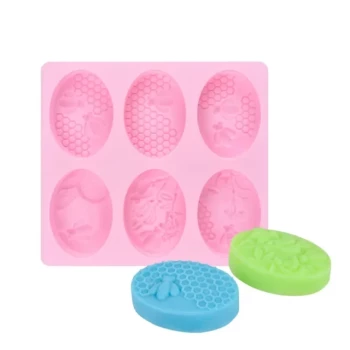
Beeswax is highly valued as an embedding agent and artistic medium due to its physical plasticity. It can be molded into precise shapes without losing structural cohesion.
This shaping capability allows for detailed work in modeling and casting. It holds its form once cooled, providing a reliable medium for intricate industrial or artistic designs.
Chemical Stability
A less visible but equally vital property is the material's chemical stability. Beeswax does not easily react with other substances, making it safe for use in preservation and embedding.
This stability ensures that the wax does not degrade the materials it is meant to protect or hold. It remains consistent over time, providing a reliable baseline for long-term applications.
Operational Challenges and Considerations
Precision Thermal Management
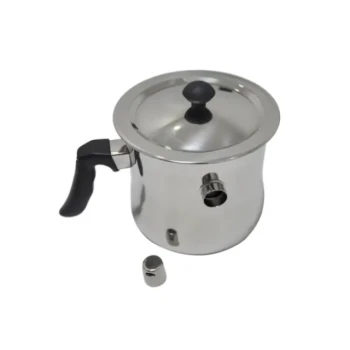
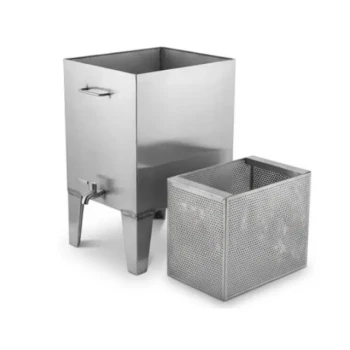
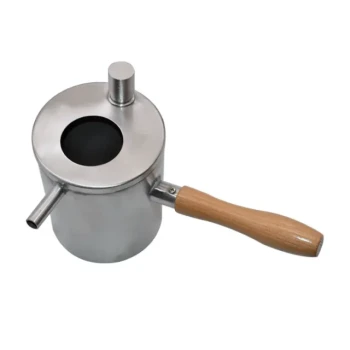
While beeswax is useful, its processing demands high-precision heating. The material's utility depends entirely on managing its state change from solid to liquid.
If the temperature is too low, the wax will not flow; if it is too high, it may degrade or become too runny to manage. Specialized equipment is often required to maintain the exact temperature needed for optimal performance.
Controlling Fluidity
Achieving the right consistency requires constant, controlled stirring. This ensures the heat is distributed evenly and the viscosity remains uniform throughout the batch.
Without this mechanical intervention, the wax can develop hot spots or uneven textures. This inconsistency can compromise the quality of the final adhesive bond or the waterproof seal.
Making the Right Choice for Your Application
To leverage beeswax effectively, align your processing methods with your specific industrial goals:
- If your primary focus is Adhesion or Sealing: Prioritize the waterproofing and adhesive qualities to create durable, moisture-resistant bonds.
- If your primary focus is Modeling or Embedding: Leverage the material's shaping capabilities and chemical stability to ensure precise, non-reactive molds.
- If your primary focus is Mass Processing: Invest in high-precision heating and stirring equipment to strictly control fluidity and prevent material degradation.
By mastering the thermal properties of beeswax, you unlock a naturally stable, waterproof, and highly adhesive medium for your industrial needs.
Summary Table:
| Physical Property | Industrial Function | Practical Benefit |
|---|---|---|
| Adhesion | Natural Binder | Creates durable bonds between surfaces |
| Waterproofing | Hydrophobic Barrier | Protects materials from moisture and corrosion |
| Malleability | Embedding & Modeling | Allows for precision shaping and casting |
| Chemical Stability | Inert Medium | Ensures long-term preservation without degradation |
| Thermal Sensitivity | State Transformation | Controlled fluidity through precise heat management |
Elevate Your Beekeeping Business with HONESTBEE
Are you looking to scale your commercial apiary or expand your distribution portfolio with high-quality beeswax products and equipment? HONESTBEE is your strategic partner, offering a comprehensive wholesale range designed for industry professionals.
From specialized hive-making and honey-filling machinery to high-grade industrial consumables and honey-themed cultural merchandise, we provide the tools you need to master thermal management and material processing.
Maximize your operational efficiency today. Contact our expert team to discuss how our full-spectrum beekeeping solutions can drive your business growth.
References
- J. ZDAREK. Book review: Kritski G. 2015: The Tears of Re: Beekeeping in Ancient Egypt.. DOI: 10.14411/eje.2016.032
This article is also based on technical information from HonestBee Knowledge Base .
Related Products
- Beeswax Machine Press Embosser Wax Foundation Mold Printer Bee Hive Equipment Making Sheet
- Beeswax Foundation Sheets Beehive Foundation for Wholesale
- Colorful Silicone Beeswax Foundation Mold Mould for Beekeeping
- Economy Manual Beeswax Embossing Mill Wax Foundation Machine Roller
- Electric Beeswax Flat Sheet Machine with Operating Tray for Wax Processing
People Also Ask
- What equipment is needed to make beeswax foundation? A Guide to DIY Wax Sheet Production
- What miscellaneous equipment is needed for making foundation? A Guide to the Essential Tools
- What miscellaneous equipment is useful when making beeswax foundation? Essential Support Tools for Beekeepers
- What specific equipment is required for making beeswax foundation? Essential Tools for High-Quality Production
- What is the recommended temperature for melting beeswax to make foundation sheets? Master the 70°C-80°C Ideal Range