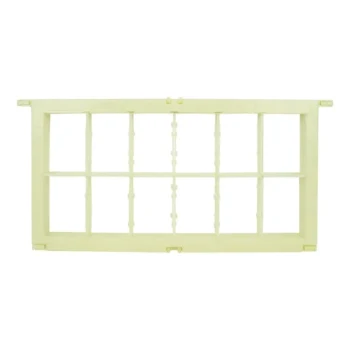
Food-grade shallow trays function specifically as the primary structural interface between delicate cut honeycomb and the consumer. Their design serves two immediate purposes: securely holding the honeycomb block in place and facilitating the addition of liquid honey at the base to prevent physical adhesion and enhance visual presentation.
Core Takeaway The shallow tray is not just a holder; it is an active component in product presentation and preservation. By allowing a layer of liquid honey to sit beneath the comb, the tray solves the mechanical problem of sticking while creating a fuller, more premium aesthetic.
The Mechanics of Interaction
Securing the Honeycomb
The primary function of the shallow tray is to act as a direct-contact container.
Because cut honeycomb is fragile, the tray provides a rigid bottom and sidewalls that support the physical structure of the wax cells. This prevents the comb from collapsing or deforming during handling.
The Anti-Adhesive Function
A critical, often overlooked function of these trays is their ability to hold a small amount of liquid honey at the bottom.
This liquid layer acts as a buffer. It ensures the waxy comb does not physically stick to the bottom of the plastic tray, making it easier for the consumer to remove the product intact.
Aesthetic Enhancement
The addition of liquid honey within the shallow tray serves a visual purpose as well.
It increases the visual fullness of the package. This makes the product look substantial and premium, rather than a dry block of wax sitting in an empty plastic shell.
Preservation Capabilities
Moisture Control
Food-grade plastic trays provide a vital barrier against the environment.
High-quality materials create a sealed environment that prevents the honey from absorbing atmospheric moisture. This is critical because excess moisture can lead to fermentation and spoilage.
Barrier Protection
These trays isolate the honey from external contaminants and odors.
By maintaining a sealed barrier, the tray preserves the enzyme activity and natural flavor profile of the honey, ensuring it tastes as intended even after long-term storage.
Understanding the Trade-offs
Sealing Requirements
While the tray supports the comb, the inclusion of liquid honey introduces a leak risk if the seal is not perfect.
The tray must be paired with high-quality sealing capabilities to prevent the liquid component from leaking during distribution. A poor seal negates the benefits of the anti-adhesive liquid layer.
Material Specificity
Not all plastics are suitable for this application.
You must strictly verify the material is food-grade. Lower-quality materials can interact with the acidic nature of honey or fail to provide the necessary barrier against moisture, leading to premature fermentation.
Making the Right Choice for Your Goal
When selecting packaging for comb honey, consider your end-user's experience:
- If your primary focus is Consumer Experience: Utilize the shallow tray's ability to hold liquid honey to ensure the comb slides out easily without sticking.
- If your primary focus is Product Longevity: Prioritize trays with superior sealing properties to lock out moisture and prevent fermentation.
The shallow tray is a strategic tool that balances the fragility of raw honeycomb with the durability required for modern retail.
Summary Table:
| Function | Description | Key Benefit |
|---|---|---|
| Structural Support | Rigid bottom and sidewalls for delicate wax cells | Prevents honeycomb collapse or deformation |
| Anti-Adhesive Buffer | Holds a base layer of liquid honey | Prevents comb from sticking for easy removal |
| Aesthetic Value | Creates a "full" and substantial appearance | Increases premium appeal and consumer value |
| Moisture Barrier | Sealed food-grade plastic environment | Prevents fermentation and maintains enzyme activity |
| Contamination Protection | Isolate product from external odors and debris | Preserves the natural flavor profile and purity |
Elevate Your Honey Brand with HONESTBEE
At HONESTBEE, we understand that premium comb honey requires more than just a container—it requires a preservation strategy. As a dedicated partner to commercial apiaries and distributors, we provide a comprehensive wholesale range of food-grade packaging, specialized hardware, and honey-filling machinery designed to protect your harvest and maximize market appeal.
Our value to your business:
- Comprehensive Inventory: From specialized hive-making equipment to high-performance honey-filling machines.
- Wholesale Expertise: Tailored solutions for large-scale operations and global distributors.
- Quality Assurance: Industry-standard food-grade materials that prevent spoilage and ensure structural integrity.
Ready to scale your production? Contact us today to explore our full spectrum of beekeeping tools and machinery!
References
- Veli Öztürk, Mehmet Turgut. Bal Üreten İşletmelerde Maliyet Analizi, Türkiye Muhasebe Standartları Açısından İncelenmesi ve Maliyet Belirleme Üzerine Bir Örnek Uygulama (Cost Analysis of Honey Producing Property, Investigation of Turkey Accounting Standards and A Case Study on Cost . DOI: 10.20491/isarder.2016.171
This article is also based on technical information from HonestBee Knowledge Base .
Related Products
- Food Grade Plastic Honey Bucket Pail for Beekeeping
- Honeycomb Style Drip Free Honey Dispenser
- Plastic Honey Comb Frames Cassette Box for Honey
- Professional Sectional Comb Honey Frame with 250g Cassette System for Beekeeping
- Heart-Shaped Comb Honey Frame and Honeycomb Cassette
People Also Ask
- What key operational precautions should be taken when using honey buckets and extractors fitted with bottom drain taps?
- What functions do food-grade honey buckets perform? Safeguard Your Harvest and Optimize Apiary Logistics
- Why are food-grade plastic buckets preferred for honey? Protect Quality with Modern Honey Collection Tools
- What is the significance of food-grade plastic honey collection buckets? Boost Quality in Forest Honey Logistics
- What is a honey pail? The Essential Container for Protecting Your Honey's Value